
Hovhannes Tumanyan
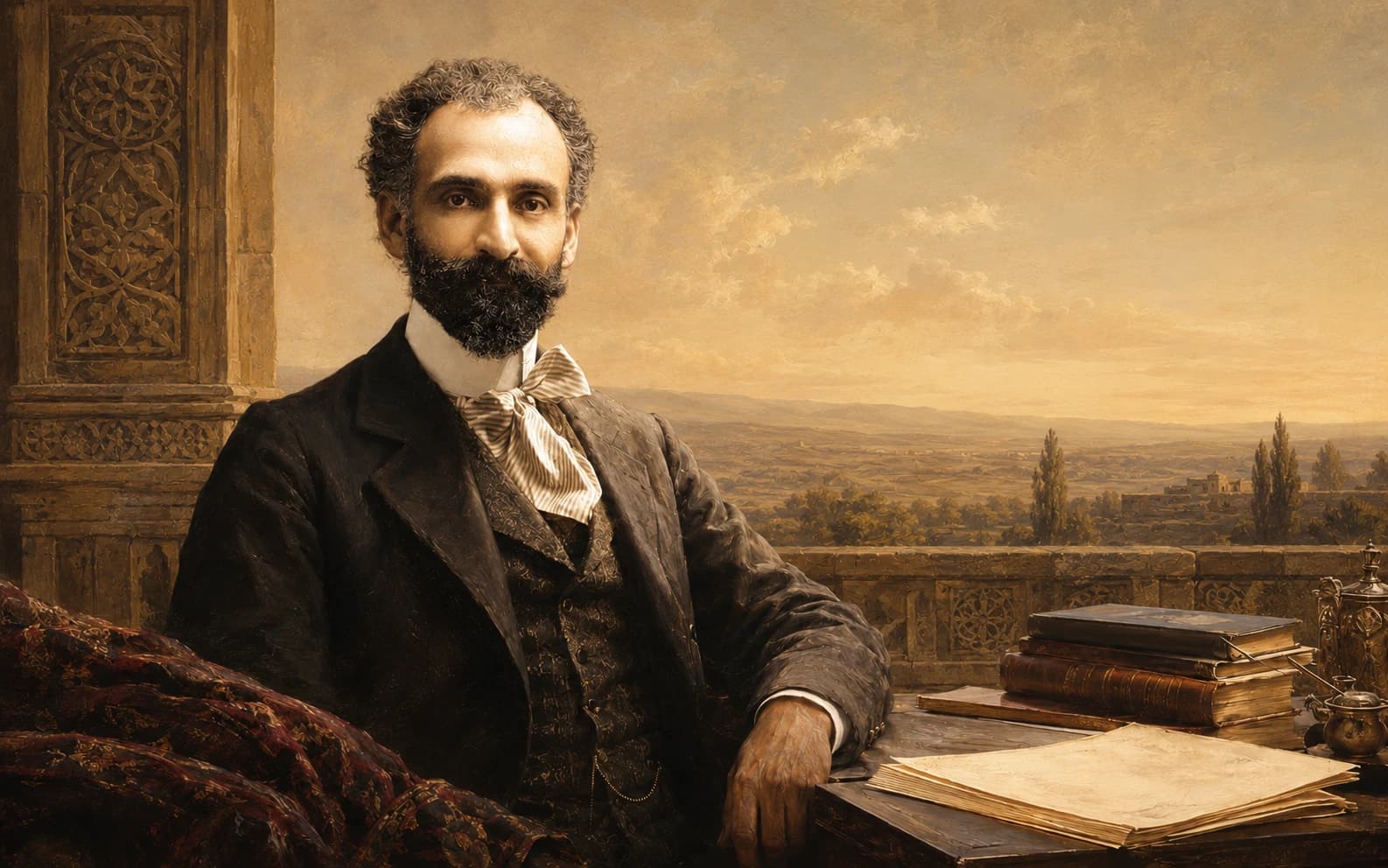
Hovhannes Tumanyan turned the everyday life of Armenian mountain villages into poetry that readers of every age could understand. He wrote narrative poems, fairy tales, quatrains and essays, and he retold the national epic David of Sassoun for modern readers. Beyond his writing, he became a trusted public figure who used his reputation to help ordinary people during years of war and displacement.
- Author
- Armat Editorial Team
- Updated
- Reading time
- 8 min read
Key facts
- Born
- 19 February 1869, Dsegh, Lori
- Died
- 23 March 1923, Moscow, aged 54
- Birthplace
- Dsegh village, Lori region
- Known for
- Narrative poems, fairy tales and his title Poet of All Armenians
- Notable works
- Anush, The Capture of Tmkaberd, Gikor, A Drop of Honey
- Literary period
- Late nineteenth-century Armenian realism
Early life in Lori
Hovhannes Tumanyan was born on 19 February 1869 in Dsegh, a village in the mountainous Lori region of northern Armenia, then part of the Russian Empire. His father, Ter Tadevos, was the village priest, and the household stood at the centre of local life. The boy grew up among shepherds, ploughmen, wedding singers and storytellers, and the speech, songs and legends he absorbed there would supply the raw material for nearly everything he later wrote.
He attended the village school at Dsegh, then from the age of ten the school at Jalaloghli, and from 1883 the Nersisyan School in Tiflis, the great Armenian cultural centre of the Caucasus. Money was short and he never completed a formal higher education, leaving school in 1887 to take clerical work. What he lacked in diplomas he made up for in wide reading, and by his late teens he was publishing verse in Armenian periodicals.
Tiflis shaped him as much as Lori did. In the city he met editors, teachers, painters and composers, and he learned to see his village childhood from a distance, as material worth preserving. That double perspective, insider warmth combined with a writer's clear eye, became one of the defining qualities of his work.
Literary career
His first collections of poems appeared in 1890 and 1892 and were welcomed for their directness. While many contemporaries wrote in an ornate, self-consciously literary style, Tumanyan wrote in a plain spoken Armenian close to the way people actually talked. Critics quickly recognised that this simplicity was a deliberate artistic choice rather than a limitation, and younger writers began to imitate it.
In Tiflis he became the centre of a literary circle known as Vernatun, meaning the upper room, which met in the attic of his apartment from about 1899. Writers such as Avetik Isahakyan, Levon Shant, Derenik Demirchyan and Nikol Aghbalyan gathered there to read new work aloud and argue about literature. The gatherings gave Armenian letters a meeting point at a time when there was no single national capital.
Tumanyan also worked as an editor, translator and public lecturer. He translated Pushkin, Lermontov, Byron and Goethe into Armenian, and he produced a literary retelling of the David branch of the oral epic David of Sassoun, which helped that ancient story reach schoolchildren and general readers rather than only folklore specialists.
Major works
His best known narrative poem is Anush, written in 1890, first printed in 1892 and substantially reworked in 1901 and 1902. It tells of a village girl and her beloved Saro, whose love is destroyed by a rigid code of honour and by a brother's revenge. The poem combines lyric beauty with a clear social criticism of customs that crush individual lives, and in 1912 the composer Armen Tigranian turned it into an opera, the first to build its melodies directly on Armenian folk song.
The Capture of Tmkaberd, published in 1902, is a historical ballad about betrayal and conscience set around a besieged fortress. Gikor, written in 1895, is a short prose story about a peasant boy sent to work as a servant in the city, where loneliness and neglect destroy him. It remains one of the most widely read pieces of Armenian prose in schools.
Alongside these he produced dozens of fairy tales and fables, including A Drop of Honey, The Dog and the Cat, The Death of Kikos and The Master and the Servant. Written for children but layered with adult irony, they are still among the first literary texts Armenian children encounter.
- Anush, narrative poem, written 1890, printed 1892, revised 1901 to 1902
- The Capture of Tmkaberd, historical ballad, 1902
- Gikor, short story, 1895
- A Drop of Honey and other fairy tales and fables
- A literary retelling of the epic David of Sassoun
Themes and style
Tumanyan wrote about ordinary people caught between old customs and changing times. Village honour, poverty, the pull of the land, the cost of revenge and the innocence of children appear again and again in his work. He rarely preached. Instead he let a situation unfold and trusted readers to draw the moral conclusion themselves, which is one reason his stories survive translation so well.
His language is famously clear. He used short lines, familiar words and the rhythms of folk song, and he took the structures of oral storytelling seriously as art. This made his work accessible without making it shallow. Scholars often point out that beneath the plainness lies careful construction, with repeated images and motifs that hold long poems together.
He was also a humanist with a wide view. He read Russian and European literature closely, corresponded about world affairs, and argued that Armenian writing should belong to a shared human conversation rather than remain isolated. That outlook helped his reputation extend well beyond Armenian readers.
Later years and public service
The early twentieth century brought turmoil to the Caucasus. Tumanyan intervened personally during the Armenian and Azerbaijani clashes of 1905 and 1906, travelling to villages to calm hostilities. His public prominence made him a target, and he was twice imprisoned by tsarist authorities, in 1908 and 1911, on suspicion of political activity. Both times he was released without conviction.
During and after the massacres and deportations of 1915 he devoted much of his energy to relief work. As head of the Armenian Writers Union of the Caucasus and later of a major refugee aid committee, he organised shelter, food and orphan care for tens of thousands of survivors, work that consumed years he might otherwise have spent writing.
His health declined in the early 1920s. He travelled to Moscow for treatment of cancer and died there on 23 March 1923 at the age of fifty-four. He was buried in Tiflis, in the Armenian pantheon at Khojivank, mourned as a national figure rather than merely a literary one.
Legacy
Tumanyan is universally known in Armenia as Amenayn Hayots Banastegh, the Poet of All Armenians, a title given in recognition of both his writing and his moral standing. His house in Dsegh and his Tiflis apartment are museums, and the Tumanyan Museum in Yerevan holds his manuscripts and library.
His work is a permanent part of the school curriculum. Generations have learned to read with his fairy tales, studied Anush in literature class and watched the opera or its film adaptations. Composers, illustrators and animators have returned to his stories continually, so that his characters remain visible in Armenian culture far beyond the printed page.
Important dates
1869
Born in the village of Dsegh in the Lori region.
1890
Publishes his first collection of poems in Moscow.
1892
Prints the first version of the narrative poem Anush, written in 1890.
1899
Founds the Vernatun literary circle in Tiflis.
1912
Armen Tigranian premieres the opera Anush, based on the poem.
1923
Dies in Moscow and is buried in the Armenian pantheon in Tiflis.
Why Hovhannes Tumanyan matters
Tumanyan proved that literature written in the everyday language of villagers could carry the full weight of tragedy, humour and philosophy. Before him, much Armenian writing addressed an educated urban audience. After him, the plain style became a respected literary standard, and later poets from Isahakyan to Sevak worked in the space he opened.
He also demonstrated what a writer could be in public life. During years of war, famine and refugee crisis he used his fame to organise practical help rather than to build a personal legend. That combination of artistic quality and moral seriousness is why Armenians speak of him less as a favourite author than as a national conscience.
Interesting facts
- 01He had ten children, and the crowded family apartment in Tiflis doubled as the meeting place of the Vernatun literary circle.
- 02He never finished secondary school and worked as a clerk in a church consistory while publishing his early poetry.
- 03His retelling of David of Sassoun helped turn an oral epic into a text that schoolchildren could read.
- 04The opera Anush, adapted from his poem, was the first Armenian opera to enter the permanent national repertoire.
- 05During the 1905 unrest in the Caucasus he personally travelled between villages to negotiate peace between neighbours.
Sources
- A. J. Hacikyan, G. Basmajian, E. S. Franchuk and N. Ouzounian (eds.). The Heritage of Armenian Literature, Volume III: From the Eighteenth Century to Modern Times — Wayne State University Press, 2005 ISBN 9780814332214
- Hovhannes Tumanyan Museum, Yerevan — Museum of Hovhannes Tumanyan Visit sourceHolds the manuscripts and the documented chronology of the poet's life and works.
Related articles
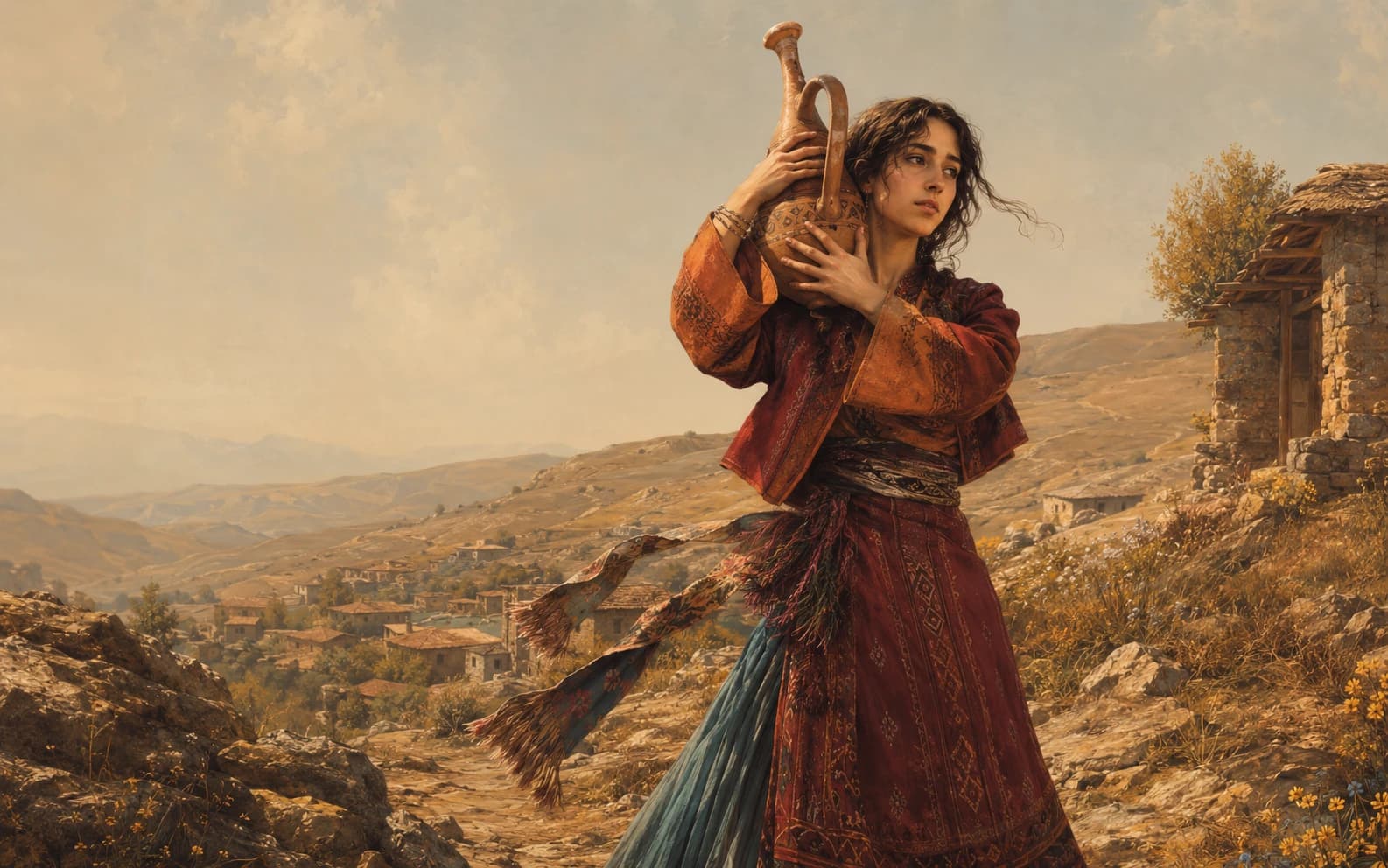
Anush
Hovhannes Tumanyan's mountain love poem follows two young villagers destroyed by pride, custom and the harsh code of honour.
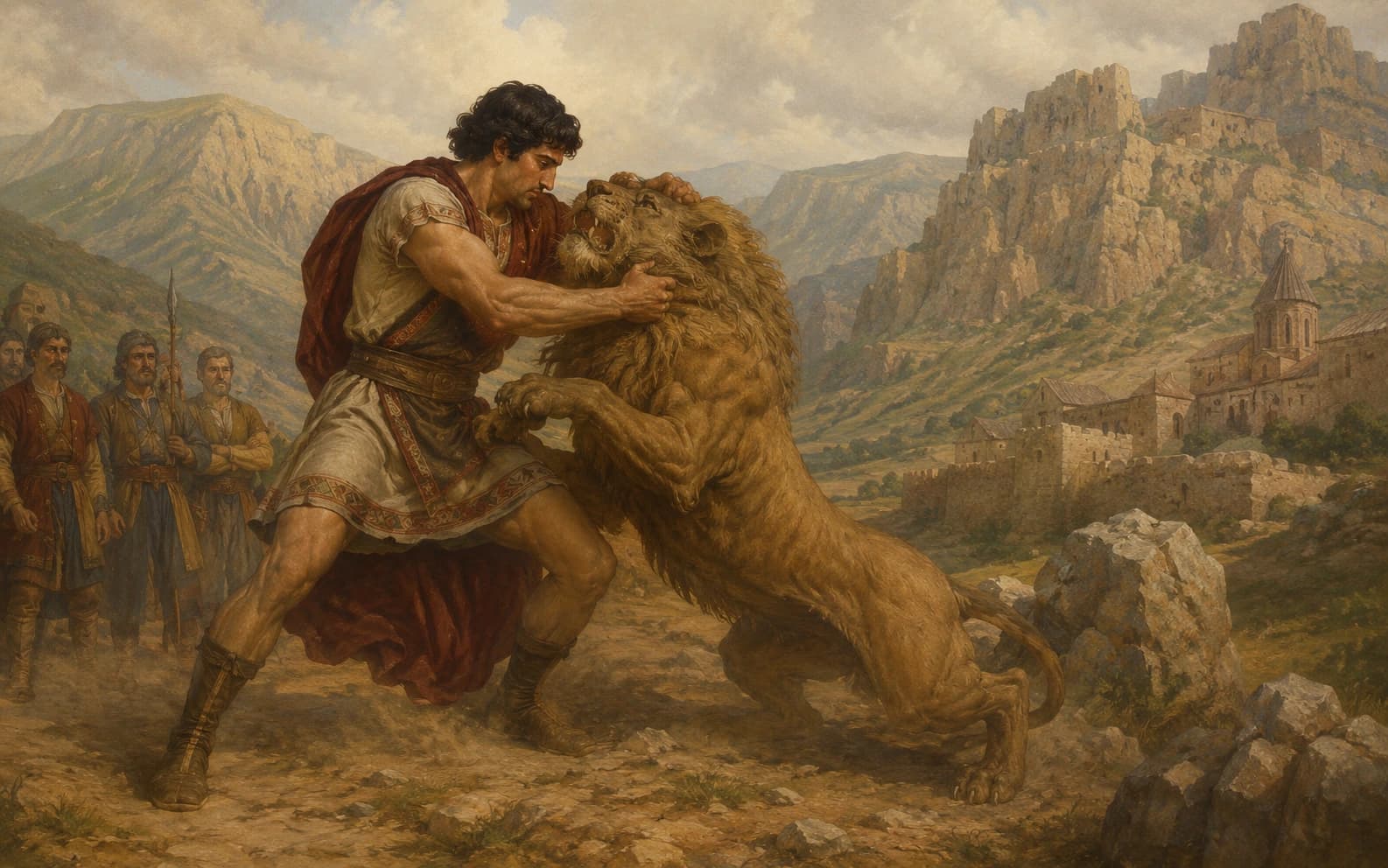
David of Sassoun
The great Armenian oral epic tells of four generations of Sassoun heroes who defend their mountain homeland against foreign tribute and invasion.
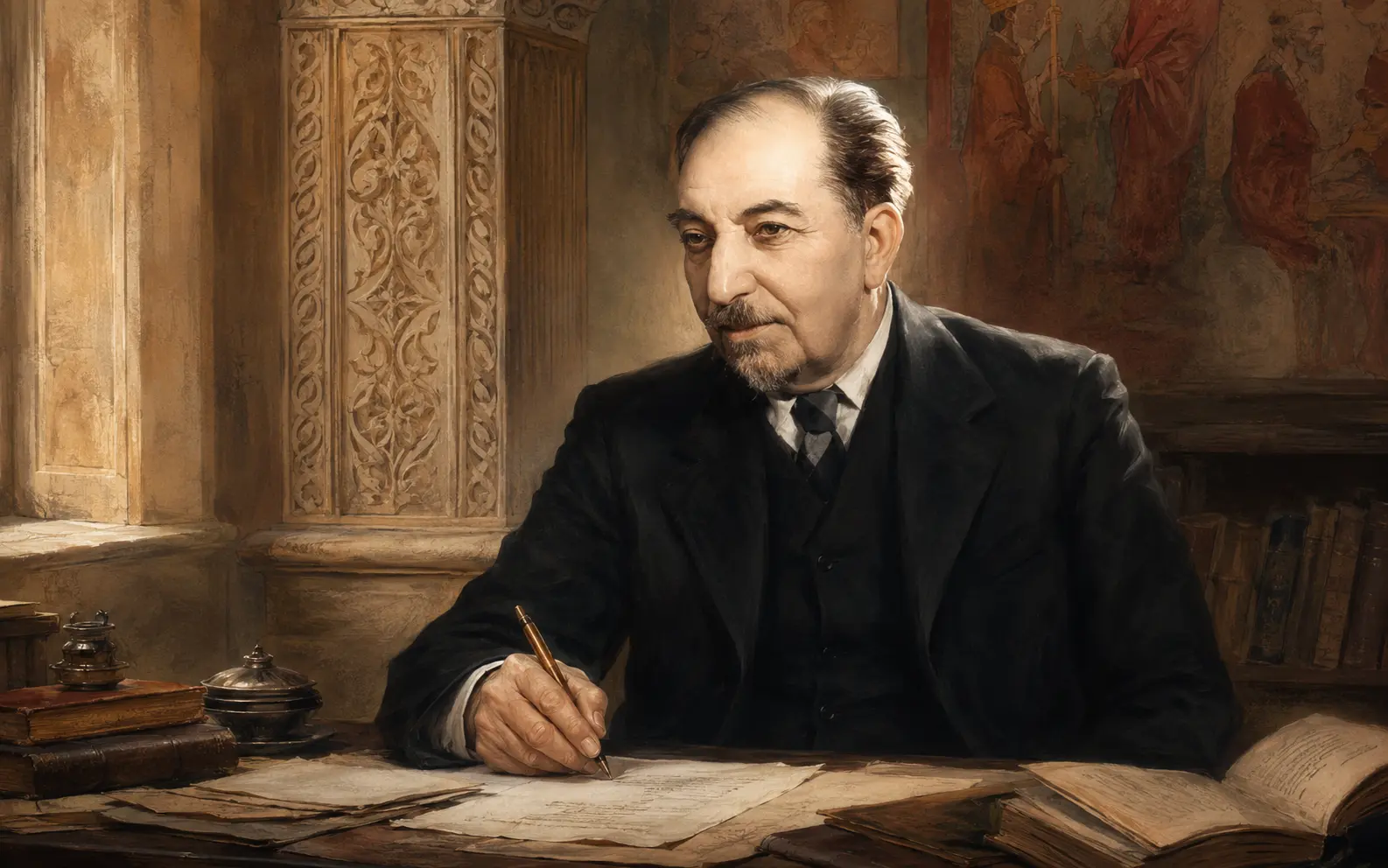
Avetik Isahakyan
A lyric poet of exile and longing whose folk-toned songs and philosophical epic made him one of the most beloved Armenian voices.