
Khachatur Abovyan
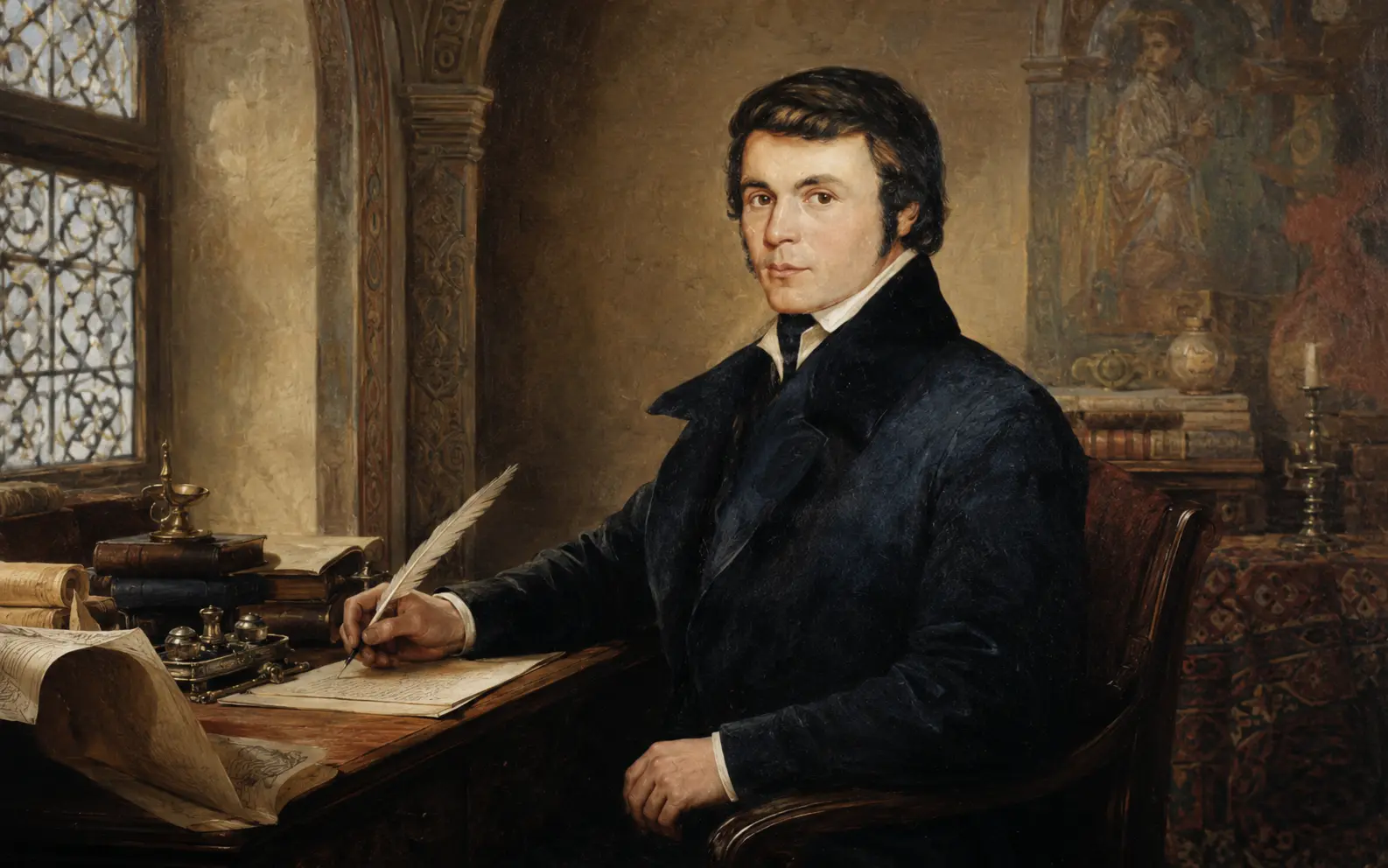
Khachatur Abovyan is usually called the father of modern Armenian literature. He made a decisive choice to write in the spoken vernacular rather than in the classical language of the church, and his novel Wounds of Armenia opened the way for every Eastern Armenian writer who followed. He was also an energetic educator and the guide on the first recorded ascent of Mount Ararat.
- Author
- Armat Editorial Team
- Updated
- Reading time
- 7 min read
Key facts
- Born
- 15 October 1809, Kanaker, near Yerevan
- Died
- Disappeared 14 April 1848, aged 38; fate unknown
- Birthplace
- Kanaker village, then under Persian rule
- Known for
- Founding modern Eastern Armenian literature and education
- Notable works
- Wounds of Armenia, Preliminary Path, fables and school textbooks
- Literary period
- Early nineteenth-century Armenian enlightenment
Early life and education
Khachatur Abovyan was born on 15 October 1809 in Kanaker, then a village outside Yerevan and now part of the city. His family belonged to the minor local nobility, and the region was still under Persian rule, a period he later described as one of insecurity and heavy taxation for Armenian villagers.
He was educated first at the monastery school of Etchmiadzin and then at the Nersisyan School in Tiflis, where he encountered a wider intellectual world. In 1829 he returned to Etchmiadzin as a teacher and translator, a position that placed him at the centre of Armenian religious and educational life.
That year the German scientist Friedrich Parrot arrived to attempt the ascent of Mount Ararat. Abovyan was assigned as his interpreter and companion, and in October 1829 the expedition reached the summit, the first documented ascent of the mountain. The expedition made Abovyan's name and led directly to the next stage of his life.
Study in Dorpat
With Parrot's support Abovyan received a scholarship to the University of Dorpat, in what is now Tartu in Estonia, where he studied from 1830 to 1836. He read philosophy, pedagogy, literature and natural science, and he became fluent in German and Russian while deepening his knowledge of European educational reform.
Dorpat changed his thinking permanently. He absorbed the romantic idea that a nation's true voice lies in its living speech and folk culture, and he concluded that Armenian writing would remain sealed off from ordinary people as long as it clung to Grabar, the classical literary language understood mainly by clergy and scholars.
He returned to the Caucasus in 1836 determined to build modern Armenian schools and a modern Armenian literature. Both aims brought him into conflict with conservative authorities who regarded the vernacular as vulgar and his educational ideas as dangerous.
Teaching career and major works
Abovyan worked as a school inspector and teacher in Tiflis and then in Yerevan, where he ran the district school from 1843. He opened a private boarding school, taught girls as well as boys, wrote textbooks and pressed the authorities for better facilities and teacher training, usually with limited success and considerable personal cost.
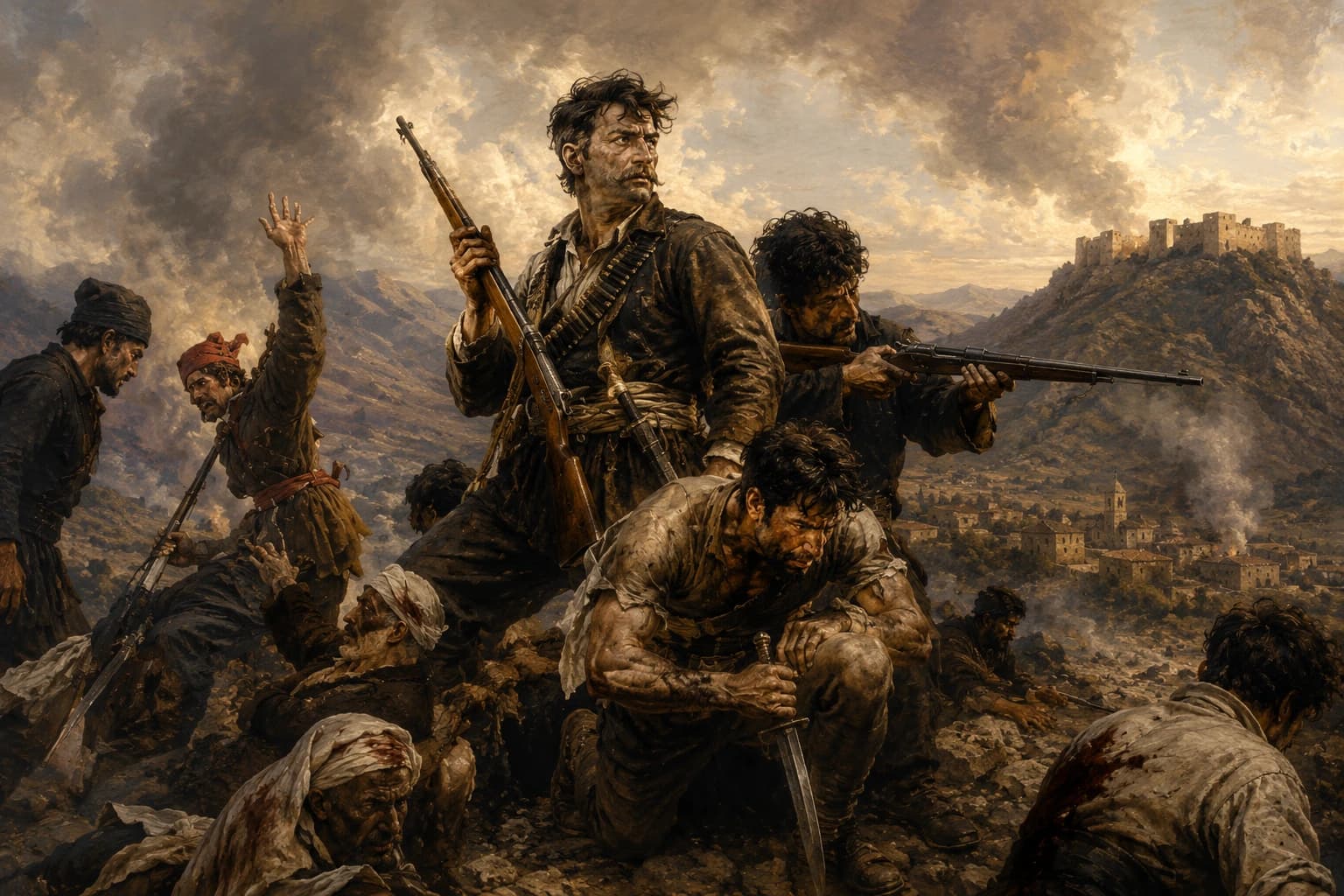
His masterpiece, Wounds of Armenia, was written in 1841. Set during the Russo-Persian war of 1826 to 1828, it follows the young hero Aghasi and the villagers of Kanaker as they are drawn into the conflict, and it combines patriotic narrative, ethnographic detail and open political argument about the condition of the Armenian people.
The novel could not be published in his lifetime. It appeared in 1858, ten years after his disappearance, and its impact was immediate: it was the first substantial literary work in Eastern Armenian vernacular prose and it settled the language question in practice by simply demonstrating what the spoken language could do.
- Wounds of Armenia, novel written 1841, published 1858
- Preliminary Path, a pedagogical primer for children
- Fables, parables and educational stories
- Textbooks and teaching materials for Armenian schools
- Ethnographic and folkloric notes on Armenian village life
Themes and style
Abovyan wrote as a reformer. His constant themes are the ignorance produced by poor schooling, the humiliation of a people without political protection, and the moral strength he found in ordinary villagers. He addressed readers directly, sometimes interrupting the story to argue with them, a technique that feels unusual now but made the book feel urgent to its first audience.
His prose is close to spoken Armenian, full of proverbs, dialect words, exclamations and the cadence of village conversation. Later writers refined the literary language considerably, but Abovyan's choice established the principle that Armenian literature would be written in a language its readers already spoke.
He was also among the first Armenians to collect folklore systematically, recording songs, sayings and customs because he believed they carried the character of the nation. This work influenced both literature and later Armenian ethnography.
Disappearance and legacy
On the morning of 14 April 1848 Abovyan left his home in Yerevan and was never seen again. He was thirty-eight. Suicide, murder by his political opponents, and arrest and exile by the Russian authorities have all been proposed, and none can be ruled out; no evidence has ever settled the question and his fate remains unknown.
Recognition came after his death. The publication of Wounds of Armenia in 1858 made him a founding figure, and Eastern Armenian literature developed along the path he had marked out. Raffi, Perch Proshian and later realists all worked in the vernacular tradition he began.
Today his birthplace in Kanaker is a museum, a town and a major Yerevan street carry his name, and Wounds of Armenia is a fixed part of the school curriculum. He is remembered as much for his work as an educator as for his fiction.
Important dates
1809
Born in the village of Kanaker near Yerevan.
1829
Accompanies Friedrich Parrot on the first recorded ascent of Mount Ararat.
1830
Begins six years of study at the University of Dorpat.
1841
Writes Wounds of Armenia, which cannot be published at the time.
1848
Leaves his house in Yerevan and disappears without trace.
1858
Wounds of Armenia is published posthumously.
Why Khachatur Abovyan matters
Abovyan resolved the most important question facing Armenian culture in his century: which language literature should use. By writing a full-length novel in the vernacular he showed that the spoken language could carry narrative, argument and emotion, and within a generation the classical language had retreated to liturgy and scholarship.
He also modelled the writer as public educator. He built schools, trained teachers, wrote primers and defended the education of girls, believing that literature without literacy achieves nothing. That linking of writing and teaching became a durable feature of Armenian intellectual life.
Interesting facts
- 01He took part in the first documented ascent of Mount Ararat, in October 1829, as interpreter to the scientist Friedrich Parrot.
- 02He buried a cross near the summit of Ararat and carried down a piece of ice, which he regarded as holy.
- 03Wounds of Armenia waited seventeen years for publication and appeared only after his disappearance.
- 04He advocated schooling for girls decades before it became common in the region.
- 05His disappearance in 1848 has never been explained, and it remains one of the open questions of Armenian literary history.
Sources
- A. J. Hacikyan, G. Basmajian, E. S. Franchuk and N. Ouzounian (eds.). The Heritage of Armenian Literature, Volume III: From the Eighteenth Century to Modern Times — Wayne State University Press, 2005 ISBN 9780814332214
- Friedrich Parrot, trans. W. D. Cooley. Journey to Ararat — Longman, Brown, Green, and Longmans, London, 1845 Visit sourceParrot's own account of the 1829 ascent, on which Abovyan was his interpreter and companion.
Related articles
Wounds of Armenia
Khachatur Abovyan's novel of the Russo-Persian war is the first major work written in the living speech of the Armenian people.
Raffi (Hakob Melik-Hakobian)
The novelist who invented the Armenian historical novel and used fiction to argue that a nation must act to save itself.
Hovhannes Tumanyan
The village-born poet whose ballads, fairy tales and quiet moral authority earned him the title Poet of All Armenians.