Lavash
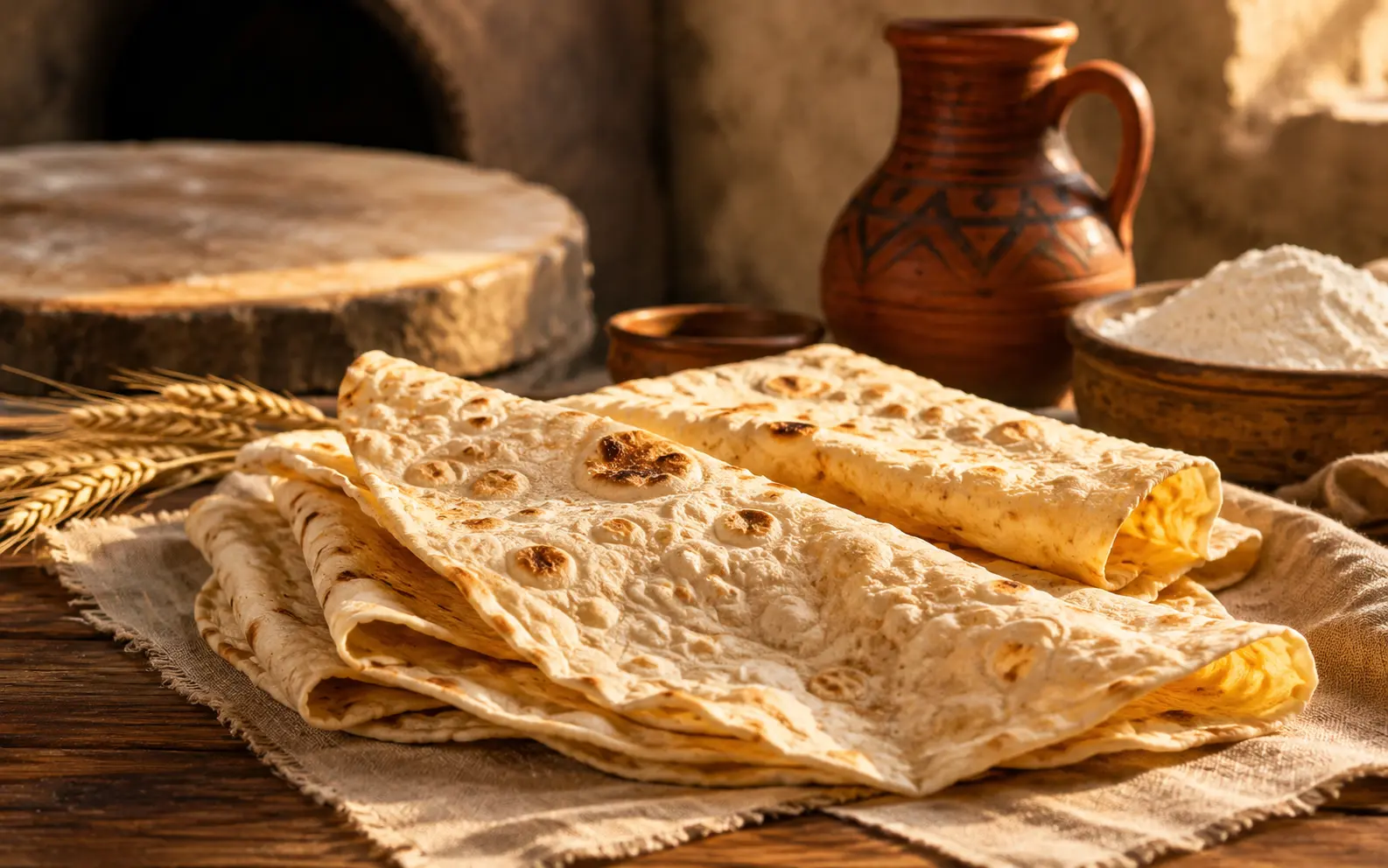
The thin flatbread baked against the wall of a clay tonir, inscribed by UNESCO in 2014 for the way it is made, shared and used in Armenian life — and inscribed again in 2016 for five other countries.
This section looks at Armenian dishes as part of history, family life, celebrations, regional traditions and diaspora culture. Many of them are shared across the region and belong to more than one cuisine; what follows describes how they are made and what they mean in an Armenian setting.
6 articles available
Featured dish

The thin flatbread baked against the wall of a clay tonir, inscribed by UNESCO in 2014 for the way it is made, shared and used in Armenian life — and inscribed again in 2016 for five other countries.
7 min read · Updated 31 July 2026
All cuisine articles
The section grows over time. Use the search field and the filters above to narrow it by kind of dish.
The thin flatbread baked against the wall of a clay tonir, inscribed by UNESCO in 2014 for the way it is made, shared and used in Armenian life — and inscribed again in 2016 for five other countries.
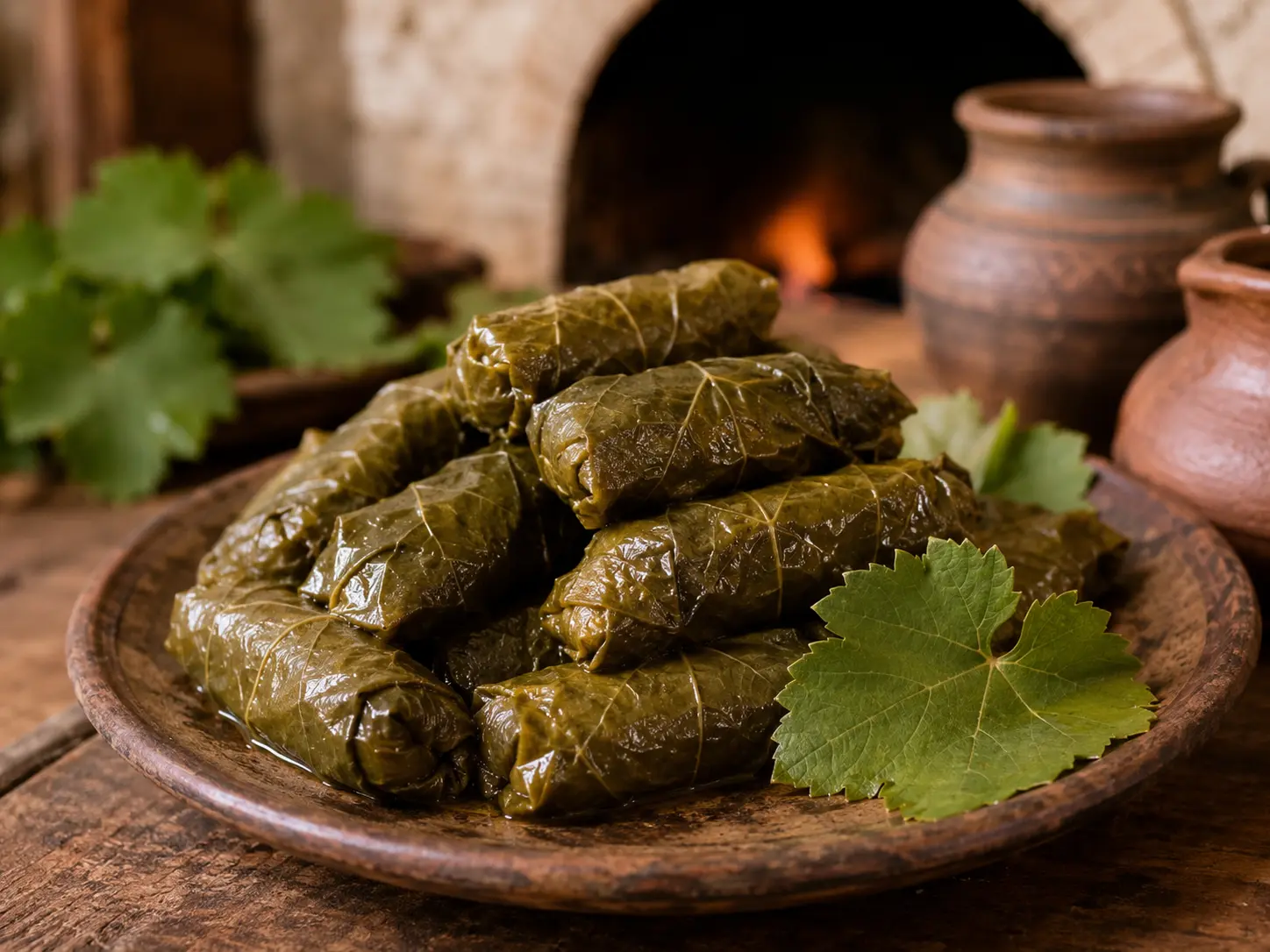
Vine leaves and hollowed vegetables filled with rice, herbs and often meat — a dish made across the whole region, and one of the clearest examples of why this section does not assign dishes to a single owner.
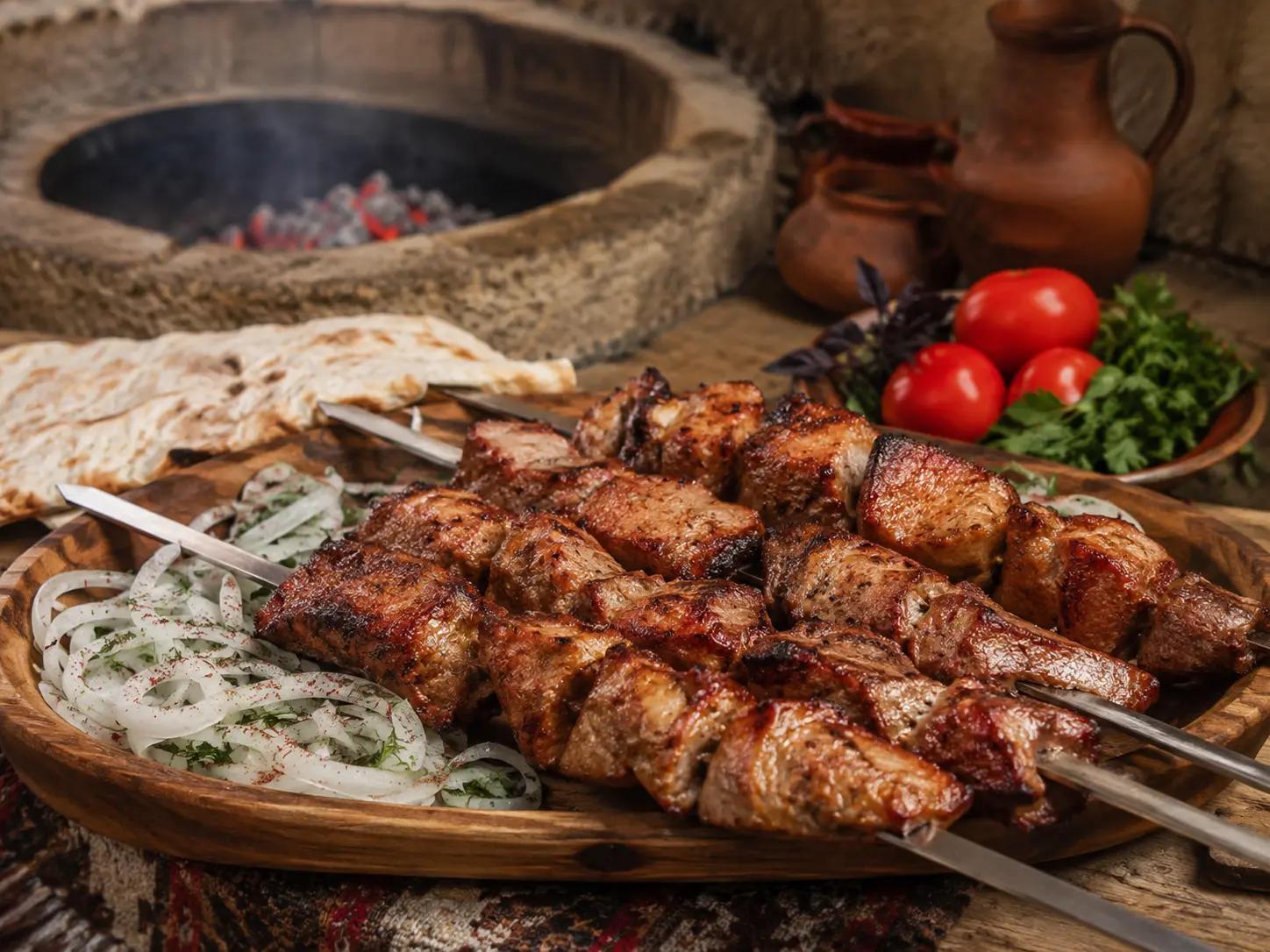
Meat grilled over open embers, and the social occasion built around it: who lights the fire, who tends it, and how it differs from the communal meal of a madagh.
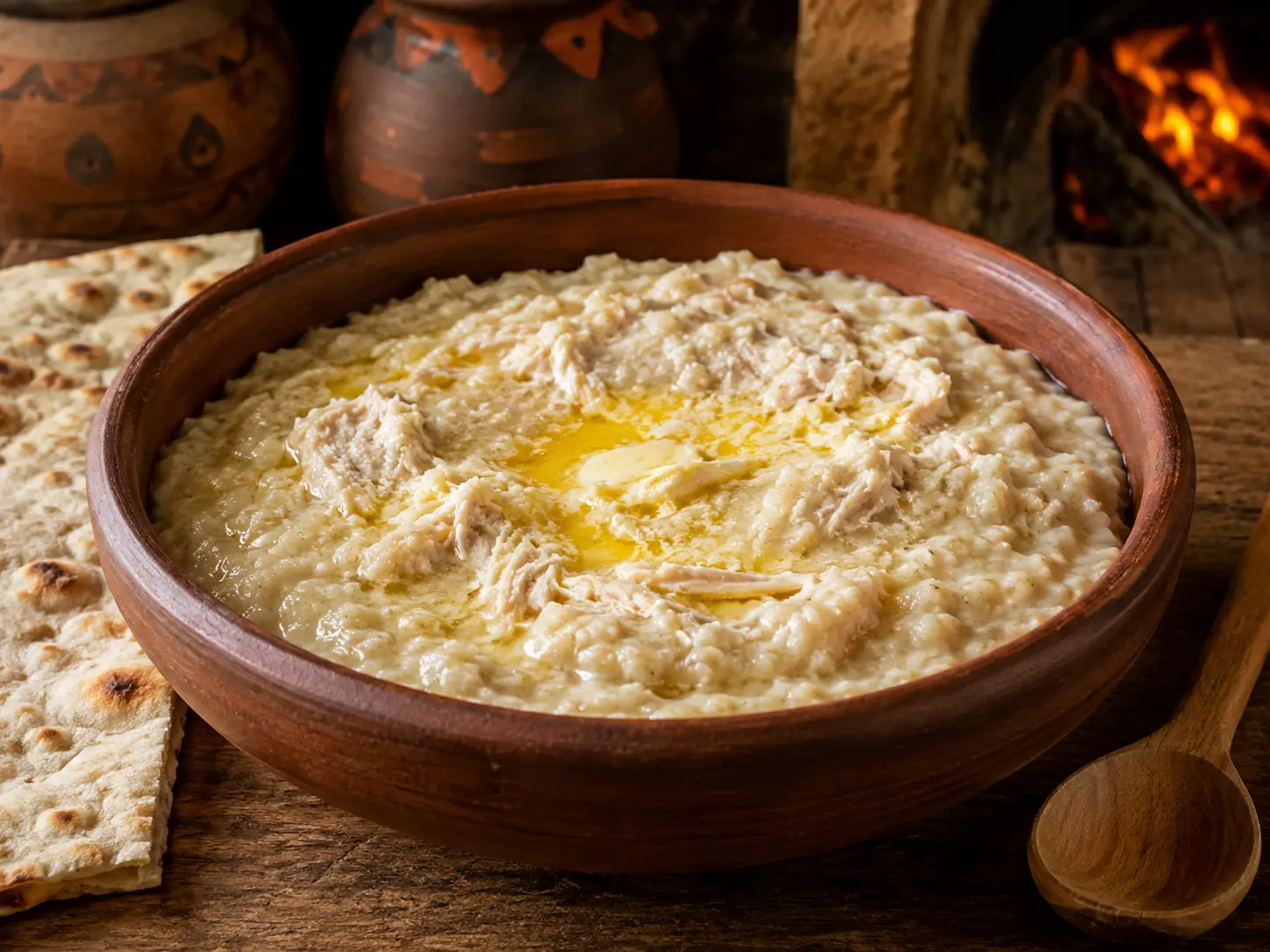
Wheat and meat stirred together for hours until they become one substance — a dish recorded in a tenth-century Baghdadi cookbook, and the food around which the Musa Dagh resistance is commemorated every September.
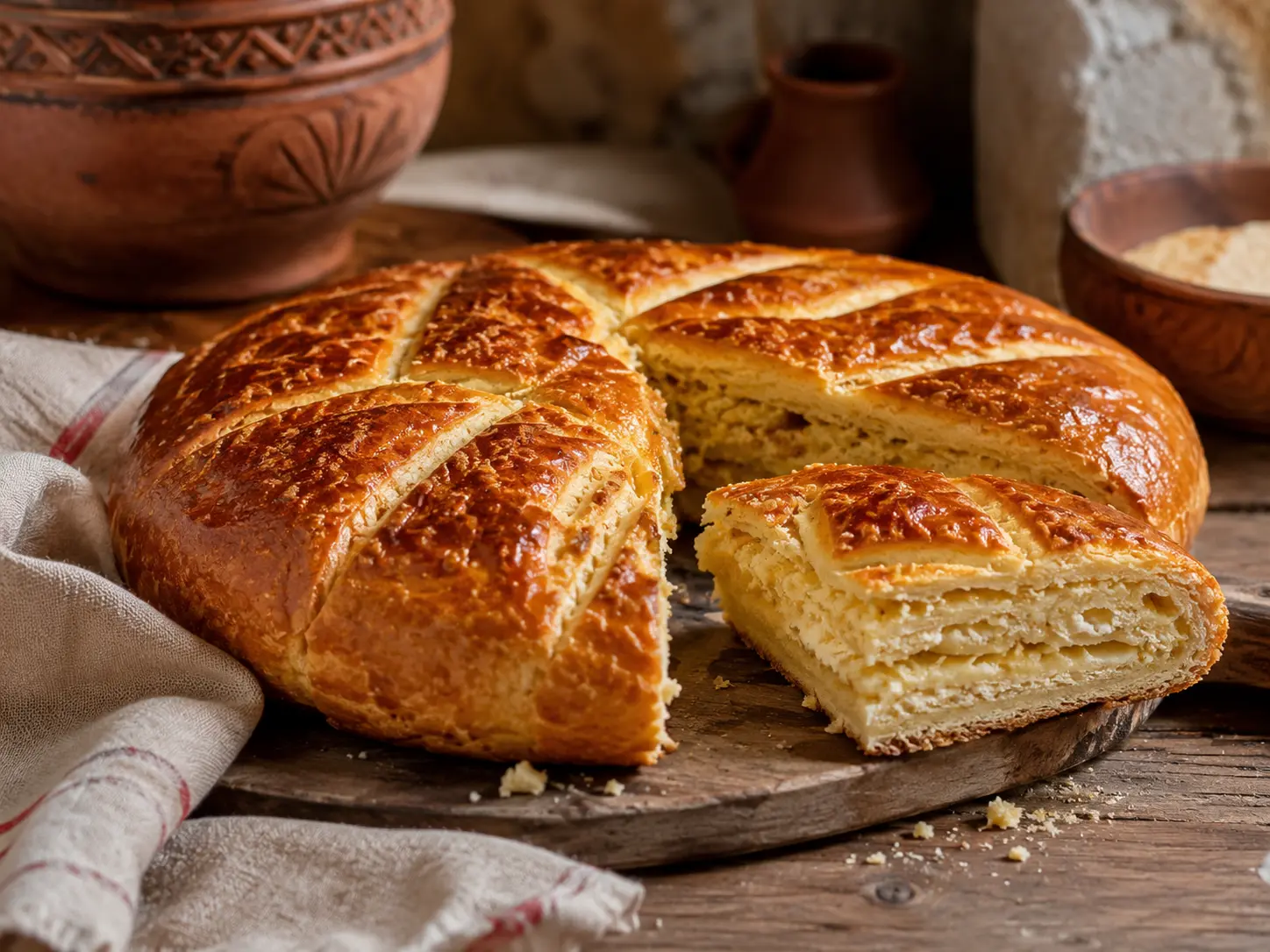
A sweet pastry built around khoriz — flour worked into butter and sugar — made in a different shape and marked with a different pattern in nearly every village that bakes it.
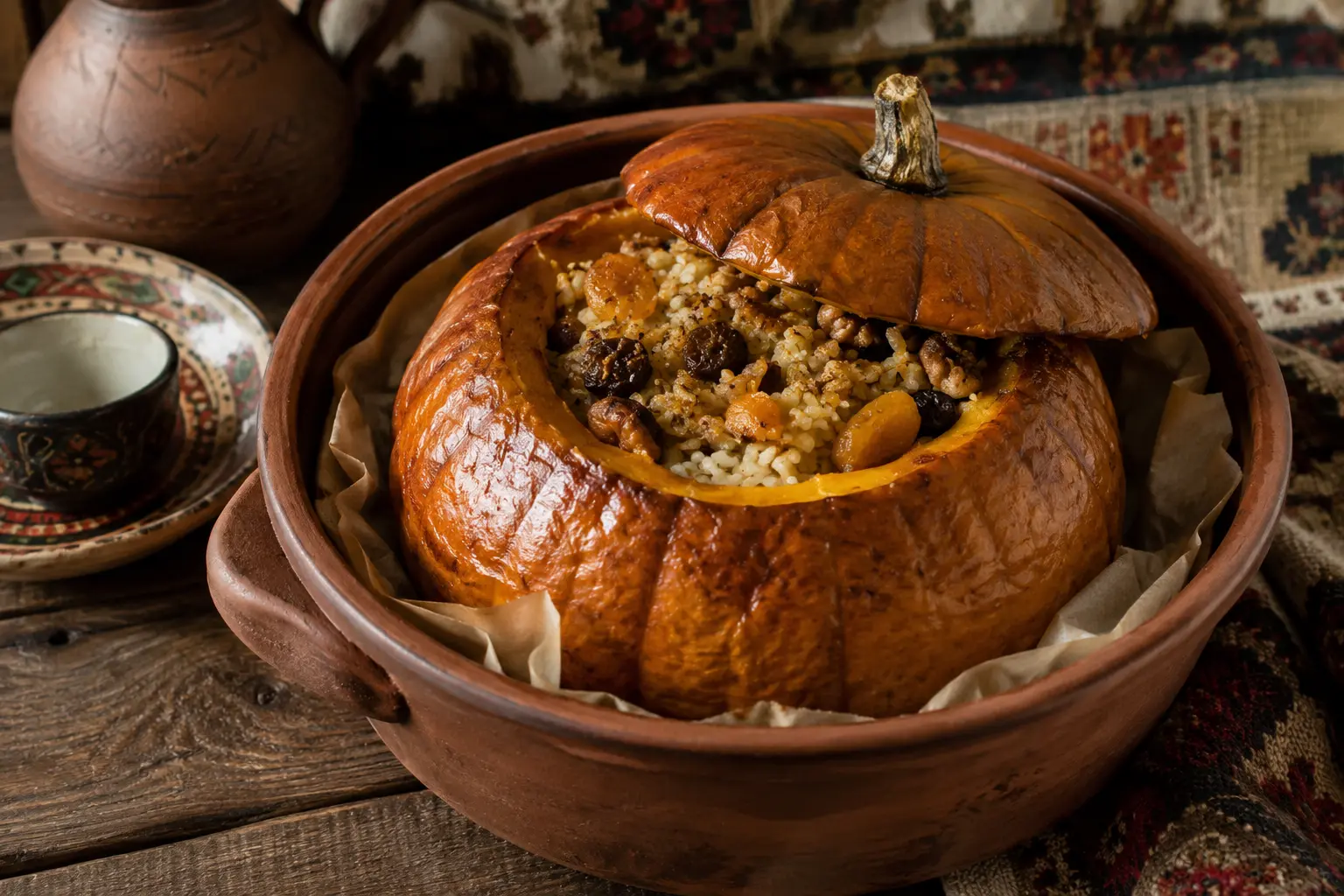
A whole pumpkin filled with rice, dried fruit and nuts and baked until it can be opened at the table — a festive dish whose ingredients place it firmly in the modern era.