
Raffi (Hakob Melik-Hakobian)
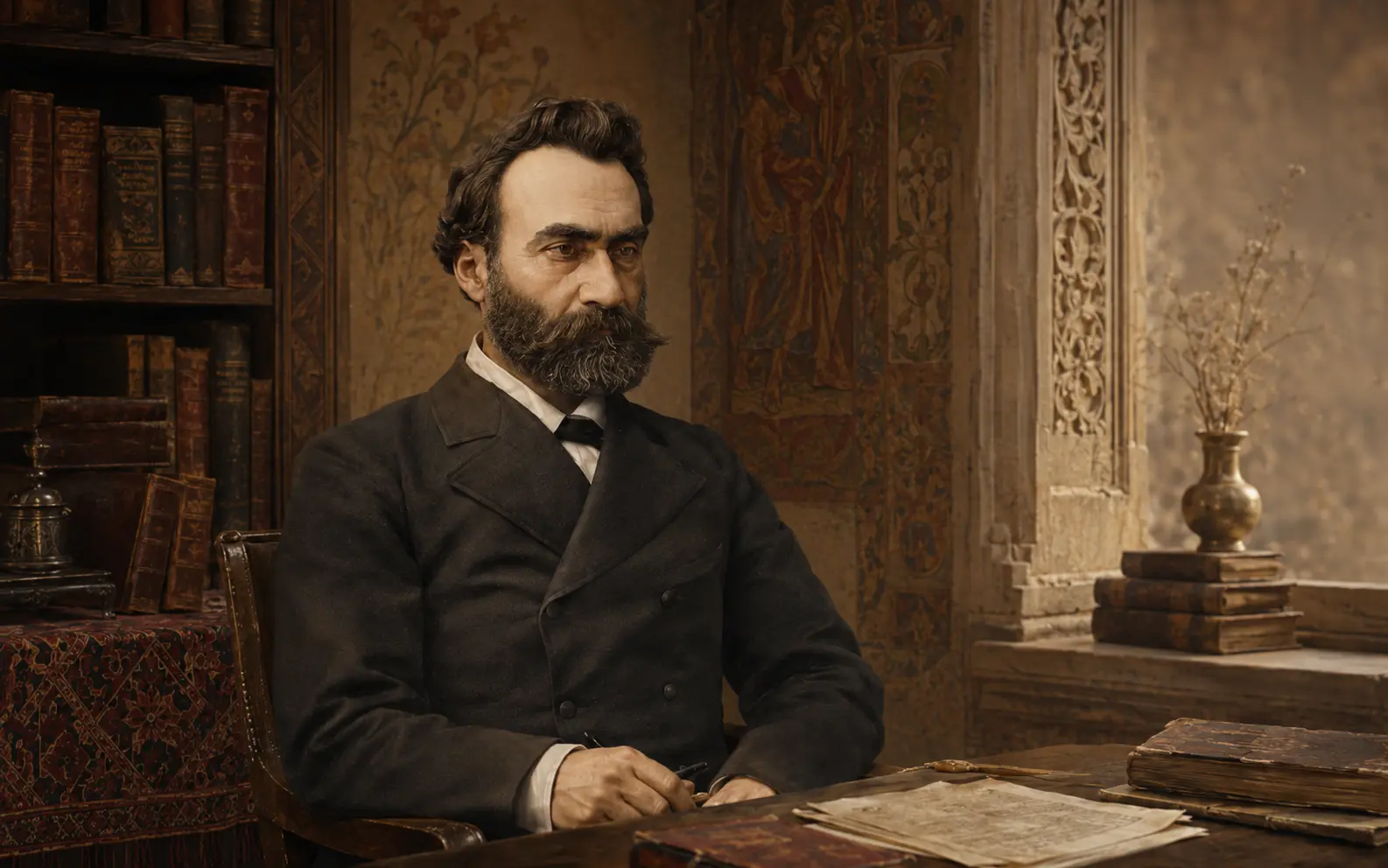
Raffi, the pen name of Hakob Melik-Hakobian, was the most widely read Armenian novelist of the nineteenth century. Writing from Persia and the Caucasus, he produced sweeping historical novels and sharp contemporary ones that asked the same urgent question: what should a scattered, unarmed people do about its own future? His books shaped Armenian political thinking for decades.
- Author
- Armat Editorial Team
- Updated
- Reading time
- 6 min read
Key facts
- Born
- 1835, Payajuk, Salmast district, Persia
- Died
- 6 May 1888, Tiflis, aged 53
- Birthplace
- Payajuk, in Persian Armenia
- Known for
- Creating the Armenian historical novel and the novel of national awakening
- Notable works
- The Fool, Sparks, Samvel, David Bek
- Literary period
- Nineteenth-century Armenian national revival
Early life in Persia
Hakob Melik-Hakobian was born in 1835 in Payajuk, a village in the Salmast district of northwestern Persia, into a prosperous merchant family of Armenian landowners. His childhood among Armenian, Persian, Kurdish and Assyrian neighbours gave him a first-hand knowledge of the region that later filled his novels with unusually precise detail.
He was sent to Tiflis for schooling and studied at a Russian secondary school there, but family financial troubles forced him to return home before completing his education. For years he managed the family business, travelling widely through Persian Armenia, Van and the surrounding provinces and recording the conditions of the Armenian villagers he met.
These journeys were decisive. Where other writers of the period wrote about Armenians from the comfort of Tiflis or Constantinople, Raffi had seen isolated highland communities living without protection or education, and the memory of those places gave his later fiction its sense of emergency.
Literary career
Raffi began publishing in 1860, first travel notes and then fiction. His breakthrough came through the Tiflis newspaper Mshak, edited by Grigor Artsruni, which serialised his novels and gave him a large and devoted readership across the Caucasus. He also worked for several years as a teacher in Tabriz and Agulis.
Serial publication suited him. He wrote quickly, in long instalments, with cliffhangers, subplots and a strong narrative pull, and readers waited for each issue. Critics sometimes complained about looseness of construction, but the popular impact was enormous and no earlier Armenian author had reached so many readers.
In 1879 he settled permanently in Tiflis and devoted himself to writing. The last decade of his life produced his major works in rapid succession, despite poor health and constant financial strain.
Major works
Jalaleddin, published in 1878, and The Fool, published in 1880, deal with the Russo-Turkish war and the suffering of Armenian villagers caught in it. The Fool follows Vardan, a young man dismissed as foolish by his neighbours because he refuses to accept passivity, and it became the model for a new kind of Armenian hero who acts rather than laments.
Sparks, issued in two volumes between 1883 and 1887, is his great novel of ideas, tracing a generation of young Armenians who move from private grievance to organised political commitment. Its influence on the founders of Armenian political parties in the 1880s and 1890s was direct and acknowledged.
His historical novels David Bek, published in 1882, and Samvel, published in 1886, reach back to the eighteenth-century struggle in Syunik and to fourth-century Armenia respectively. Samvel in particular, with its conflict between family loyalty and national duty, is considered his most accomplished work of construction and character.
- Jalaleddin, novel, 1878
- The Fool, novel, 1880
- David Bek, historical novel, 1882
- Sparks, novel in two volumes, 1883 to 1887
- Samvel, historical novel, 1886
Themes and style
Raffi's central theme is self-reliance. His novels argue that neither foreign powers nor prayer will protect Armenian communities, and that education, organisation and, where necessary, self-defence are the only realistic answers. This message was controversial in his lifetime and made him both admired and denounced.
He wrote in Eastern Armenian at a time when the modern literary language was still settling, and he helped fix its prose vocabulary. His style is descriptive and energetic, rich in landscape, customs, clothing and dialect, giving readers an almost ethnographic picture of communities that were soon to be destroyed.
Alongside the patriotism sits sharp social criticism. He attacked corrupt clergy, greedy landlords, superstition and, notably, the restricted lives of Armenian women, whose education he defended repeatedly in both fiction and journalism.
Later years and legacy
Raffi died in Tiflis on 6 May 1888, aged fifty-three, worn down by illness and overwork. His funeral drew an enormous crowd, and he was buried in the Armenian pantheon at Khojivank. He left an unfinished manuscript and a family in modest circumstances.
His novels remained bestsellers for generations and were translated into Russian, French and English. Armenian revolutionary organisations distributed them as recruiting texts, and characters such as Vardan the Fool entered the language as shorthand for principled stubbornness.
Modern scholars read him with more nuance, noting the melodrama and the political simplifications alongside the storytelling power. What is not disputed is that he created the Armenian historical novel and gave nineteenth-century readers a shared imaginative picture of their own past.
Important dates
1835
Born Hakob Melik-Hakobian in the village of Payajuk.
1860
Publishes his first piece, in the journal Hyusisapayl.
1878
Publishes Jalaleddin, his first widely discussed novel.
1880
Publishes The Fool, introducing the hero Vardan.
1886
Publishes Samvel, generally judged his finest novel.
1888
Dies in Tiflis and is buried at the Khojivank pantheon.
Why Raffi matters
Raffi gave nineteenth-century Armenians a usable past. By dramatising figures such as Samvel and David Bek he turned scattered chronicles into vivid narratives that ordinary readers could carry in their heads, and he established the historical novel as the leading Armenian literary form of the era.
He also changed what literature was expected to do. His books were read as arguments, debated in the press and used by political movements, which made writing itself feel consequential. Whether or not later readers agree with his conclusions, his insistence that a community must take responsibility for its own survival remains a defining theme of Armenian letters.
Interesting facts
- 01He took the pen name Raffi around 1872, when he began writing for the newspaper Mshak, and it quickly displaced his family name in public use.
- 02Most of his novels first reached readers as newspaper serials in the Tiflis paper Mshak.
- 03He argued publicly for the education of Armenian girls at a time when it was widely neglected.
- 04The title character of The Fool became a proverbial figure for someone whose supposed foolishness is really courage.
- 05His travels through Van, Salmast and Persian Armenia supplied the geographic detail that makes his novels valuable to historians.
Sources
- A. J. Hacikyan, G. Basmajian, E. S. Franchuk and N. Ouzounian (eds.). The Heritage of Armenian Literature, Volume III: From the Eighteenth Century to Modern Times — Wayne State University Press, 2005 ISBN 9780814332214
- Razmik Panossian. The Armenians: From Kings and Priests to Merchants and Commissars — Columbia University Press, 2006 ISBN 9780231139267Sets Raffi's novels in the nineteenth-century national movement they helped create.
Related articles
Khachatur Abovyan
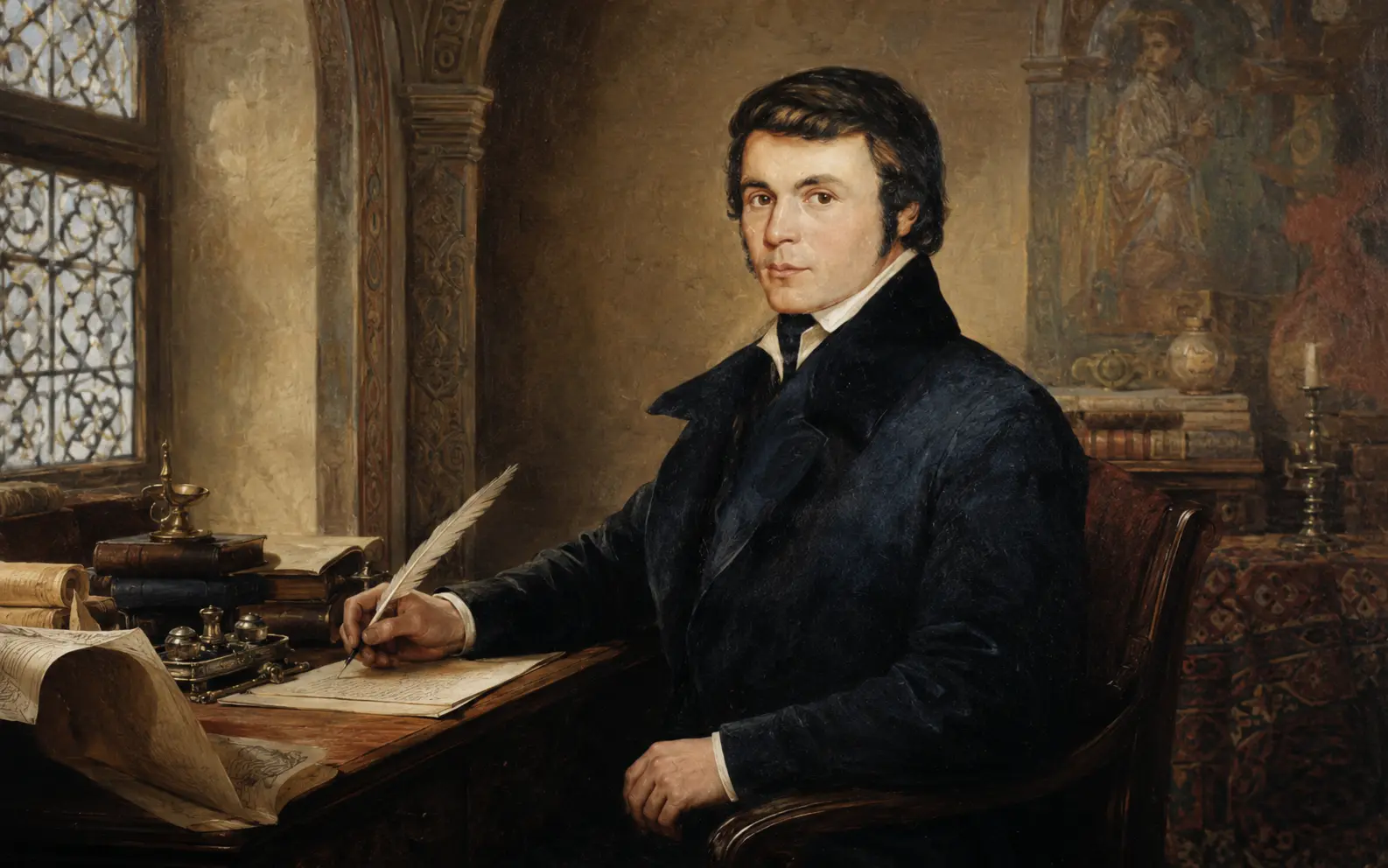
The teacher, mountaineer and novelist who founded modern Armenian literature by writing in the language people actually spoke.
The Fool
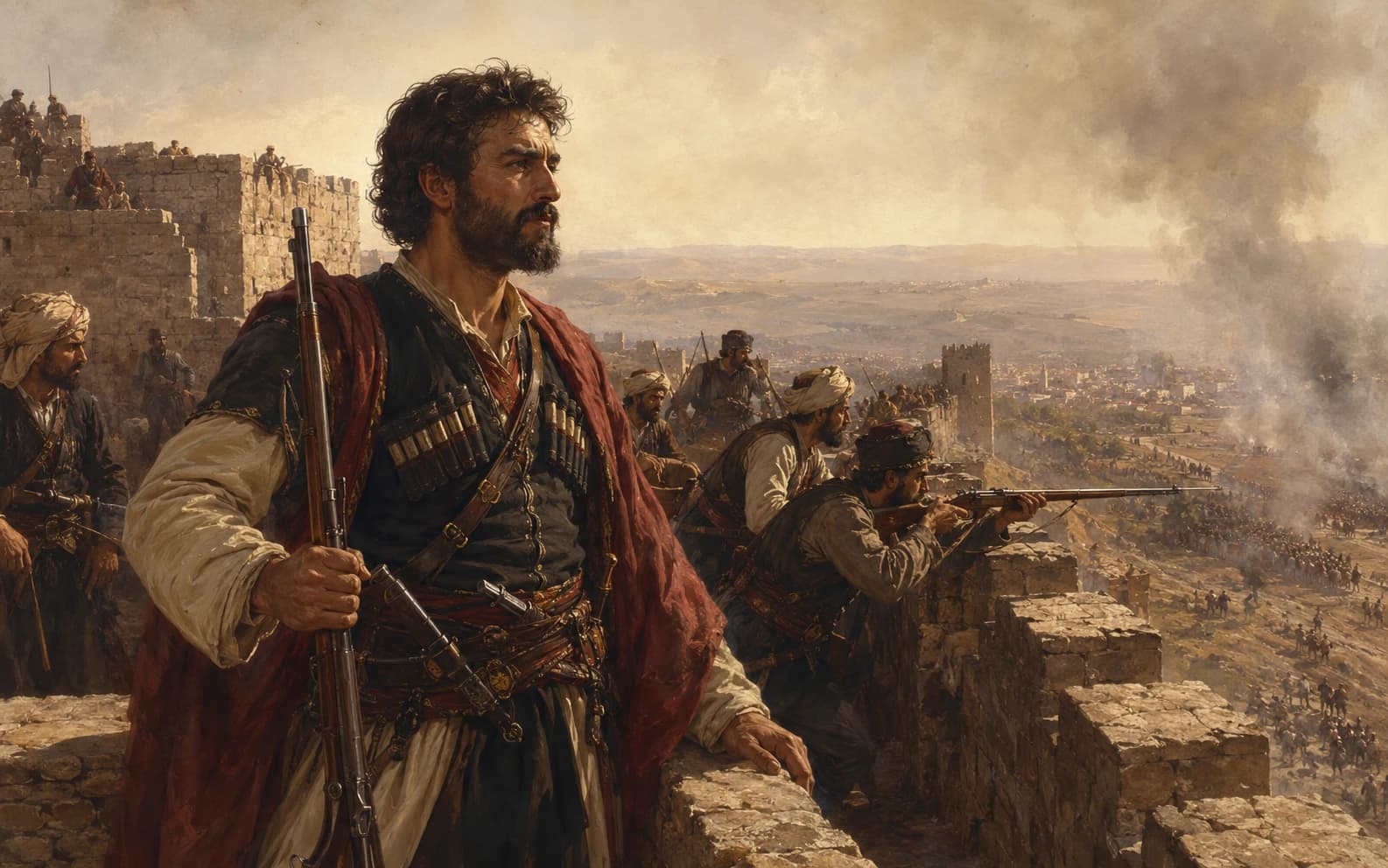
Raffi's novel Khente follows a young villager branded a madman for seeing clearly what his neighbours refuse to admit.
Wounds of Armenia
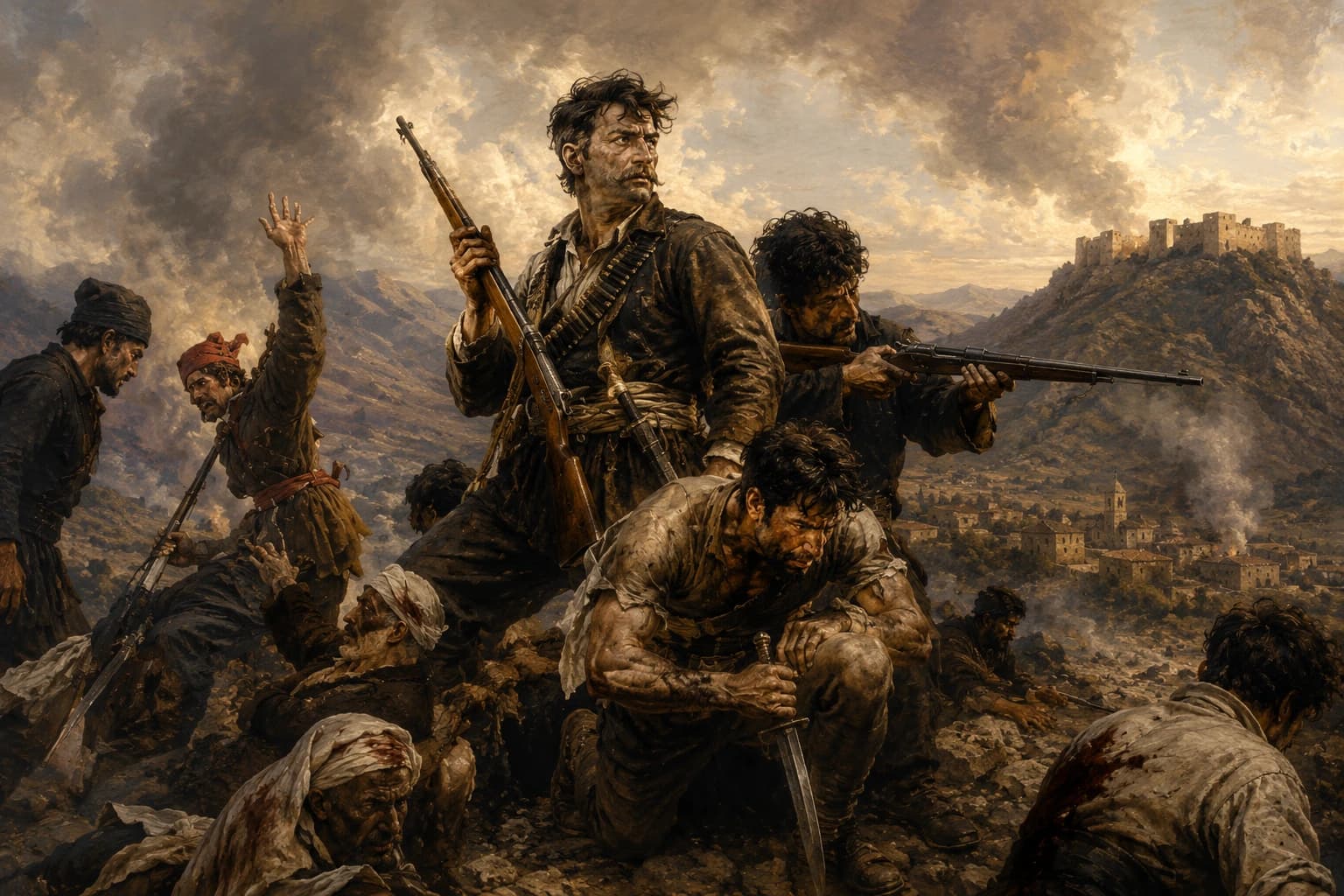
Khachatur Abovyan's novel of the Russo-Persian war is the first major work written in the living speech of the Armenian people.