
Wounds of Armenia
Wounds of Armenia, known in Armenian as Verk Hayastani, was written by Khachatur Abovyan around 1841 and published in 1858, ten years after its author disappeared. It tells the story of Aghasi, a young villager who takes up arms during the Russo-Persian war of 1826 to 1828. Because Abovyan wrote it in everyday spoken Armenian rather than the ancient literary language, it is usually called the first modern Armenian novel.
- Author
- Armat Editorial Team
- Updated
- Reading time
- 8 min read
Key facts
- Author
- Khachatur Abovyan (1809–1848)
- Written
- Composed around 1841 in Yerevan
- First published
- 1858 in Tiflis, ten years after the author's disappearance
- Genre
- Historical novel with strong romantic and didactic elements
- Setting
- Kanaker, Yerevan and eastern Armenia during the Russo-Persian war of 1826–1828
- Main characters
- Aghasi, Taguhi, Aghasi's mother, the narrator, Hossein Khan and Hasan Khan
Historical context
In the early nineteenth century the Armenian highlands were divided between the Persian and Ottoman empires, with the Russian Empire expanding southward. The Russo-Persian war of 1826 to 1828 ended with the Treaty of Turkmenchay, which transferred the Yerevan and Nakhichevan khanates to Russian control. For many Armenians of the eastern provinces this was experienced as deliverance from a period of heavy taxation, forced conversions and local violence.
Abovyan lived through these events as a boy and later studied at the University of Dorpat in the Russian Empire, where he encountered European romanticism and the idea that a nation's literature should be written in the language its people actually speak. He returned home determined to apply that idea to Armenian.
At the time, serious Armenian writing was still done in Grabar, the classical language of the fifth century, which ordinary villagers could not understand. Abovyan's decision to write a full novel in the Ararat dialect of spoken Eastern Armenian was a deliberate and controversial break with centuries of practice.
Summary of the story
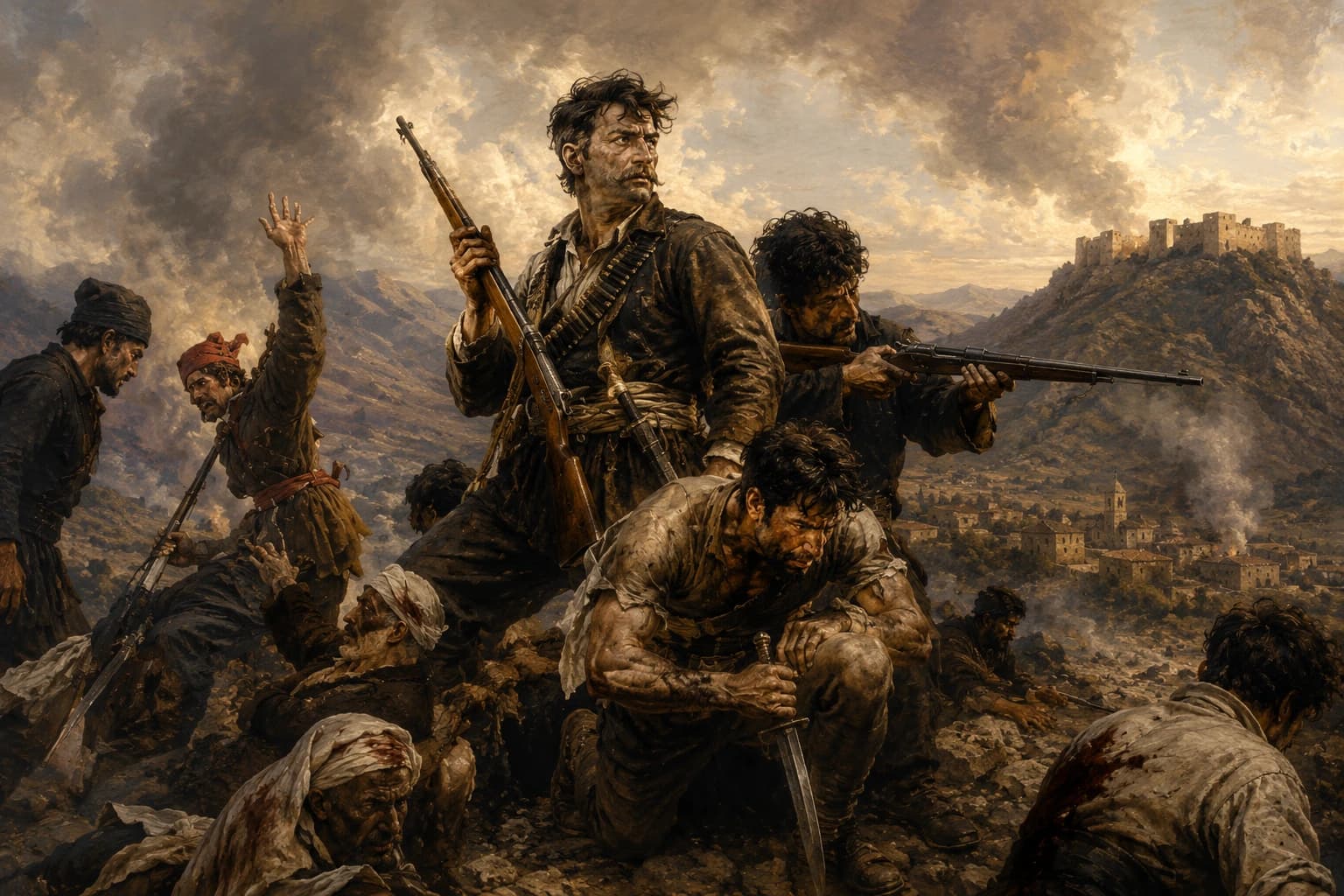
The novel opens with a long lament over the condition of the Armenian people, then moves to the village of Kanaker near Yerevan. During the Easter festivities the soldiers of Hossein Khan, the Persian governor of Yerevan, carry off a village girl named Taguhi. Aghasi, a young and hot-tempered villager, goes after them and kills one of them. Having spilled the khan's blood, he can no longer live safely in his village.
Aghasi becomes a fugitive, gathers companions and joins the Russian advance as the war begins. The narrative follows raids, sieges and the daily suffering of the villagers caught between armies, including the fall of the fortress of Yerevan. Abovyan mixes battle scenes with descriptions of village weddings, funerals, proverbs and prayers, so that the war is always seen through ordinary lives.
Aghasi fights bravely but is fatally wounded, and the novel ends with his death and with the establishment of Russian rule over eastern Armenia. The tone of the ending is complicated: there is relief that the immediate persecution is over, but also grief and a warning that liberation without education and self-knowledge will not be enough.
Main characters
Abovyan's characters are drawn less as psychological portraits than as representatives of a people at a turning point. The narrator himself is a strong presence, breaking into the story to address the reader directly with grief, anger and hope.
The villagers of Kanaker appear collectively as often as individually, and this collective portrait is one of the reasons the book reads as a national epic in prose.
- Aghasi: the young hero, brave and impulsive, who becomes a fighter after killing one of the governor's soldiers to save an abducted village girl.
- The narrator: an openly emotional voice, generally understood as Abovyan himself, who comments on events and pleads with his readers.
- Aghasi's mother: a figure of endurance and lament who embodies the suffering of Armenian women during the war.
- Hossein Khan, the Persian governor of Yerevan, and his brother Hasan Khan, whose reprisals against the villages represent the oppression the story is written against.
- Aghasi's companions: village youths who follow him into the mountains and into the fighting.
Themes and key ideas
The strongest theme is national awakening. Abovyan believed that his people had grown passive under centuries of foreign rule, and the novel is designed to shake readers out of that passivity. The wounds of the title are not only the injuries of war but the deeper damage of ignorance, disunity and lost self-respect.
Education is the second great theme, and it runs beneath every episode. Abovyan worked as a teacher and school inspector and argued constantly that schools in the vernacular were the only route to national recovery. The book's very language is an argument for this position, since a novel a villager cannot read cannot educate anyone.
A third theme is the ambiguity of liberation. Abovyan welcomes Russian rule and says so openly, yet the narrative also records looting, hardship and the loss of a familiar world. Modern readers are often struck by how much sorrow accompanies the celebration, and this tension is a productive subject for classroom discussion.
Language and style
The single most important stylistic fact about Wounds of Armenia is its language. Abovyan wrote in the living Ararat dialect, full of proverbs, oaths, blessings, curses and turns of phrase taken straight from village conversation. Readers who had been trained on classical Grabar found this shocking, and some contemporaries dismissed it as vulgar. Within a generation it had become the foundation of modern Eastern Armenian literary prose.
The structure is loose by the standards of a European novel. Abovyan moves between narrative, sermon, folklore, historical documentation and personal outburst, sometimes within a single chapter. The book is best read as a hybrid of novel, chronicle and manifesto rather than as a tightly plotted story.
The emotional register is high throughout. Exclamations, direct addresses to the reader and passages of open weeping are frequent. This romantic intensity was typical of the period and was also strategic, since Abovyan wanted his audience to feel their situation rather than merely be informed about it.
Legacy and adaptations
Abovyan vanished on the morning of 14 April 1848 and was never found, so he never saw his book in print. Wounds of Armenia was finally published in Tiflis in 1858, and it quickly became the model for the writers who followed. Raffi, Perch Proshian and Ghazaros Aghayan all built on the vernacular prose that Abovyan pioneered.
The novel has been reprinted continuously, translated into several languages, adapted for the stage and screen, and set as a core text in Armenian schools. Abovyan's name is attached to a city, a state pedagogical university and countless schools, reflecting his double status as writer and educator.
For students, the book is valuable both as literature and as a historical document. It preserves the vocabulary, beliefs and daily rituals of early nineteenth-century Armenian village life in a detail that few other sources match.
Important dates
1826–1828
The Russo-Persian war, the historical events depicted in the novel.
1841
Abovyan completes the manuscript of Wounds of Armenia.
1848
Abovyan disappears near Yerevan and is never seen again.
1858
The novel is published for the first time, in Tiflis.
1948
The centenary of Abovyan's disappearance is marked across Soviet Armenia.
Why Wounds of Armenia matters
Wounds of Armenia changed what Armenian literature could be. By writing a serious book in the language people actually spoke, Abovyan made literature available to villagers, women and children who had no training in classical Grabar. Every modern Eastern Armenian novel, story and play stands on the ground he cleared.
The book also gave Armenians a modern hero. Aghasi is not a saint or a king but an ordinary young man who acts, and that shift from sacred and dynastic subjects to the life of the people is one of the defining features of nineteenth-century national literatures across Europe. Abovyan made the Armenian version of that shift.
Interesting facts
- 01Abovyan climbed Mount Ararat in 1829 as interpreter for the scholar Friedrich Parrot, in the first recorded modern ascent.
- 02The manuscript waited seventeen years between its completion in 1841 and its publication in 1858.
- 03The book's Armenian title, Verk Hayastani, is often translated as Wounds of Armenia or Sores of Armenia.
- 04Abovyan also wrote textbooks, fables and one of the earliest Armenian collections of pedagogical writing.
- 05His disappearance in 1848 has never been explained and remains one of Armenian literature's open questions.
Sources
- A. J. Hacikyan, G. Basmajian, E. S. Franchuk and N. Ouzounian (eds.). The Heritage of Armenian Literature, Volume III: From the Eighteenth Century to Modern Times — Wayne State University Press, 2005 ISBN 9780814332214
- Razmik Panossian. The Armenians: From Kings and Priests to Merchants and Commissars — Columbia University Press, 2006 ISBN 9780231139267On Abovyan's turn to the vernacular and the making of a modern literary language.
Related articles
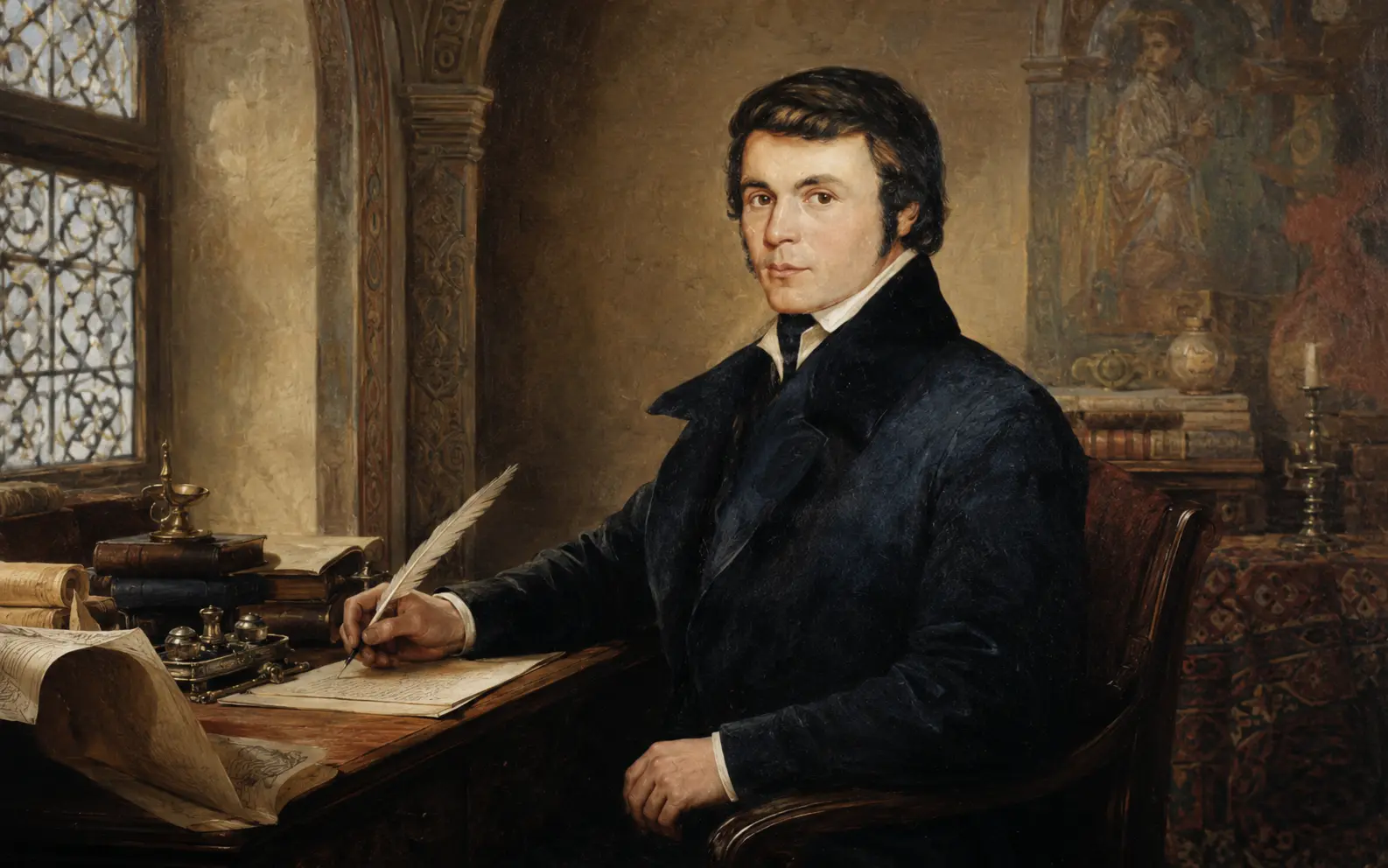
Khachatur Abovyan
The teacher, mountaineer and novelist who founded modern Armenian literature by writing in the language people actually spoke.
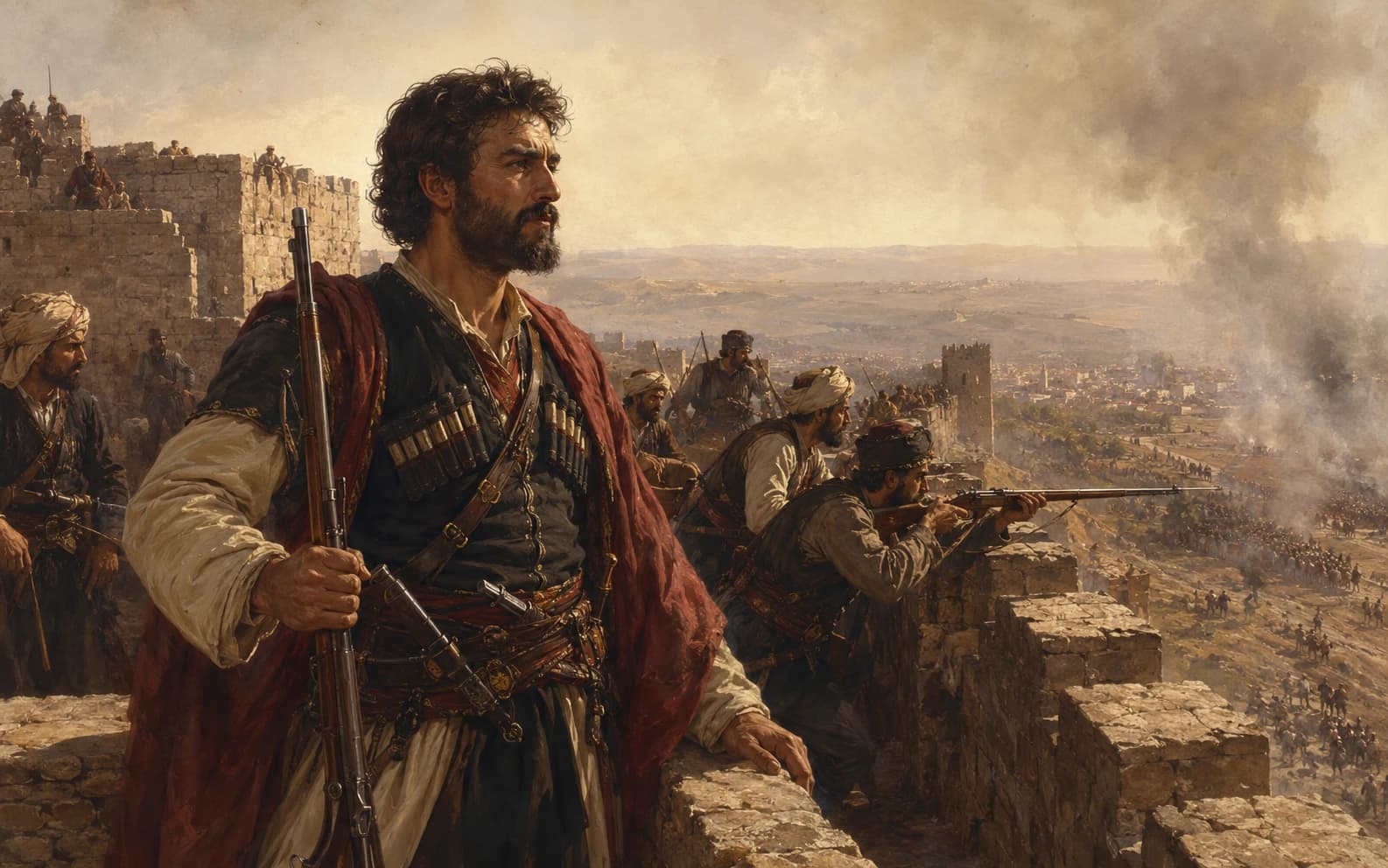
The Fool
Raffi's novel Khente follows a young villager branded a madman for seeing clearly what his neighbours refuse to admit.
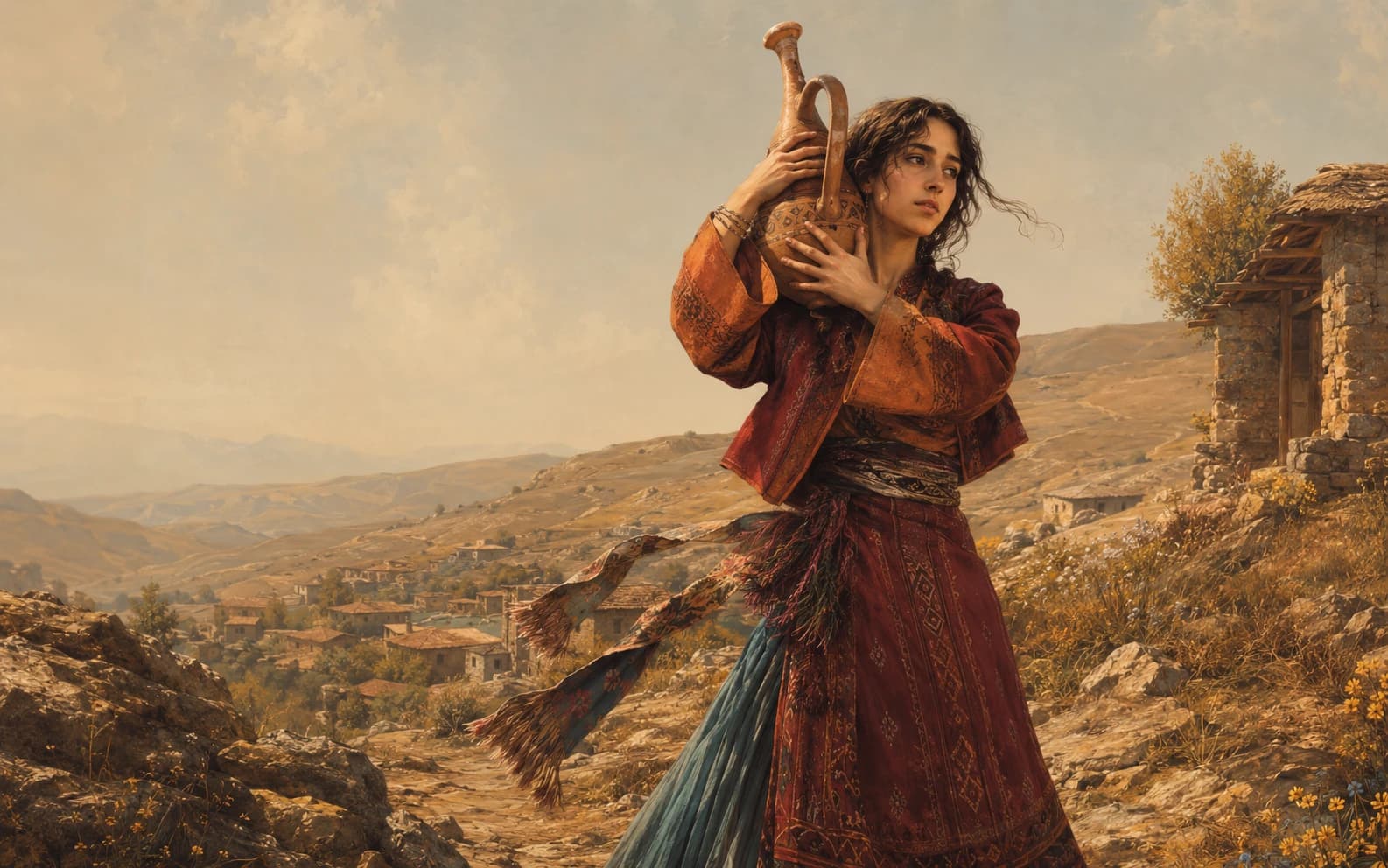
Anush
Hovhannes Tumanyan's mountain love poem follows two young villagers destroyed by pride, custom and the harsh code of honour.