
Aksel Bakunts
Aksel Bakunts wrote short stories about a part of Armenia that had almost no literature of its own. He came from Goris, in the mountains of the far south, and he knew the region both as a native and as its chief agronomist, the official in charge of its land and crops. He did not turn that knowledge into local colour. His stories are compressed, visually exact and unsentimental about village life, and the gorges and forests in them act almost as a force in the story, much more than a backdrop.
- Author
- Armat Editorial Team
- Updated
- Reading time
- 34 min read
In brief
Aksel Bakunts was an Armenian prose writer, short-story writer, screenwriter and agronomist. He was born Alexander Tevosyan at Goris in 1899, and much English material spells his name Axel Bakunts. He trained in agriculture at Kharkiv and was chief agronomist of Zangezur from 1924 to 1926. His fiction grows out of that work: it is set in the mountain villages of the south, among people whose economy he had surveyed as a professional. His stories began appearing in 1926, and his debut collection Մթնաձոր followed in 1927. His other most-cited works are Ալպիական մանուշակ, Միրհավ and Կյորես, a satirical chronicle of Goris. He was arrested in August 1936 during the Stalinist purges, executed in July 1937 and legally rehabilitated in 1955.
Key facts
- Lived
- 13 June (25 June NS) 1899 to 8 July 1937
- Born
- Goris, Zangezur uyezd, Elizavetpol Governorate, Russian Empire — now Syunik, Armenia
- Born as
- Alexander Tevosyan (Ալեքսանդր Ստեփանի Թևոսյան); Bakunts is a pen name
- Wrote in
- Eastern Armenian
- Worked as
- Prose writer, short-story writer and screenwriter; agronomist, and chief agronomist of Zangezur 1924–26
- Best known for
- Մթնաձոր, Ալպիական մանուշակ, Միրհավ and Կյորես
- Also written
- Axel Bakunts, Aksel Bakounts; Ակսել Բակունց, Ակսէլ Բակունց
- In English
- The Dark Valley, the complete 1927 collection, translated by Nairi Hakhverdi (2009)
Who Aksel Bakunts was
Aksel Bakunts was an Armenian prose writer and short-story writer. He was born at Goris in 1899 and died at Yerevan in 1937. He also wrote novellas, satirical prose, film scenarios and a great deal of practical journalism on farming. By profession he was an agronomist, and for roughly a decade he held senior posts in that field before writing became his main work.
He is the first writer in this section whose reputation rests on short fiction. Almost everyone around him here is a poet, a novelist or a dramatist. Armenian literature of the nineteenth and early twentieth centuries leaned heavily toward verse, the historical novel and the patriotic lyric. Bakunts belongs to the generation that made the short story a serious Armenian form, and his is the name that comes up most often when that form is discussed.
He is also the first writer here to take the rural south as his subject. Goris and the surrounding district of Zangezur, with its mountains, gorges, forest and scattered villages, provide the setting for most of what he wrote, and in one case the title too. Historians and ethnographers had written about this country before. Nobody who lived and worked inside it had turned it into fiction.
Aksel or Axel, and the name he was born with
This article calls him Aksel Bakunts, the form used by Armenian institutions and by the international library authorities. The Library of Congress name authority lists him as Bakuntsʻ, Aksel, 1899-1937; the Bibliothèque nationale de France gives Aksel Bakounts; and the house-museum at Goris and its parent, the Charents Museum of Literature and Art, both call him Aksel. English Wikipedia titles its article Axel Bakunts, which is why that spelling dominates English search results.
The two spellings bring up quite different sets of pages. A search for Axel returns encyclopedias, aggregators and knowledge-graph entries; Aksel returns museums, booksellers and the English translation. The split is real enough that the film database IMDb holds two separate person records for him, one under each spelling. This page carries both forms in its search terms, along with Aksel Bakounts, so that any of them will find him.
Neither is his legal name. He was born Alexander Tevosyan — Ալեքսանդր Ստեփանի Թևոսյան, Alexander son of Stepan — and both the Soviet Armenian Encyclopedia and the Library of Congress record that name alongside the pen name. The authority records also give the older spelling Աղեքսանդր.
Armenian sources say that the pen name Bakunts was formed from Begunts, the ancestral family nickname on his father's side. As for Aksel, Armenian accounts say that as a young man he played the part of Aksel in Bjørnson's play The Newly-Married Couple. His friends began calling him by it, and it replaced Alexander. Neither story could be traced past these accounts to a document, so this article goes no further than the sources do.
Goris, Zangezur and Syunik
He was born on 13 June 1899, which is 25 June by the Gregorian calendar. The two dates are the Julian and Gregorian forms of the same day, not a disagreement between sources. The Soviet Armenian Encyclopedia prints it in the Soviet convention as 13(25).6.1899, which settles the question. The birth year 1889, found in several databases, is simply an error.
The geography has to be described as it was then, not as it is today. In 1899 Goris was the centre of the Zangezur uyezd, a district of the Elizavetpol Governorate of the Russian Empire. The Russian encyclopedia of Brockhaus and Efron, written at the time, describes the uyezd sloping south toward the Arax, which formed the Persian frontier, with peaks above twelve thousand feet and an economy of grain, silk and livestock. It calls the district centre the village of Gerusy, the official Russian name for Goris. Zangezur is the historical name for the region. Syunik is both the older name and the name of the modern Armenian province, created in 1995, that contains Goris today. Projecting that province back onto 1899 would misdescribe the state he was born in.
Goris itself is two settlements. The old one, which its inhabitants called Kyores, lies on the rocky left bank of the Goris river. Parts of it are cut into cone-shaped tuff pillars: homes, byres and storerooms dug out of the rock and still in use into the nineteenth century. The new town beside it was laid out on a grid from the 1870s as the seat of the Russian district administration. That doubling matters for his work, because one of his books is explicitly about it.
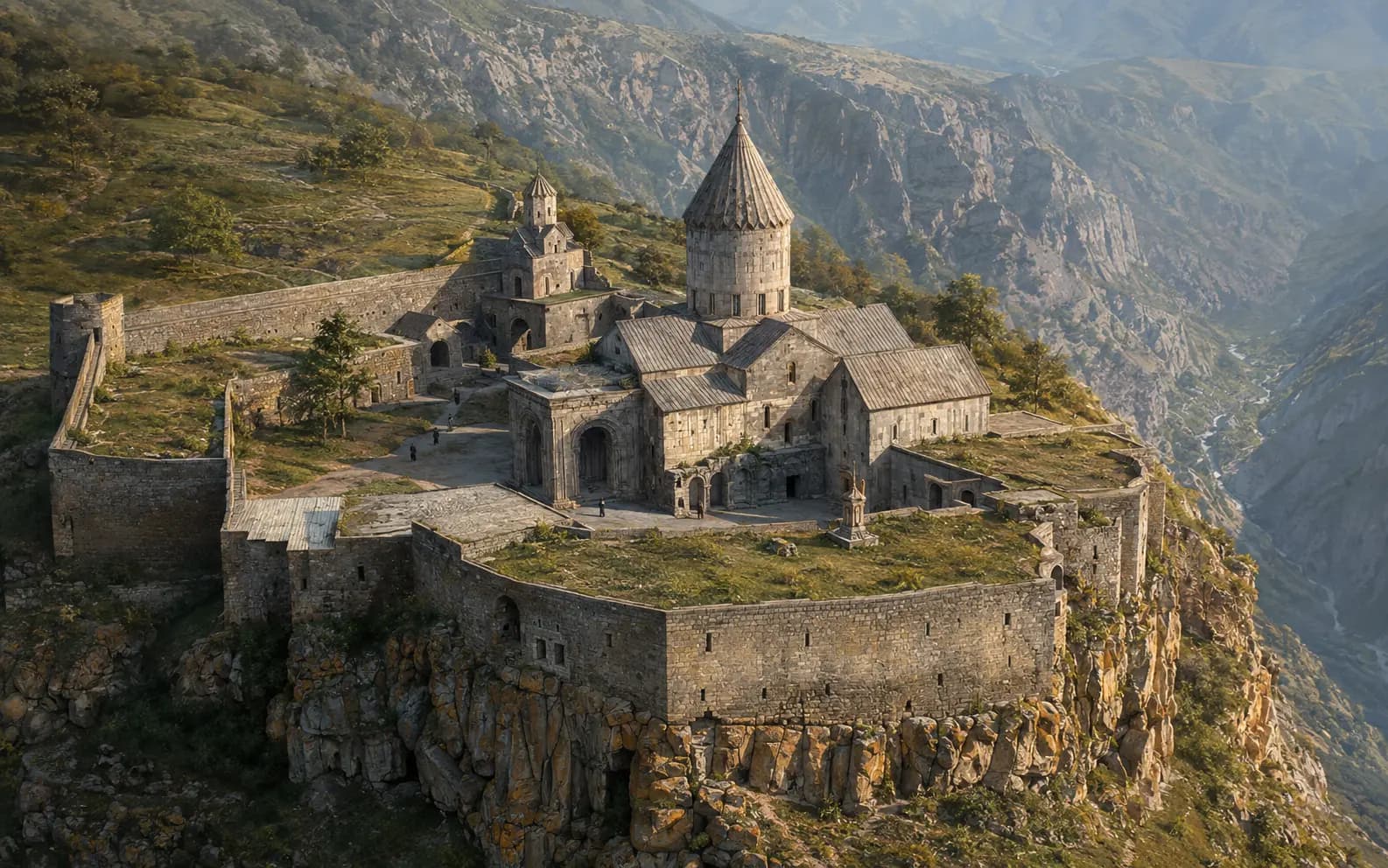
The wider landscape is high, broken and forested, drained by the Vorotan and its tributaries. Villages sit on slopes and in side valleys, and roads follow the gorges instead of cutting across country. The monastery of Tatev stands on a shelf above the same Vorotan gorge, a short distance from Goris. Here distance is measured by what the terrain allows. The isolation that results is a real condition of the life his stories describe, not a mood laid over them.
Schooling, the seminary and Kharkiv
He attended the parish school at Goris until 1910, and from 1910 to 1917 the Gevorgian Seminary at Echmiadzin. This was the leading Armenian school of the period, where, in the encyclopedia's phrase, he studied under the notable Armenologists of the day. One detail needs to be exact. The seminary had a six-year general division and a three-year upper division, and he completed the general one. He did not train as a churchman.
After the war years he entered the Tiflis Polytechnicum. Armenian sources record that he enrolled but not that he finished, and this article leaves the gap where they leave it.
From 1920 to 1923 he studied agriculture at Kharkiv and graduated. The school is the one known from 1921 as the Kharkiv Agricultural Institute, successor to the Novo-Alexandria institute that had been evacuated to Kharkiv in 1914. It took Dokuchaev's name only in 1946, so listing him under that later title is an anachronism. No source consulted names his degree, and this article does not invent one.
These dates have a consequence that is easy to miss. He was in Kharkiv, several countries away, through the sovietisation of Armenia in late 1920, the revolt of February 1921 and the mountain resistance in Zangezur that followed it. He took no part in any of it, and nothing in the sources places him there.
1915 to 1920
Three separate things happened in these years, and accounts often run them together. In 1915 and 1916 he taught in the village of Lor, in Zangezur. In 1915 he published a feuilleton in the Shushi paper Փայլակ attacking the mayor of Goris and the way the district was run. A widely repeated claim that this landed him in jail for a time rests on his own later autobiography, which gives no year, so this article does not assert it.
Then there is the fighting. He served on the Caucasus front in 1917 and 1918, and the sources disagree about where. The Soviet Armenian Encyclopedia puts him in volunteer units in 1918 at Erzurum, Kars and Sardarapat. Armenian Wikipedia has him as a rank-and-file soldier at Aşkale, Ilıca, Ardahan and Sardarapat. English accounts give a third list. Every source agrees on one point: Sardarapat, in May 1918. This article says that and no more, and does not piece together a confident route from three lists that do not match.
Afterwards, in 1918 and 1919, he worked as a correspondent and proofreader, taught at the orphans' gymnasium in Yerevan and published war sketches in the Yerevan paper Ժողովուրդ. He joined the Communist Party only in 1930. That late date matters. He was a writer who joined the party late, not a party writer, and the accusations later made against him drew on an earlier political affiliation, not on this one.
The agronomist
For about a decade after Kharkiv his profession was agriculture, and these were real jobs, not honorary titles. He worked at the seed-breeding station at Yerevan. From 1924 to 1926 he was chief agronomist of the Zangezur district and head of its land department, based at Goris. From 1926 he was deputy head of the land administration at the People's Commissariat of Land in Yerevan, a post he held into the early 1930s. He worked at the agricultural paper Մաճկալ in 1927 and 1928 and helped organise the Yerevan zootechnical and veterinary institute. In 1931 he moved to the journal Նոր ուղի, and after that writing took over.
He also wrote as an agronomist. In the 1920s he started a book series for the Land Commissariat called Գյուղացու գրադարան, The Peasant's Library, and wrote for it the short practical pieces he called ագրոզրույցներ, agro-talks. Three of the booklets are on record: one on vetch in 1926, one on growing potatoes in 1926, and one on the Khotorjur commune in 1927. The fourth volume of his academic collected works is made up of agricultural articles, reports and official papers.
The work gave him a close, professional, first-hand knowledge of the villages of southern Armenia: land tenure, crops, yields, livestock, seasonal labour and the household economy. Almost no other Armenian writer of the period knew the villages that way. Between 1923 and 1925, before the fiction began, he published sketch series in the press with titles like Մեր գյուղերում and Նամակներ գյուղից. They described the economic state of the Zangezur village and, in the encyclopedia's summary, the collision of the old and the new in people's psychology.
That does not mean the agronomy explains the fiction, and no source consulted argues that it does. The safe claim is narrower. The villages in his stories are places he had surveyed as a professional, so the accuracy of their material detail has a documented basis.
How he became a writer of fiction
The usual summary, that he started writing in 1924, needs correcting. What began in December 1924, with the first of his Գավառական նամականի in the Tiflis paper Մարտակոչ, was journalism: provincial letters, sketches and reports from the villages he was administering. Before that there is only juvenilia, including a tale he says was printed in 1911 and which he himself did not count.
The fiction starts in 1926, in a newspaper. The textual notes to his collected works give exact dates for the first appearances: Միրհավ in the Yerevan daily Խորհրդային Հայաստան on 6 June 1926, Մթնաձոր in the same paper on 21 November 1926, and Ալպիական մանուշակ across the issues of 1 and 4 January 1927. He was twenty-seven, and he had spent two of the preceding years as chief agronomist of Zangezur.
The book came in 1927: Մթնաձոր, published at Yerevan, eighteen stories, his debut collection. It made his reputation, and after it people read him as a prose writer, not as an agriculturalist who happened to write. Three more collections followed in his lifetime — Սպիտակ ձին in 1929, Սև ցելերի սերմնացանը in 1933 and Անձրևը in 1935 — along with the satirical novella Հովնաթան Մարչ in 1927.
The short story as he built it
Armenian critics do describe him in the expected terms. Suren Aghababyan, who wrote both the standard Soviet monograph on him and his encyclopedia entry, concludes that Bakunts enriched Soviet literature with classical specimens of the short story and the novella, in a style expressing national artistic thinking. That is Aghababyan's judgement, and it is quoted here as his, not stated as fact.
How the stories work is more interesting than the praise. He builds them by accumulation toward an extreme situation. Episodes follow one another, each pushing the central figure a little further, until one final collision brings the whole story to its sharpest edge — the hunter against the bear at the end of Մթնաձոր. When the crisis comes, it is written in short sentences and dense fragments, so the effect is of compression more than of a climax.
Looking back is part of how he builds a story, not a lyrical decoration. Several of the best-known stories are organised around a narrator returning to a memory — Միրհավ, Բրուտի տղան, Նամակ ռուսաց թագավորին. Armenian scholars have argued specifically against reading that memory as mere atmosphere: in Միրհավ, the old man's recollection is the structure of the story, not a mood laid over it.
He also works from portraiture. A story often gathers around one closely observed figure and widens out from him into his surroundings. According to Armenian scholars, the characters were generally taken from real people as prototypes, not invented. His endings tend to hold back resolution. Մթնաձոր closes with the villagers unable to tell whether the old hunter, hearing the name of the place, was angry or smiling — a last gesture deliberately left unread.
What the landscape is doing
The most useful thing Armenian critics say about his landscapes is that they are not descriptions. As one critic puts it, nature in Bakunts is not described but introduced into the story by the teller as a minimum unit of psychological movement. It comes in where a state of mind has to shift, and it does the job that interior monologue would do in another writer.
The gorge, the road and the ruin stand for fate more than for place. The road to the fortress in Ծիրանի փողը has been read as the road of a people, not of one man. The apricot-wood pipe and its player form a paired symbol: on one side a lost homeland of the soul, on the other a road of struggle. The country is high, closed and hard to cross, and the stories take on that shape.
In the Մթնաձոր stories the landscape reaches back past human history. One critical reading centres on the line that Mtnadzor seemed a corner forgotten from the days when there was no man yet, when the fossil dinosaur felt as free as the bear does now. The place holds a pre-human time inside the present, and the stories then bring it gradually forward into concrete, psychological terms.
None of this is scenery, and it should not be read as admiration of scenery. The mountains in these stories are where people work and wear themselves out. Again and again their beauty misleads the observer, a point Bakunts makes directly, at the expense of visitors, in his best-known story.
The village, without nostalgia
It is tempting to file Bakunts as a writer who loved Armenian villages. His own prose rejects that reading more sharply than any commentary could. In Ալպիական մանուշակ an archaeologist and a painter arrive at a village under a ruined fortress. The archaeologist finds a prince's tomb and sees nothing else, the painter paints the flowers and the walls, and neither notices the people. Armenian scholars describe the pair as looking at the world through the eyes of a beetle: they come, see the beauty of the past or the present, and leave, while the substance of life escapes them. In his work the outsider who turns everything into a picture is a target, and Bakunts never takes that position himself.
What the stories actually contain is labour, hierarchy and constraint. Lives turn with the seasons until movement becomes mechanical and everything repeats. Feeling between people is often reported as absent, not merely suppressed. Speech shows social rank: a linguistic study of Կյորես finds that idiom marks the psychology and social position of each speaker. Women appear in positions of dependence — marriages arranged for them, attachments broken off by others, a schoolmistress who provokes desire she has no power to refuse.
Armenian critics do not agree on where his sympathies lie, and this article reports the disagreement without settling it. Aghababyan singled out the village rebels — Habud, Ando, Set — as the figures who carry his ideal. A more recent reading argues the opposite: that his real centre is not the rebels whose lives the times destroy but those who endure, such as the potter, the mother and Badi.
Modernisation enters this world through administration and arrivals: officials, surveys, plans, outsiders with instruments. The author was himself the district's chief agronomist, and yet his fiction is hard on the professional gaze he might have been expected to defend.
The prose itself
Armenian critics routinely call his prose lyrical, and the word needs explaining. It refers to the density of the writing: its sound patterns, its economy, the way an image carries a state of mind. It does not mean he was a poet. He was not. His standing rests entirely on prose.
Restraint runs through everything. Scholars describe him bringing a plot to its end with a silent, unswerving pain, carrying a character's tragedy through the character and not in the author's own voice. He states very little and holds back a great deal, and the pressure in the writing comes from what goes unsaid.
His visual method is distinctive. He does not give a face all at once when a character first appears; he scatters it through the story in pieces, and the reader puts it together. Surviving drafts show him revising single verbs for sound and precision. He uses dialogue unevenly and on purpose. Sometimes he leaves it out entirely, on the reasoning that people who share a routine have no need to speak. Sometimes, as in Կյորես, it is dense with idiom.
The best single description of his texture comes from Avetik Isahakyan, not from a critic. Isahakyan wrote that these stories are so finely woven that past and present melt into one another, so that the memory becomes the present and the real present becomes a dream.
Մթնաձոր: one word, four different things
Մթնաձոր is the title most associated with him, but it does not name a single thing. It names at least four, and Armenian and English sources routinely mix them up.
The first is a short story, published in the Yerevan daily Խորհրդային Հայաստան on 21 November 1926. The second is his debut collection, published at Yerevan in 1927, which contains eighteen stories, with that one first. The third is a real place name, from մութ and ձոր, dark and gorge. It belongs to an abandoned village in Syunik and to several unrelated Armenian rivers and streams. The village was inhabited until the First World War, when its people moved to Shikahogh. The fourth is a different story in the same collection, Մթնաձորի «չարքը», which is neither the first story nor the collection.
The difference matters in practice. To say Մթնաձոր was published in 1927 is true of the book and wrong about the story. A reader looking for the gorge in a gazetteer and a reader looking for the collection in a catalogue need different entries. This article keeps them apart, and any future entry on Mtnadzor in this archive will have to say which of the four it covers.
In English the collection has a settled title; the other three do not. The Dark Valley is the title of Nairi Hakhverdi's translation of the complete 1927 collection, published in London in 2009 with an introduction by Victoria Rowe. It is the only book-length Bakunts in English, and the only reason that phrase is in use at all. For the story and the place, English writers usually leave Mtnadzor untranslated. Dark Gorge is an accurate gloss of the place name, but no one has used it as a title, and The Dark Ravine has no record of use at all.
Ալպիական մանուշակ
Ալպիական մանուշակ is a short story, not a novella. He wrote it in 1925, and it first appeared across two issues of Խորհրդային Հայաստան on 1 and 4 January 1927. That was before the collection it is usually linked with, which it joined later the same year. He reworked it heavily in 1933 for the collection Սև ցելերի սերմնացանը, which is why it is sometimes credited to that book instead.
It has almost no plot, and Armenian scholars see that as the design: the story runs on subtext. Two visitors from the city, an archaeologist and a painter, come to a village beneath the ruins of a medieval fortress. The archaeologist opens a prince's tomb. The painter paints the walls and the alpine violets growing on them. The human situation right beside them — poverty, and a sudden act of violence against a woman — passes them both by. The story ends without either of them understanding what they have been standing in.
The flower is a real symbol, and the symbolism is Bakunts's own, not something later readers added. The violet is the thing both visitors misread. His recurring figure of the pollen-covered beetle, to which the violet seems a swing and the world an orchard, is written into the text. Archival evidence identifies the archaeologist with a real friend of his, the archaeologist Morus Hasratyan, with whom he visited the fortress.
Two layers of reading came later and should be labelled that way. The story carries a dedication to the memory of Arpenik Charents, the first wife of Yeghishe Charents. She died on 2 January 1927, between the two instalments. The dedication was added in the 1933 reworking and was not there at first publication. Reading the story as a coded self-portrait or as a premonition of the purges is entirely posthumous. In English it appears as The Alpine Violet.
Կյորես, and the town under two names
Կյորես takes its title from the name the people of Goris used for their own town, and its subject is the difference between the two names. Old Kyores, the rock-cut quarter on the left bank, is set against the new grid-planned Goris of the Russian administration — in habits, in ways of thinking, in what people expect from life and in how they speak. Its epigraph rewrites Cicero: O Zangezur, O Kyores.
He wrote it at Goris in the summer of 1935, and it was first published in 1936, in the booklet Եղբայրության ընկուզենիները. The encyclopedia's date of 1935 is the year of writing; sources that give it as the publication date have merged the two. Its original title was Գորիս և Կյորես, later shortened.
Armenian scholars have not settled what kind of book it is. The Soviet Armenian Encyclopedia calls it a satirical վիպակ, a novella; Armenian Wikipedia files it as a վեպ, a novel. In substance it is closest to a satirical chronicle of a town: a sequence of quarters, market scenes and portraits, without a plot in the usual sense. It was put together from interviews with elderly residents, local anecdotes and nicknames, and literary scholars have shown that nearly all its characters and settings were real. This article calls it a satirical novella and chronicle, and notes the disagreement openly instead of quietly picking a side.
There is no English translation and no established English title; Kyores is how the town's own municipality spells it. Because the book and the place share a name, this article draws no link to any settlement entry. Sharing a name does not, by itself, make them related.
Other stories, translations and scripts
Միրհավ, published on 6 June 1926 and sixth in the 1927 collection, is among his most anthologised works: an old man's memory of a love broken off by other people's decisions. The title is a bird — a pheasant, or in his own phrase the golden-feathered bird of dark forests. The word appears in neither the standard Armenian dictionaries nor the dialect dictionaries, and is known more or less only from this story; the linguist Hrach Martirosyan derives it from մայրի, forest, and հաւ, fowl. English has no settled title for it, and the 2009 translation calls it The Pheasant.
Two more short stories come up regularly: Լառ-Մարգար, sixteenth in the 1927 collection, and Սպիտակ ձին, which is both a story and the title of a separately published book. The satirical novella Հովնաթան Մարչ of 1927 turns on the illusions of national romanticism. He translated Gogol's Taras Bulba in 1934, and in 1935 he translated forty of Vardan Aygektsi's medieval fables from classical Armenian.
He also wrote for the cinema and headed a scenario department. Three of his scenarios are documented — Սև թևի տակ; a tragedy set on Aragats, known by the working title Ալագյազ; and Զանգեզուր, which he was working on in Moscow in the months before his arrest. A children's film scenario, Կարինե, was lost after August 1936.
Two large works were left unfinished, for different reasons. The novel Խաչատուր Աբովյան survives only as ten fragments. The epic Կարմրաքար, about the Armenian village, was already unfinished by Bakunts's own account in an autobiography of 1932. It was incomplete before his arrest, and the arrest should not be blamed for it. Beyond that, this archive found no itemised, documented list of destroyed manuscripts and does not claim one. What is certain is that much of his unpublished work did not survive him.
Bakunts and Charents
The relationship between Bakunts and Yeghishe Charents is documented in unusual detail, and it goes far beyond two writers happening to die in the same year. They met in March 1926, after Charents noticed the village sketches. Bakunts then joined the literary group Նոյեմբեր, which Charents led, and by his own later account the two of them effectively led it together.
The traces run both ways. Bakunts dedicated Ալպիական մանուշակ to the memory of Charents's first wife. Charents wrote at least three poems to him: a quatrain of 1927 after reading Մթնաձոր, warning him not to lose his bright path in that dark gorge; a verse letter from Leningrad dated 16 October 1929, which opens by telling him he has not been forgotten; and a third, written in October 1936 while Bakunts was in prison. They sat on the same committees and worked on the same publications.
They also fell out, and that belongs to the story too. From about 1933 the two drifted apart — over criticism of an unpublished satire, over the literary language, and over which position to take at the 1934 Moscow writers' congress. By 1936 and 1937 each was distancing himself from the other in writing, at a time when association was dangerous. Both were named in the same NKVD case against a supposed nationalist writers' organisation, and both were dead by the end of 1937.
Because the connection is so well documented, this article links to Charents's biography, which it does not do for several other writers in this section.
The language he wrote in
He wrote in standard Eastern Armenian. The encyclopedia judges that his language represents the highest quality of the Armenian literary language. That is the place to start, because the opposite claim — that he wrote in dialect — is common and convenient, and it is wrong.
A study comparing the idioms in Կյորես with the living speech of Goris found that his phrasing does come from the local dialect. Some of it is spoken by the characters. The rest appears in the author's own narration in literarised form: popular speech reshaped for literature, not transcribed. That tendency to literarise is the study's actual subject. He uses marked dialect where he is characterising a speaker, and not always the dialect of Syunik: in Ծիրանի փողը a migrant from Sasun speaks in a western register instead.
He also argued for this approach in public. At the first congress of the Writers' Union of Armenia in August 1934 he said that the unified literary language must be anchored in the popular language, that dialects were the natural and healthy way to enrich it, and that forming a literary style without dialect expressions was difficult to the point of impossibility. He also thought classical Armenian legitimate for statehood, philosophy and military vocabulary, but damaging for describing nature. On this he sided with Hovhannes Tumanyan, and against Charents, who had called the fusion of provincial words with the literary language historically doomed.
In short, he drew regional vocabulary, idiom and speech rhythm from the spoken language of the south and generally raised it into literary form. That is not dialect writing. The one description from his own time of his prose as a contrived vulgar provincial patois comes from a political denunciation of 1936. It is reported here as an accusation, not borrowed as a description.
The literary politics of the 1930s
The campaign against him was run through official bodies, and it used a specific vocabulary. The group Նոյեմբեր was attacked as a nationalist organisation of what was called specificist orientation. The charge was that it denied that a proletarian literature in Armenia was necessary or even possible, and that it set Armenian Soviet literature against Russian. The phrase used against his circle was Բակունցի խմբակ, Bakunts's circle; there is no evidence for any term corresponding to Bakuntsism.
The literary charges began in 1933 with the story Ծիրանի փողը, which was read as nationalist and as idealising the past. A second charge kept coming back, and it rested on a real fact of his life, not an invention. He had belonged to the Dashnaktsutyun from 1915 and been active until 1919, and he had chaired the 1923 congress at which former members formally dissolved the party's organisation in Armenia. Under interrogation he denied membership.
The most quoted attack shows exactly what was wanted from him. In August 1936, in the literary paper Գրական թերթ, the writer Nairi Zaryan complained that Bakunts does not see the collective farm, does not notice the tractor's track on the road, and does not hear the songs to Lenin and Stalin from the collective farmers in the communal fields. The complaint tells us something true about the fiction: collectivisation is largely missing from it, and that absence is what was held against him. This archive found no scholarship arguing that his stories support or oppose collectivisation in their own terms, and does not invent such a reading.
Events in 1936 moved fast. The Writers' Union of Armenia condemned him at meetings in June and July. Aghasi Khanjyan, the party leader who had been his patron, was killed in Tiflis in July. In August a press campaign named him first among what it called typical exponents of nationalism.
1936, 1937 and 1955
He was arrested at Yerevan on 9 August 1936. His investigation file, number 4131, runs to eight volumes and 384 documents. It was partly opened in the 1990s and has since been published and studied, so the dates can be given exactly.
The indictment described a counter-revolutionary, Trotskyist and nationalist organisation and alleged a plot against the leadership. The word Trotskyist belongs in that formula and carried real weight in 1936. On 7 July 1937 the visiting session of the Military Collegium of the USSR Supreme Court, sitting in closed session, sentenced him to death. He was executed at Yerevan on 8 July 1937, aged thirty-eight. This article says nothing more about the execution: the details that circulate rest on single testimonies, and the sources that report them say so.
In 1937 his family was told that he had been exiled. For years afterwards the family was given false information about his death. His wife was arrested in September 1937 and exiled for eight years.
Three separate things followed, at three different dates, and they are often merged. Legal rehabilitation came on 2 March 1955, when the sentence was quashed because the elements of a crime were absent, and the case was closed. The year 1964, sometimes given for this, is the date of a two-volume edition of his works, not of the rehabilitation. Republication also began in 1955, with a volume of his works, and reached its scholarly form in the four-volume academic edition published by the Academy of Sciences from the 1970s. Public memorials came later still: the house-museum at Goris was founded in 1968 and formally opened on 17 September 1970. The diaspora had got there before all of this: his stories were printed in Paris in 1938, the year after his death.
What the writing became
He is now a fixed part of the Armenian canon and the school syllabus. The senior secondary literature course gives eight lesson-hours to his work, with Ալպիական մանուշակ taught in the third. Scholarship on him has been steady and serious, well beyond anniversary tributes. The Academy's journals published new work on his myth-structures, his phraseology, his language politics and his unfinished novel in 2015, 2020, 2021, 2024 and 2025. The 125th anniversary of his birth, in 2024, was marked with a dedicated section in the Academy's social-sciences review, a national reading marathon and a postage stamp.
His fiction has moved into other forms. Միրհավ was filmed in 1975 as Այս կանաչ, կարմիր աշխարհը, with music by Tigran Mansuryan. The house-museum at Goris, a branch of the Charents Museum of Literature and Art, holds around five hundred main exhibits — manuscripts, photographs, personal belongings and his own library — in the house he grew up in, and holds Bakunts Days every year.
In English he is still barely translated and barely written about, which is unusual for a writer of his standing. There is one book: The Dark Valley, the complete 1927 collection in Nairi Hakhverdi's translation, published in 2009. There is no English biography and no English monograph.
What lasts is the fiction. He took a mountainous, poor district that hardly anyone had written about and made it the subject of a body of short stories. They are exact about work and hierarchy, unsentimental about their people and hostile to the visitor who mistakes hardship for scenery. The prose is so compressed that a paragraph of landscape can do the work of a chapter of explanation. It is a small body of work, most of it written in about nine years, and it is why he is still read.
Important dates
1899
Born on 13 June (25 June New Style) at Goris, in the Zangezur uyezd of the Russian Empire.
1910
Enters the Gevorgian Seminary at Echmiadzin after the parish school at Goris; completes its general division in 1917.
1915
Teaches in the village of Lor and publishes a feuilleton in the Shushi paper Փայլակ.
1918
Serves on the Caucasus front; every source places him at Sardarapat in May.
1920
Begins studying agriculture at Kharkiv, graduating in 1923.
1924
Chief agronomist of the Zangezur district and head of its land department, at Goris, until 1926; publishes village sketches in the press.
1926
First short stories appear in Խորհրդային Հայաստան — Միրհավ in June, Մթնաձոր in November. Moves to the People's Commissariat of Land at Yerevan.
1927
Ալպիական մանուշակ published in January; the debut collection Մթնաձոր and the satirical novella Հովնաթան Մարչ follow.
1929
The collection Սպիտակ ձին published at Moscow.
1933
Սև ցելերի սերմնացանը published; political accusations begin, prompted by Ծիրանի փողը.
1934
Speaks on dialect and the literary language at the first congress of the Writers' Union of Armenia; translates Gogol's Taras Bulba.
1935
The collection Անձրևը; writes Կյորես at Goris; translates forty fables of Vardan Aygektsi into modern Armenian.
1936
Կյորես published. Condemned at Writers' Union meetings in June and July and in the press in August; arrested at Yerevan on 9 August.
1937
Sentenced by the Military Collegium of the USSR Supreme Court on 7 July and executed at Yerevan on 8 July, aged 38.
1938
His stories are published in Paris, a year after his death and seventeen years before Soviet republication.
1955
Legally rehabilitated on 2 March; a volume of his works appears the same year.
1968
The house-museum at Goris is founded; it opens formally on 17 September 1970.
1975
Միրհավ filmed as Այս կանաչ, կարմիր աշխարհը, with music by Tigran Mansuryan.
2009
The Dark Valley, the complete 1927 collection, published in English in London.
Why Aksel Bakunts matters
Bakunts made the Armenian short story carry real weight. The tradition around him was strongest in poetry, the historical novel and the patriotic lyric. He worked almost entirely in short forms and showed that a dozen pages could hold a whole social world — a village, its economy, its hierarchies and one life inside it — without growing into a novel.
He also brought a region into literature. Historians and ethnographers had described Zangezur, but it had produced no fiction of its own. Bakunts wrote its mountains, gorges and villages from the inside, with a professional agronomist's accuracy about how people there actually lived. Few Armenian writers have combined that kind of technical knowledge of a rural economy with so compressed a literary method.
He also changes how rural literature is read. His prose is at its sharpest about visitors who mistake poverty for landscape, and its most memorable image is of two educated men studying a village and seeing nothing in it. Bakunts is less a writer who loved villages than one who knew them, and that knowledge gives his work a harder and more lasting foundation.
Interesting facts
- 01For two of the years just before his first stories appeared, he was chief agronomist of Zangezur, the official in charge of the land and crops of the district his fiction describes.
- 02Before the fiction he wrote pamphlets on growing potatoes. He founded a series for the Land Commissariat called The Peasant's Library and filled it with short practical pieces he called agro-talks.
- 03Մթնաձոր is a story, a book, a real abandoned village in Syunik and a second, different story in the same book. Sources routinely treat all four as one.
- 04The word միրհավ, the title of one of his best-known stories, appears in no standard Armenian dictionary and no dialect dictionary; it is known almost only from him.
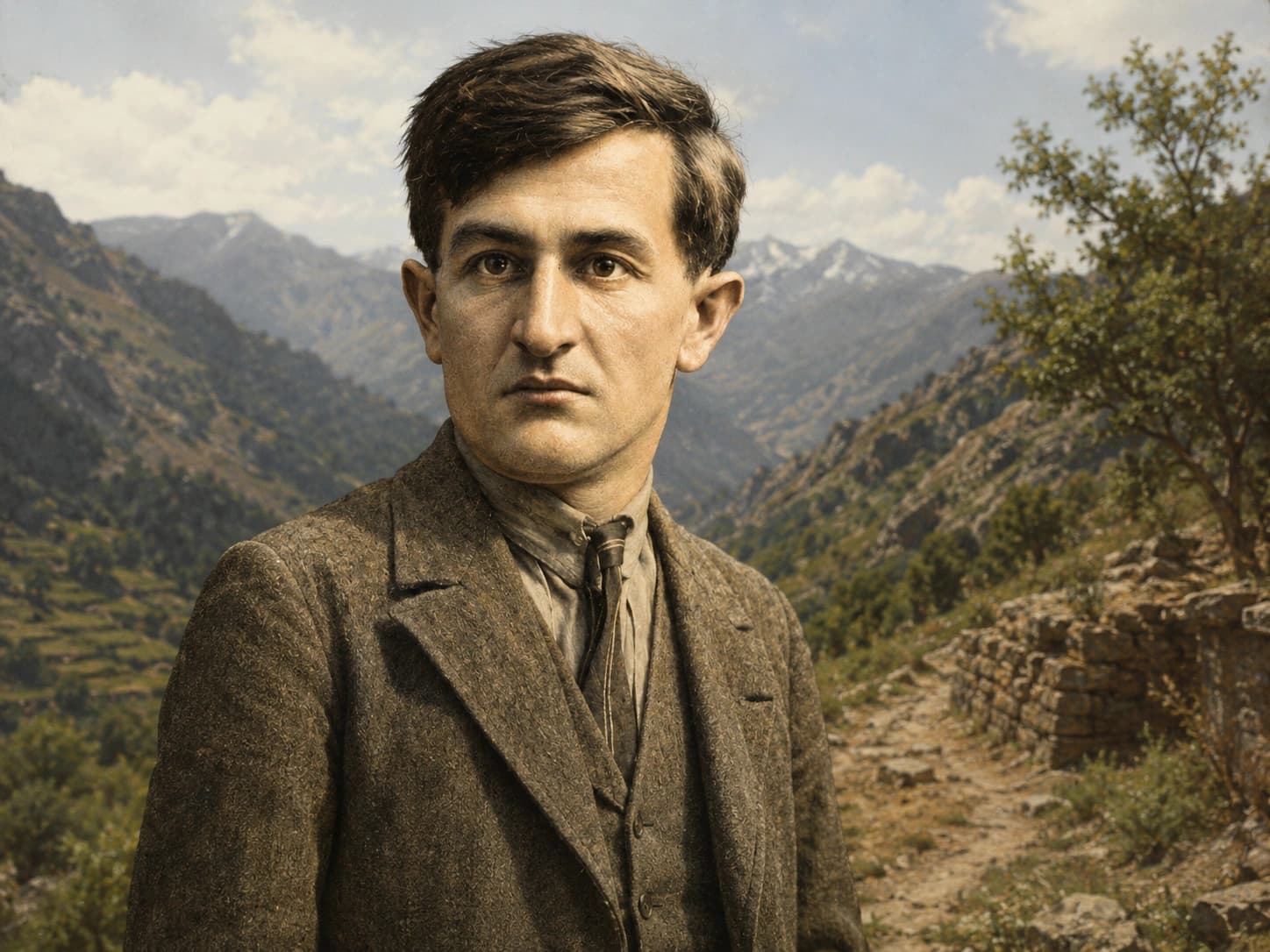
- 05The image widely captioned as a 1932 portrait of Bakunts is a painting by Panos Terlemezian. The striking three-quarter-length portrait that ranks highest in image searches was painted by Eduard Isabekyan in 1960, twenty-three years after his death.
- 06His stories were published in Paris in 1938, the year after his execution, and were not republished in Soviet Armenia until 1955.
- 07Charents wrote him a quatrain in 1927 after reading Մթնաձոր, telling him to work so that his bright path was not lost in that dark gorge.
Sources
- Սուրեն Աղաբաբյան. «ԲԱԿՈՒՆՑ Ակսել», Հայկական սովետական հանրագիտարան, հատոր 2 — Հայկական հանրագիտարանի գլխավոր խմբագրություն, Երևան, 1976 · ՀՍՀ, հատոր 2, էջ 245The spine of the article and the source of every date it states without qualification: the birth as 13(25).6.1899 at Goris — which is what settles the Old Style and New Style forms as one date rather than two claims — the birth name Ալեքսանդր Ստեփանի Թևոսյան, the seminary years 1910–17, Kharkiv 1920–23, the Yerevan seed station, the Zangezur posts of 1924–26, the Peasant's Library series and the sequence of collections. Signed by the scholar who also wrote the standard monograph on him, which is why the article attributes the classical-specimens judgement to Aghababyan by name rather than stating it as fact. Its silence is also evidence and is used as such: the entry gives the death year alone, with no arrest, trial or execution, which is what a 1976 Soviet encyclopedia could say.
- Aksel Bakunts, translated by Nairi Hakhverdi, introduction by Victoria Rowe. The Dark Valley — Taderon Press for the Gomidas Institute, London, 2009 ISBN 9781903656907The only complete English Bakunts: all eighteen stories of the 1927 collection. Cited for the English title the article treats as settled for the book and for nothing else — the story, the toponym and the second Mtnadzor story have no canonical English form, which is precisely the distinction the Mtnadzor section draws. Also the source for the rendering of Միրհավ as The Pheasant.
- Ակսել Բակունցի տուն-թանգարան, Գորիս — Եղիշե Չարենցի անվան գրականության և արվեստի թանգարան Visit sourceThe institutional record for the museum: founded 1968, opened 17 September 1970, a branch of the Charents Museum of Literature and Art, holding about five hundred principal exhibits including manuscripts, photographs and his own library. Cited for the memorialisation chronology, which the article keeps separate from rehabilitation and republication. It is also the evidence that lifetime photographs of him exist in institutional hands beyond the single published one — the page describes the holdings without reproducing them.
- Դավիթ Գասպարյան. Ակսել Բակունցը քաղաքական բռնությունների զոհ (1936–1937 թթ.) — Լրաբեր հասարակական գիտությունների, ՀՀ ԳԱԱ, Երևան, 2024 Visit sourceThe basis for the whole 1936–37 chronology, by the scholar who edited the published indictment file. Cited for the arrest on 9 August 1936, the case reference — number 4131, eight volumes, 384 documents — the wording of the charge as counter-revolutionary, Trotskyist and nationalist, the Military Collegium's closed session of 7 July 1937, the execution on 8 July, and the rehabilitation of 2 March 1955. It is also the source for the Writers' Union meetings, the Zaryan article of 25 August 1936 and the documented estrangement from Charents from 1933. The article deliberately takes only the chronology and the documents' wording from it, and does not repeat the interrogation testimony as evidence about what Bakunts thought.
- Արմինե Մանասյան. Ակսել Բակունցը և 1920-30-ական թվականների պատմվածքը — Գրականագիտական հանդես XVI, ՀՀ ԳԱԱ Մ. Աբեղյանի անվան գրականության ինստիտուտ, Երևան, 2015 · arar.sci.am, Հայկական հանրապետական թվային գրադարան, publication 197097The source for the short-story and prose-technique sections, and the reason those sections make technical rather than admiring claims: composition by accumulation toward a limiting situation, retrospection as a construction principle rather than lyricism, portraiture as compositional centre, the withheld ending of Մթնաձոր, and the formulation the article leans on hardest — that nature in Bakunts is not described but introduced by the teller as a minimum unit of psychological movement. Also the source for the live scholarly disagreement over whether his sympathies lie with the village rebels or with those who endure, which the article reports rather than resolves.
- Սուսաննա Հովհաննիսյան. Ակսել Բակունցը և ազգային լեզվի զարգացման ուղիները — Գրականագիտական հանդես, ՀՀ ԳԱԱ Մ. Աբեղյանի անվան գրականության ինստիտուտ, Երևան, 2021 · arar.sci.am, Հայկական հանրապետական թվային գրադարան, publication 273343The basis for his stated position at the first congress of the Writers' Union of Armenia in August 1934 — that the literary language must be anchored on the popular one, that dialects are its natural path of enrichment, and that classical Armenian serves statehood and philosophy but damages the description of nature — and for his disagreement on this with Charents and Teryan and his alignment with Tumanyan. Cited so that the language section rests on what he argued rather than on what his prose is assumed to sound like.
- Մհեր Քումունց և Ալլա Բակունց. Դարձվածքները Ա. Բակունցի «Կյորես» վիպակում (համեմատական քննություն) — ՀՀ ԳԱԱ Հ. Աճառյանի անվան լեզվի ինստիտուտ, Երևան, 2025 Visit sourceThe single most important citation for the article's refusal of the dialect claim. It compares the phraseology of Կյորես against living Goris speech and finds that the idiom does derive from the dialect but that part of it sits in characters' mouths while the rest is carried in the authorial narration in literarised form — popular speech reshaped, not transcribed. That is the evidence for the distinction between regional vocabulary and dialect writing, which this article states and most short accounts of Bakunts do not. Also cited for idiom marking a speaker's social position.
- Ա. Պետրոսյան, Կ. Բայրամյան և Ա. Գնունի. Հնագետը Ակսել Բակունցի «Ալպիական մանուշակ»-ում — Պատմա-բանասիրական հանդես, ՀՀ ԳԱԱ, Երևան, 2025 Visit sourceThe basis for the Alpine Violet section and for the article's anti-pastoral argument. It supplies the reading of the archaeologist and the painter as looking at the world through the eyes of a beetle — arriving, seeing the beauty of past or present, and leaving while the substance of life escapes them — the observation that the story has no clear plot and works by subtext, and the archival identification of the archaeologist's model as Morus Hasratyan.
- Naira Hambardzumyan. Interpenetration of Myth and Sign in Axel Bakunts' "Mtnadzor" Collection — Լրաբեր հասարակական գիտությունների, ՀՀ ԳԱԱ, Երևան, 2020 · arar.sci.am, Հայկական հանրապետական թվային գրադարան, publication 263016Cited for the landscape section's claim that the Mtnadzor stories hold a pre-human time inside the present, and for the line about the forgotten corner from the days when there was no man yet. Also one of the few pieces of Bakunts scholarship published in English, which is itself part of the article's point about how thin the English-language record is.
- Library of Congress Name Authority File and Bibliothèque nationale de France, authority records for Aksel Bakuntsʻ — Library of Congress; Bibliothèque nationale de France, consulted 2026 · LC n88058958; BnF ark:/12148/cb12147444vThe evidence for the name section, and cited only for that. The Library of Congress heading is Bakuntsʻ, Aksel, 1899-1937, with Tʻevosyan, Alekʻsandr Stepʻani recorded as the birth name and Աղեքսանդր preserved as a variant; the BnF gives Aksel Bakounts. Both therefore file him under Aksel rather than the Axel of English Wikipedia, which is what the article's choice of canonical form rests on. Both also record Western Armenian pronunciation transliterations — Paguntsʻ, Agsel and Aksel Pagounts — which is independent evidence that diaspora imprints exist, and the reason the article treats the Western Armenian form as a variant spelling rather than inventing a separate title set.
Related articles
Yeghishe Charents
A restless modernist poet whose bold experiments and fierce love of Armenia made him the defining literary voice of his generation.
Hovhannes Tumanyan
The village-born poet whose ballads, fairy tales and quiet moral authority earned him the title Poet of All Armenians.
Tatev Monastery
A monastery on a basalt shelf above the Vorotan gorge in Syunik. It was the seat of a bishop, home to the best-known school in medieval Armenia, and the place where a tenth-century stone column still rocks on its base.