
Alexander Shirvanzade
Alexander Shirvanzade wrote the Armenian novel of money. A novelist and playwright, he spent his youth keeping accounts in the oil offices of Baku. What he saw there — fortunes made in a decade, families rebuilt around them, respectability bought and sold — became the core of Armenian realist prose. Two of his books have outlived the world they describe: Նամուս, about a provincial honour code that kills, and Քաոս, about an oil family falling apart. He also wrote about twenty plays, and the Armenian stage has been performing them for more than a century.
- Author
- Armat Editorial Team
- Updated
- Reading time
- 25 min read
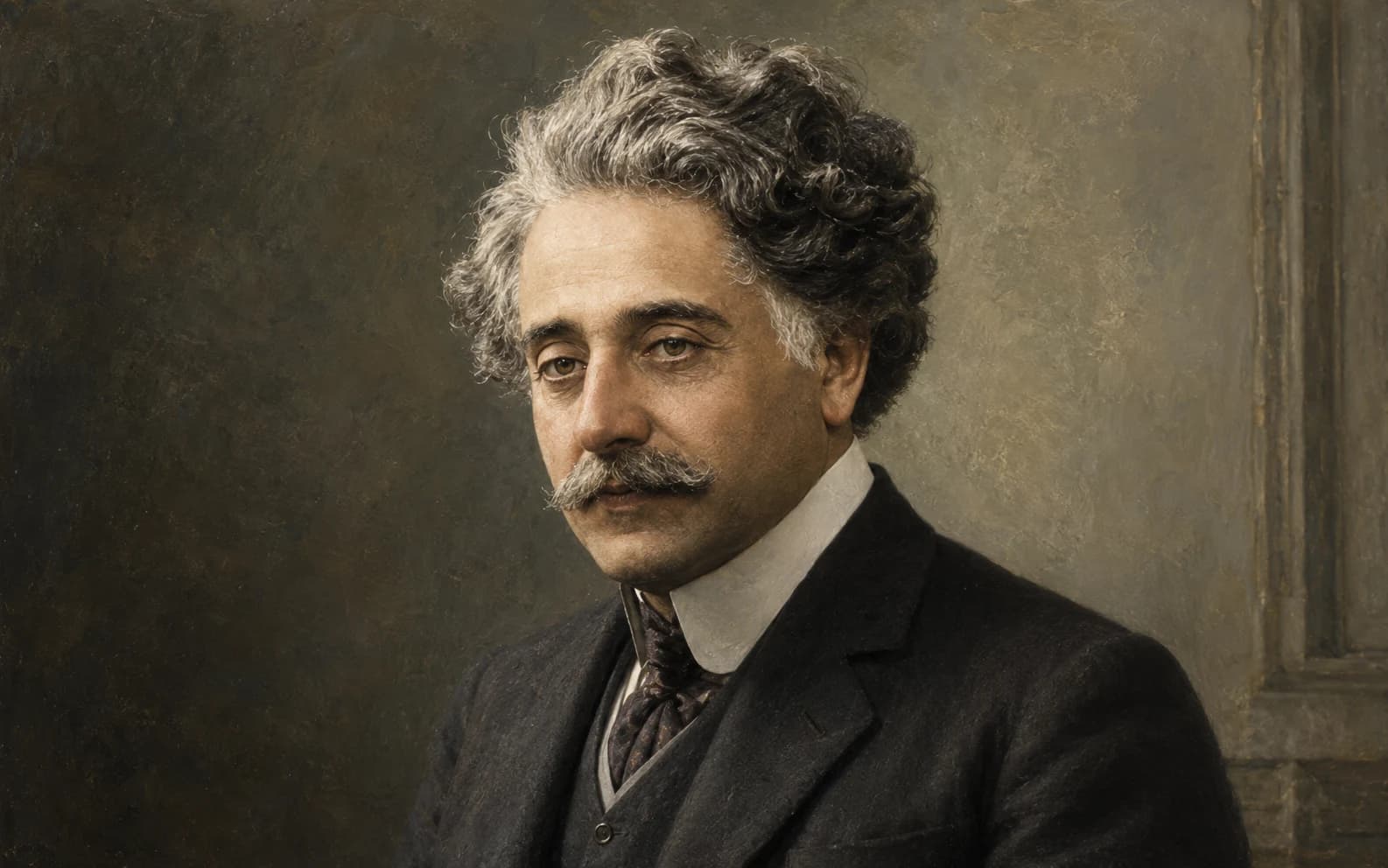
In brief
Alexander Shirvanzade, the pen name of Alexander Movsisyan, was an Armenian novelist, prose writer and playwright. He was born at Shamakhi in the Russian Empire in 1858 and died at Kislovodsk in 1935. He is the central figure of Armenian critical realism. He was shaped in the counting-houses of oil-boom Baku, not in a village or a seminary, which is why his subject is what money does to families. His novel Նամուս appeared in 1885 and his novel Քաոս in 1898, and his drama Պատվի համար reached the stage in 1904. He lived into the Soviet period and was honoured by it in 1930, but everything that made him matter was written before then.
Key facts
- Lived
- 1858 to 1935
- Born
- Shamakhi (Շամախի) in Shirvan, Russian Empire — now Şamaxı, Azerbaijan
- Birth date
- 7 April 1858 in the Old Style form Armenian encyclopedias give; New Style dates of 18 and 19 April are both printed
- Died
- Kislovodsk, 7 August 1935; buried in the Komitas Pantheon, Yerevan
- Born as
- Alexander Movsisyan; Shirvanzade is a pen name meaning of Shirvan
- Wrote in
- Eastern Armenian
- Worked as
- Novelist, prose writer, playwright and journalist; earlier a clerk, bookkeeper, accountant and librarian
- Best known for
- Նամուս, Քաոս and Պատվի համար
- Soviet honours
- People's Writer of the Azerbaijan SSR and of the Armenian SSR, both conferred in 1930
Who Alexander Shirvanzade was
Alexander Shirvanzade was an Armenian novelist, prose writer and playwright. He was born at Shamakhi in the Russian Empire in 1858 and died at Kislovodsk in 1935. He wrote in Eastern Armenian, worked mainly in Baku and Tiflis, and is the first writer Armenian critics name when they discuss critical realism.
Two things set him apart from most of the writers around him in this archive. The first is genre. The section he joins leans heavily toward poetry, and he was a novelist and dramatist who wrote almost no verse. The second is subject. Where Raffi built the Armenian historical novel out of the national past, Shirvanzade wrote about the present, about cities and about money: who has it, how they got it, and what a household will do to keep it.
He also lived long enough to be claimed by a state that arrived after his work was done. He died holding Soviet titles awarded in 1930. This article keeps those honours separate from the career that earned them, which belongs to the 1880s, the 1890s and the years before 1905.
Movsisyan, and the name he signed
He was born Alexander Movsisyan. Armenian encyclopedias give the name as Ալեքսանդր Մինասի Մովսիսյան, which includes his father's name, Minas. Shirvanzade is a pen name taken from the place he came from: Shamakhi lay in Shirvan, and the Persian suffix -zade means born of or son of. The name simply means of Shirvan.
That is all it means, and this article reads nothing more into it. It is not a title or an inherited family name, and it tells us nothing about his ancestry. It is a nineteenth-century writer's byline built from his home district, a common enough way to make a pen name, and it needs no more explanation than the sources give.
In English he appears as Alexander Shirvanzade and Aleksandr Shirvanzade, and Shirvanzadé, Shirvan-Zade and plain Shirvanzade are also used. French-language material published in his lifetime printed Chirvanzadé. In Armenian the name is Ալեքսանդր Շիրվանզադե in the reformed Eastern spelling and Ալեքսանդր Շիրվանզադէ in the classical Western spelling. This page's search terms include all of these forms, because each brings up a different set of pages.
Shamakhi
Shamakhi (Շամախի, today Şamaxı in Azerbaijan) was the old capital of Shirvan and, when he was born, a district town of the Russian Empire. It had been the seat of the governorate named after it until an earthquake wrecked it in 1859 and the administration moved to Baku. For his biography, this is the key fact about the place: the town he was born in had just been overtaken by the city where he would spend his youth.
It was a town of mixed population, Armenians alongside other local communities, run in Russian, and it is the world of Նամուս. The novel is set there, and the earthquake is in the book. Shamakhi was wrecked again in 1902, long after he had left.
His family was not well off. Russian reference works describe his father, Minas, as a tailor, and the household was modest enough that his schooling ended at the district school, which he finished in 1873. This article uses the historical names of these places and the political units that actually existed at the time, because those are the terms his own documents used.
Baku, which is the subject as much as the setting
In the 1870s Baku was on its way to becoming the largest oil city in the world. Derricks went up at Balakhani, refineries filled the district known as the Black Town, and capital arrived from everywhere: from Armenian and other local entrepreneurs, and from Russian, Swedish and French investors. Shirvanzade went there as a teenager, in 1873 or 1875 depending on the Armenian source, and stayed about eight years.
For a future novelist, the city offered social change fast enough to watch. Fortunes were made within a decade and lost within the next. Families of provincial traders became industrial owners and sent their sons to Russian and European schools. Workers were gathered from across the Caucasus and northern Persia and housed accordingly. Position had stopped being inherited and started being bought, and nobody yet knew the rules.
His prose is made from this world, which is why Baku belongs in an account of his work and not just in his timeline. He does not write about the city as a visitor would. He writes about the offices and the contracts, the marriages arranged around shares, the sons who go abroad and the ones who stay, the household that is rich one decade and ruined the next. He was inside the bookkeeping of that world while it changed.
The clerk who read
His jobs were ordinary, and they are the reason the books exist. He worked in provincial government offices and then in the offices of the oil firms, as a clerk, an assistant bookkeeper and finally an accountant. He also worked as a librarian for the Armenian philanthropic society in Baku.
Keeping accounts gave him a particular kind of access. A clerk who keeps a firm's books sees the family behind it — the inheritance disputes, the guarantees, the debts a household hides from its own guests — in a way no other outsider does. Very little Armenian prose of the century was written from that position, and that, more than local colour, is why his jobs are worth naming.
After the district school, he educated himself. He read Russian and Armenian literature and the European novelists whose method is closest to his own; Armenian and English accounts both link him with Balzac and Zola, and with Shakespeare. He was self-taught in the full sense, with no seminary or university behind him, and he knew the world of his novels at first hand in a way no seminary could have taught him.
1883: out of the oil field and into Tiflis
His first published fiction came straight out of the oil field. In 1883 the Tiflis newspaper Մշակ printed his story Հրդեհ նավթագործարանում (a fire at an oil works), followed by the novella Գործակատարի հիշատակարանից (from a clerk's notebook). A man who had spent eight years in those offices began by writing about them.
That same year he moved to Tiflis, then the administrative and cultural capital of the Russian Caucasus and the centre of Eastern Armenian publishing. He joined its literary world as a working journalist, not a man of letters, and from 1886 to 1891 he was secretary of the weekly Արձագանք.
Արձագանք also published his fiction. Խնամատար appeared there in 1884 and Նամուս in 1885, and Նամուս made his name. By then the pattern of his career was set: fiction and journalism in the same papers, and a living earned from the press, not from books.
What his realism actually consists of
Calling Shirvanzade a realist is accurate, but on its own it says very little. The word covers everything from a taste for ordinary settings to a whole theory of what fiction is for. In his case it means three specific things.
First, money drives the plot. His characters want money, or have it and fear losing it, or need a marriage to secure it. Property, inheritance, dowry, credit, shares and debt are not background in his books. They are what moves the story, and the pressure under which people break. Քաոս is a novel about an oil fortune and a family that cannot hold together around it.
Second, his moral interest lies in compromise, not villainy. The people who do the damage are rarely monsters. They are men doing what their position makes reasonable, and the harm builds up over time. Պատվի համար turns on a man who burns a document rather than give up an inheritance he had no right to, and the play is about the household that then has to live with him.
Third, his realism was a stated method, not just an instinct. Shirvanzade wrote about realism as well as practising it, and he argued for generalisation and typification. He criticised the photographic reproduction of reality and rejected open tendentiousness, on the grounds that a novel which merely records is not doing a novel's work. This was a considered nineteenth-century position, and it separates him from naturalism, though short English summaries tend to lump the two together.
The contrast with the tradition he came from is sharpest here. Before him, Armenian prose was dominated by the historical and national novel: the past recovered, the nation addressed, the reader asked to feel something about both. Shirvanzade wrote about the week his reader was living through, and about the part of that week that involved a bank.
Money, family and social standing
In his work, the family is an economic institution first. A marriage is a deal between households; a daughter is one of its terms; a son is a claim on a business. This is not cynicism laid over the material. It is how these arrangements really worked, and his books stand out in Armenian literature mainly because they say so, at the length the subject needs.
In that world, reputation is a working asset. A household's standing decides how much credit it can raise, which marriages it can make and what both will cost. So the gap between what a family is worth and what it must seem to be worth is a constant source of pressure. Most of his disasters begin with someone trying to close that gap.
His concern with the position of women grows out of the same analysis. If a marriage is a deal, the person who is its object has no standing in it. Two of his plays put the question directly: Եվգինե and Ունե՞ր իրավունք, both from 1903; the second title asks whether she had the right. Armenian accounts record that his treatment of these subjects drew conservative opposition at the time.
How the prose is built
His novels are ensemble works. He sets up a household, a firm and the people attached to both in some detail, then puts pressure on all of them at once instead of following one person's fate. As a result, what the reader comes to understand is the social arrangement, not any single character.
Dialogue does most of the characterisation. His people give away their position, education and intentions by how they talk about money. Both the comedy and the cruelty come from the mismatch between the tone a man adopts and what he is actually doing. He very rarely stops to explain a character. He lets the character explain himself and arranges the explanation so that it convicts him.
Material detail serves as evidence, not decoration. Sums of money, documents, rooms, clothes and the state of a business are spelled out because the story depends on them. A reader can usually work out a household's finances from what the narrator chooses to mention.
Armenian critics have consistently praised the care of his literary language and the psychological depth of the later novels. This article reports those as their judgments, not as facts about the prose. It is clear, though, that his construction is dramatic, built on scenes, entrances and confrontations. That is one reason his novels moved so easily onto the stage and the screen.
Նամուս, 1885
Նամուս was published in 1885 in the weekly Արձագանք, and it is the book that made his name. It is set in his home town of Shamakhi and draws on the earthquake that shaped it: two neighbours who survive it promise their small children to one another.
The plot can be described without spoiling anything, because the novel does not depend on surprise. The engagement is broken off when the young couple are found to have met before the wedding, which the town's code forbids. The girl is married to someone else. Everything after that is consequence, and the consequences are fatal.
The novel is not really about the lovers. It is about the code: a set of rules that everyone in the town obeys, that nobody in the town can explain, and that costs more than anything it protects. This is the realist argument at its clearest. The disaster comes from a social arrangement working exactly as designed.
The novel, the stage version and the film are three different works, and this article treats them separately. Shirvanzade made his own stage adaptation, dated 1911. By 1912 it was in the repertoire of Hovhannes Abelyan's company, which also performed it on tour in Moscow. The film has its own section below.
What նամուս means, and why honour is not enough
No single English word translates նամուս. The usual rendering, honour, is misleading enough to need a closer look, because the whole novel depends on the difference.
The word is a borrowing. Arabic nāmūs, which itself comes from the Greek nomos, meaning law or custom, passed into Persian, Turkish, Kurdish and Armenian. In all of them it names something more specific than the English word does. It is not personal honesty or individual reputation. It is a collective standing held by a household, and in practice it rests on the conduct of that household's women. For a man the word can stretch to conscience and integrity, but for a woman it is tied to sexual conduct and to how that conduct looks.
Two things should be said about how this article uses the word. First, it is not an Armenian peculiarity. The concept is regional, shared across the Caucasus, Anatolia and far beyond, and Shirvanzade wrote about it from the inside, as a critic, not as an ethnographer explaining a custom to outsiders.
Second, it is not a museum piece. The play has been staged in this century, in English translation, as a work about violence against women. That reading comes from what is already in the text; it is not an update imposed on it. This is why the title stays in Armenian on this page: Նամուս names one concept, and Honour names another.
Քաոս and the oil city
Armenian critics most often call Քաոս his best novel, and Armenian scholarship describes it as the largest achievement of Armenian critical realism. He wrote it in 1896 and 1897, and it was published as a book at Baku in 1898, in the years around his arrest and exile.
It follows an Armenian oil family in Baku: the fortune, the household built around it, the generation that inherits it, and what the money does to the household. This was exactly the world whose accounts he had kept in his twenties, and the novel is specific about business in a way most nineteenth-century fiction about wealth is not.
The title means what it says. The book shows a society without a settled order: money moving faster than the rules that used to govern it, positions that mean nothing a decade later, and people making up a morality to suit their circumstances. Baku had made that condition visible on a scale no other city in the region matched, and Քաոս is the Armenian novel of it.
Of his works, Քաոս is the one with its own article in this archive, where the novel's Baku setting, its family conflict, its money and the social change around it are followed apart from this biography. The other titles on this page are named but not linked.
Պատվի համար is not Նամուս
Two of his best-known works are routinely translated into English with the same word, and readers who are not warned will mix them up. They are different works, in different genres, written nineteen years apart, about two different things that English calls honour.
Նամուս is the novel of 1885, which he later turned into a play. Պատվի համար is a drama, written in 1904, first staged at Baku on 10 December that year and published as a book in 1905. Պատիվ is the everyday Armenian word for honour in the sense of standing, integrity and good name; նամուս is the borrowed word for the collective, sexualised family honour described above. English wipes out the difference: the film of the novel is catalogued as Honour, and the drama circulates as For Honour's Sake, For the Sake of Honour and For Honor.
The plots have nothing in common. In Պատվի համար, Elisbarov has taken over a dead friend's estate. When the heir produces the documents that prove it, Elisbarov burns them, and his daughter Margarit, who cannot live in the household that results, takes her own life. It is a play about property, and the honour in its title is the kind that can be audited.
It became the most performed Armenian play of its generation. Armenian sources record more than 300 stagings by 1911, productions at Tiflis and Constantinople within a few years of the premiere, and revivals across the Soviet republics for decades after.
The theatre
Shirvanzade wrote about twenty plays, and theatre was central to his work. He is one of the two writers on whom the modern Armenian dramatic repertoire was built.
The other is Gabriel Sundukyan, a generation older, whose comedies of Tiflis Armenian domestic life established that Armenian drama could be about ordinary contemporary people at all. Armenian scholars describe Shirvanzade as continuing that line and widening it. To a repertoire that had been largely comic and domestic, he added social, political and psychological drama.
His list of plays goes well beyond the two titles everyone knows. Իշխանուհի dates from 1891 and Չար ոգի from 1894; Եվգինե and Ունե՞ր իրավունք from 1903; Պատվի համար from 1904; Կործանվածը from 1909; Ավերակների վրա from 1911; Շառլատանը from 1912; Արհավիրքի օրերին from 1917. Մորգանի խնամին came last, after his years abroad. Some Armenian sources date it to 1926, and the Soviet Armenian Encyclopedia to 1930.
The plays are built like the novels: an ensemble, a money problem, and dialogue that lets people convict themselves. Մորգանի խնամին is different in tone. It follows an Armenian family in America that persuades itself a son's engagement has linked it to the banker Morgan. It is the one place where his social observation turns outward, to the diaspora, and turns comic.
Eastern Armenian, and what he did with it
He comes from a different linguistic world from the Western Armenian writers in this section. He wrote in Eastern Armenian, the branch built on the spoken language of the Russian Caucasus, whose modern literary career begins with Khachatur Abovyan a generation before him.
He stretched that language into territory it had not fully covered: contemporary city prose. His characters are clerks, contractors, engineers, students, merchants' wives and the servants of all of them, and the dialogue has to show a person's class within a single sentence. A literary language developed for the village, the epic and the address to the nation had to learn to do office work, and his books are a large part of how it learned.
Armenian sources credit him with unusual care over the literary language and with purity of style, and this article goes no further than they do. His Baku and his Tiflis were multilingual cities, and it would be easy to claim that his prose is full of borrowed words as a result. But that is a linguistic claim about a specific vocabulary. The sources consulted here support the general verdict on his style, not a list of his words.
Prison, Odessa, Paris
In the mid-1890s he spoke out publicly about the massacres of Armenians in the Ottoman Empire, and he paid for it. He was arrested at Tiflis and then exiled to Odessa, where he lived from 1898 to 1900. Armenian and Russian accounts disagree on how long he was held before the exile, and this article leaves that question open. Քաոս belongs to those years.
From 1905 to 1910 he lived in Paris. The Georgian national archive holds two surviving photographic records of him, and both are registration cards made by the Tiflis provincial gendarme administration. They give a fair idea of the file the Russian authorities kept on him during this period.
Around 1919 he left the Caucasus again and spent the next years abroad, in Constantinople, Paris and the United States. These were the years of the destruction of the Ottoman Armenian communities, the short-lived Armenian republic and its sovietisation. He came back in 1926.
A pre-Soviet writer, decorated by a Soviet state
He was sixty-eight when he returned, and everything this article is about had already been written. The Soviet chapter of his life tends to hide that fact, which is why this page keeps the two apart. He was a nineteenth-century realist who lived long enough to be honoured by a state formed after his work was finished, not a Soviet writer who happened to start early.
He settled in Yerevan and was published there: a collected works in several volumes, and the memoirs Կյանքի բովից, which occupied him between 1926 and 1932. In 1934 he took part in the founding congress of the Union of Soviet Writers, and in the same year in the founding congress of the writers' union of Soviet Azerbaijan.
In 1930 he was named People's Writer of the Azerbaijan SSR, and in the same year People's Writer of the Armenian SSR. He was the first person to hold the title in Azerbaijan. At that date both republics were part of the Transcaucasian Soviet Federative Socialist Republic, and both awards were republican honours of the period: official distinctions given by two Soviet governments to a living writer whose books were read in both. They say nothing about anybody's nationality, and this article does not use them that way.
He died at Kislovodsk on 7 August 1935 and is buried in the Komitas Pantheon in Yerevan.
Նամուս on film, and the work that kept going
The film usually called the first Armenian feature is an adaptation of his first novel, a fair measure of how far his work reached. Նամուս was directed by Hamo Bek-Nazaryan and made in 1925 at the state film studio in Yerevan (founded in 1923, later Armenfilm). It premiered at the Nairi cinema in Yerevan on 13 April 1926.
The word first in that description needs limits, because it is usually repeated without any. Film historians make a narrow claim: this was the first full-length fiction feature produced in Soviet Armenia by its own studio, and it is treated as the founding work of Armenian national cinema. They do not claim that no film with Armenian subjects or an Armenian director existed before it. Bek-Nazaryan already had a career in Russian cinema behind him. Dates as early as 1924 circulate online for the film, but the premiere record does not support them.
Other works of his were filmed afterwards, among them Չար ոգի in 1928, Պատվի համար in 1956, and Քաոս later still. He lived to see only the first of these, and had no hand in making it; Պատվի համար reached the screen twenty-one years after his death. The films are their directors' readings of the books, not the author's.
The stage history has never stopped. Պատվի համար and Նամուս have been in the Armenian repertoire since before his death, his best works were translated into the languages of the Soviet Union and beyond, and the novels are still read in Armenian schools and universities. What began as a clerk's account of an oil city is now the part of nineteenth-century Armenian literature a modern reader can most easily walk straight into.
Important dates
1858
Born at Shamakhi in the Russian Empire; the date Armenian encyclopedias give is 7 April, Old Style.
1873
Finishes the district school at Shamakhi. Armenian sources place his move to Baku in this year and in 1875.
1883
Մշակ prints Հրդեհ նավթագործարանում, his first published story; he moves to Tiflis in the same year.
1884
The novella Խնամատար appears in the Tiflis weekly Արձագանք.
1885
Նամուս is published in Արձագանք and makes his name.
1886
Becomes secretary of Արձագանք, a post he holds until 1891.
1893
The novel Արսեն Դիմաքսյան.
1894
The drama Չար ոգի.
1896
Begins writing Քաոս; the work runs on into 1897.
1898
Քաոս published as a book at Baku; he is exiled to Odessa, where he remains until 1900.
1903
The dramas Եվգինե and Ունե՞ր իրավունք.
1904
Պատվի համար written and first staged at Baku on 10 December; published as a book in 1905.
1905
Settles in Paris, where he lives until 1910.
1911
His own stage version of Նամուս, and the drama Ավերակների վրա; Պատվի համար has by now been staged more than 300 times.
1919
Leaves the Caucasus for Constantinople, Paris and the United States.
1926
Returns to Soviet Armenia and settles in Yerevan; the film of Նամուս premieres at Yerevan on 13 April.
1930
Named People's Writer of the Azerbaijan SSR, the first to hold the title there, and of the Armenian SSR.
1934
Takes part in the founding congress of the Union of Soviet Writers.
1935
Dies at Kislovodsk on 7 August; buried in the Komitas Pantheon, Yerevan.
Why Alexander Shirvanzade matters
He gave Armenian literature a realism of the present tense. Before him its strongest prose looked back, to the national past and to the village. He wrote about modern cities, modern money and the households being rebuilt around both, with the precision of someone who had kept the books. That is why Armenian critics treat him as the central figure of their realist tradition, and Քաոս as the largest thing that tradition produced.
He also gave it a modern theatre. Sundukyan had shown that Armenian drama could be about ordinary contemporary people. Shirvanzade widened the form into social, political and psychological drama, and wrote plays that companies have kept performing for more than a century. Պատվի համար was the most staged Armenian play of its generation, and Նամուս has never left the repertoire.
And he is the reason this archive's picture of the nineteenth century is not only poets and historians. A literature strongest in verse, the historical novel and the patriotic lyric gained in him a novelist of contracts, inheritances, marriages and firms. The questions his books ask about what money does to a family are as current now as when he asked them.
Interesting facts
- 01His pen name is a place. Shirvanzade means of Shirvan, the district his home town of Shamakhi stood in, so he signed himself after his province rather than after his family.
- 02He was the first writer ever to hold the title People's Writer of the Azerbaijan SSR. It was conferred in 1930, the same year the Armenian SSR gave him its own version of it.
- 03The film usually called the first Armenian feature is an adaptation of his first novel — Bek-Nazaryan's Նամուս, which premiered in Yerevan in 1926, forty-one years after the book appeared in a weekly paper.
- 04Two of his best-known works are usually put into English with the same word. Նամուս and Պատվի համար are different books about different kinds of honour, and English catalogues file both under it.
- 05He kept the accounts of Baku oil firms before he published a line of fiction, and his first published story was about a fire at an oil works.
- 06He wrote about realism as well as in it, and what he argued against was the photographic reproduction of life — a position stated in his own critical writing, and the thing that separates him from the naturalists he is sometimes filed with.
Sources
- Հայկական սովետական հանրագիտարան, հատոր 8 — Հայկական հանրագիտարանի գլխավոր խմբագրություն, Երևան, 1982 · ՀՍՀ, հատոր 8, էջ 517–519, «Շիրվանզադե Ալեքսանդր»The spine of the article. It is the source for the birth name Մովսիսյան Ալեքսանդր Մինասի, for the Old Style birth date 7 April 1858 that the article prints and flags, for Shamakhi and Kislovodsk, for the burial in Yerevan, for the publication sequence from Հրդեհ նավթագործարանում in 1883 through Խնամատար, Նամուս and Քաոս, for the secretaryship of Արձագանք from 1886 to 1891, for the list of plays and their years, for the placement of Շիրվանզադե in the line of Sundukyan's dramaturgy, and for the assessment of Քաոս as the largest achievement of Armenian critical realism. It is also the source of one recorded conflict: it dates Մորգանի խնամին to 1930 where other Armenian sources give 1926, and the article states both rather than choosing silently.
- Kevork B. Bardakjian. A Reference Guide to Modern Armenian Literature, 1500–1920 — Wayne State University Press, Detroit, 2000 ISBN 9780814327470The standard English-language reference for the period, and the volume whose coverage ends exactly where his major career does. Cited for his position in the movement from romanticism to realism — the contrast the article draws between Raffi's historical-national novel and Shirvanzade's contemporary urban realism rests on this rather than on the popular summaries — and for the treatment of his prose and drama as one body of work rather than two.
- A. J. Hacikyan, G. Basmajian, E. S. Franchuk and N. Ouzounian (eds.). The Heritage of Armenian Literature, Volume III: From the Eighteenth Century to Modern Times — Wayne State University Press, 2005 ISBN 9780814332214The section's backbone series at the volume covering him. Cited for the English-language account of the Baku years and the oil-industrial setting of Քաոս, for the serialization of that novel in 1896–1897 ahead of the 1898 volume, and for his own critical position on realism — generalisation and typification against the photographic reproduction of reality — which is the distinction the article uses to separate him from naturalism.
- Ширванзаде Александр Минасович, Большая российская энциклопедия — Большая российская энциклопедия, Moscow, consulted 2026 Visit sourceCited for the chronology outside Armenia and for the honours. It gives the district school in 1873 and the move to Baku, the Baku employment as accountant and librarian, the settlement at Tiflis from 1883, the arrest and the Odessa exile of 1898–1900, the years in France and America, the return in 1926, and the naming as people's writer of both Armenia and Azerbaijan in 1930. It is also one half of the calendar problem the article records: it prints the birth date as 7 (19) April 1858, while Armenian and Russian encyclopedic practice elsewhere prints 18 April, and the article states the disagreement rather than reconciling it.
- Namus, The Project — Armenian Institute, London — Armenian Institute, London, 2011 Visit sourceThe basis for keeping the novel and the play apart. It marks the centenary of the play in 2011, which is the evidence for the 1911 dating of Shirvanzade's own stage version, and it records the first English translation of that play, by Veronica Wigg. Cited also for the contemporary staging history and for the fact that the play has been produced in this century as a work about violence against women — the reading the article reports without treating it as an update to the text.
- Hamo Beknazarian's Namus (1926) — East European Film Bulletin — East European Film Bulletin, consulted 2026 Visit sourceCited for the film section and, specifically, for the careful form of the claim the article repeats. This source says Namus is considered to be the first Armenian feature, and gives the studio history — Gosfotkino, established at Yerevan in 1923, later Armenfilm — that bounds what first means. It is also cited for the film's account of namus as an honour tied to a woman's chastity, and for Beknazarian's critical rather than illustrative treatment of it.
- Hasret Çetinkaya. Re-theorising namûs beyond 'honour': self-making, feminist ethics and the politics of translation — International Feminist Journal of Politics, 2024 Visit sourceThe scholarly basis for the section on the word itself, and the reason the article refuses to translate նամուս as honour and stop there. Cited for the Arabic nāmūs and its Greek origin in nomos, for the regional rather than ethnically specific distribution of the concept, and for the asymmetry the article states — that for men the word can extend to conscience and integrity while for women it is bound to sexual conduct. It is not cited for anything about Shirvanzade.
- Surviving lifetime images of Alexander Shirvanzade — Charents Museum of Literature and Art, Yerevan; National Archive of Georgia; Bibliothèque nationale de France, consulted 2026 · Wikimedia Commons, Category:Alexander ShirvanzadeCited for the statement that gendarme registration cards on him were compiled by the Tiflis provincial gendarme administration and are held by the National Archive of Georgia. The same record is the portrait evidence for a future commission and is described precisely because it is easy to overstate: a studio portrait photograph credited to the Charents Museum and a second undated photographic portrait survive, while the image often dated about 1880 is a lithograph published in the Constantinople French-language paper La Patrie in 1910 and held by the BnF, and a commemorative stamp and a sketch in the same category are not photographs at all.
Related articles

Raffi (Hakob Melik-Hakobian)
The novelist who invented the Armenian historical novel and used fiction to argue that a nation must act to save itself.
Khachatur Abovyan
The teacher, mountaineer and novelist who founded modern Armenian literature by writing in the language people actually spoke.
Hovhannes Tumanyan
The village-born poet whose ballads, fairy tales and quiet moral authority earned him the title Poet of All Armenians.