
Dolma
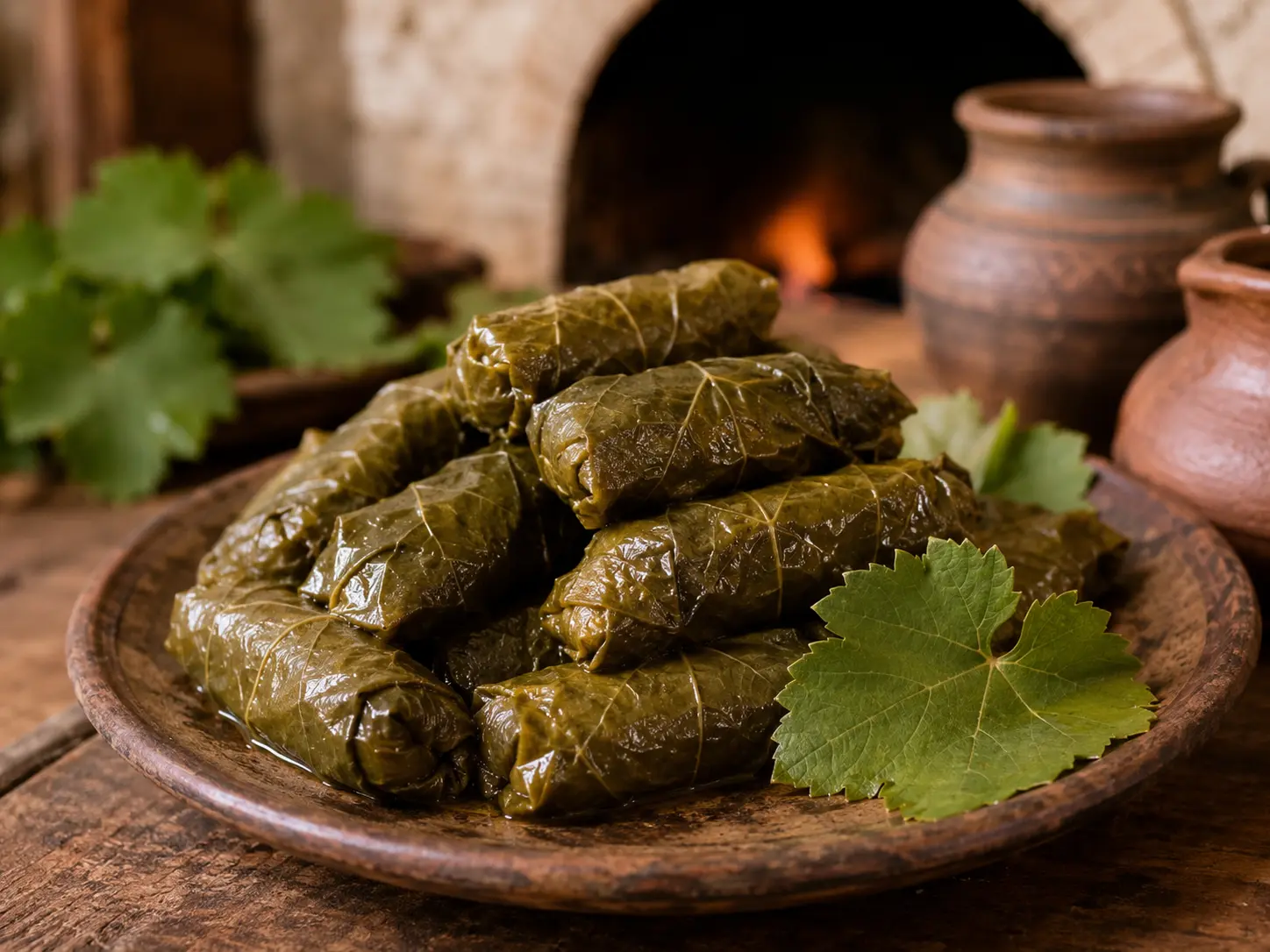
Dolma — tolma in Armenian usage — is a filling of rice, onion, herbs and often minced meat, wrapped in leaves or packed into hollowed vegetables and cooked slowly. It is made throughout the Caucasus, Anatolia, Iran and the eastern Mediterranean, under names that all derive from the same verb. In Armenian households it is a dish for gatherings rather than for a quick weekday meal, and it exists in a meatless form eaten during fasting. In 2017 UNESCO inscribed a dolma tradition on its Representative List; that nomination was submitted by Azerbaijan, and the fact is stated here rather than left out, because how such an inscription is read is part of the story of this dish.
- Author
- Armat Editorial Team
- Updated
- Reading time
- 7 min read
In brief
Dolma — tolma in Armenian usage — is defined by a method rather than a recipe: rice, onion and a large quantity of herbs, with or without minced lamb or beef, wrapped in vine or cabbage leaves or packed into hollowed peppers, aubergines, tomatoes or quinces, then packed tightly into a pot, weighted and cooked slowly. The name comes from a Turkic verb meaning to be filled. The meatless version, pasuts tolma, uses beans, chickpeas, lentils and grains, is served cold, and belongs to fasting periods. In Armenian households it is a dish for gatherings, and rolling several hundred leaves is shared work. The method is old and practised across the Caucasus, Anatolia, Iran and the eastern Mediterranean under related names; UNESCO's 2017 inscription was submitted by Azerbaijan and records a practice, not an origin.
Key facts
- Kind of dish
- Filled leaves and vegetables
- Common filling
- Rice, onion, herbs, minced meat
- Meatless version
- Pasuts tolma, filled with beans, grains and lentils
- Wrappers
- Vine leaves, cabbage; peppers, aubergines, tomatoes, quinces
- Name
- From a Turkic verb meaning to be filled or stuffed
- UNESCO
- Representative List, 2017, no. 01188, on Azerbaijan's nomination
The dish at a glance
- Common ingredients
- Vine or cabbage leaves, or vegetables for hollowing, Short-grain rice, Onion and herbs, Minced lamb or beef, in the meat versions, Beans, chickpeas and grains, in pasuts tolma
- Traditional preparation
- A raw filling of rice, onion and herbs, with or without minced meat, is spooned onto leaves and rolled, or packed into hollowed vegetables; the parcels are packed tightly into a pot, weighted and cooked slowly in a little liquid.
- Occasions
- Family gatherings and feast tables, Fasting periods, in the pasuts form, Commemorative meals
- Known regions
- Throughout the Republic of Armenia, Armenian communities of the Middle East, The wider region, under related names
- Serving traditions
- Served warm from the pot with matsun or lemon, or cold in the meatless version; lavash is usually on the table with it.
What dolma is
Dolma is defined by a method rather than by a recipe: something edible is filled with something else and cooked gently until both are done. In practice that means two broad families. Leaf dolma — vine leaves most often, cabbage in colder seasons — is rolled into small cylinders. Vegetable dolma uses peppers, aubergines, tomatoes, courgettes or quinces, hollowed and capped.
The standard filling is short-grain rice with onion and a large quantity of herbs, with or without minced lamb or beef. The pot is packed tightly, weighted, and cooked with a modest amount of liquid so that the parcels steam rather than boil apart.
The Armenian form of the name, tolma, is the same word. Folk etymologies deriving it from an Armenian root for vine leaf circulate widely; UNESCO's file records the straightforward derivation from a Turkic verb meaning to be filled, and that is the explanation this article follows.
Its place in Armenian life
Tolma is labour that is normally shared. Rolling several hundred leaves is a task for several pairs of hands at a kitchen table, and in many families it is the point at which a household's cooking knowledge is actually transmitted — not by instruction, but by sitting alongside someone who rolls faster.
It is also a dish of display. A tightly packed pot of even, small parcels is understood as evidence of care and skill, and tolma is accordingly a common centrepiece when guests are expected. The Smithsonian Folklife Festival's 2018 Armenia programme listed it among the staples of an Armenian feast, alongside bread and grilled meat.
The meatless version, pasuts tolma, gives the dish a second life in the church calendar. Made with beans, chickpeas, lentils and grains and served cold, it belongs to fasting periods, and is one of the few festive-looking dishes that a fast permits.
Documented background
Stuffed-vegetable and stuffed-leaf dishes have a long written history in the region, and the surviving records are mostly Ottoman and Arabic rather than Armenian. Priscilla Mary Işın's history of Ottoman cuisine traces the dish family through palace kitchen documents and other archival material — the kind of evidence that shows what was cooked and when, without telling us who cooked it first.
That is the honest limit of the historical claim. The technique is old and regionally widespread; the specific Armenian repertoire of tolma is documented in modern cookbooks and ethnography rather than in medieval sources.
In 2017 UNESCO inscribed "Dolma making and sharing tradition, a marker of cultural identity" on the Representative List. The nomination came from Azerbaijan, and the file describes the practice within that country. An inscription of this kind records a living tradition in the community that nominated it; it does not adjudicate origin, and it does not exclude the equivalent practice elsewhere.
Ingredients and preparation
Vine leaves are used fresh in early summer and preserved in brine for the rest of the year; brined leaves are rinsed before use. The filling is mixed raw — rice, finely chopped onion, herbs, salt and pepper, with meat if it is a meat version — and a small spoonful is placed on each leaf, which is folded at the sides and rolled.
The parcels are laid in a heavy pot in close rows, often over a layer of leaves or sliced vegetable to protect the bottom, weighted with a plate, and cooked slowly with a little water, stock or tomato until the rice is done.
Many families finish leaf tolma with lemon or with matsun, and vegetable tolma with a tomato-based liquid; both practices are usual, and neither is the correct one.
Occasions and traditions
Tolma belongs to occasions where people sit for a long time: family gatherings, holidays, and the meals that follow church services and commemorations. Its preparation time is part of the point — the dish signals that the day was planned for.
Pasuts tolma is tied to fasting periods, and is served cold, which also makes it practical for a table that has to stand for hours.
In Armenia, festivals devoted to tolma have been held in recent years, with cooks presenting many regional versions side by side. They are a modern, deliberate act of promotion rather than an inherited custom, and are described that way here.
Regional variations
The clearest internal division is between meat and meatless. Beyond that, proportions of rice to meat, the herb mixture, and the sourness of the finish differ by region and by family.
In some regions cooks wrap the filling in leaves other than the vine's — cabbage most commonly, but also quince, beet or sour cherry leaves where those are to hand, each of which changes the flavour of the finished dish.
Armenian communities of the Middle East tend towards smaller, tighter rolls and a more pronounced lemon finish; households in the Republic of Armenia often serve larger parcels with matsun. Both are ordinary practice, and describing either as the authentic one would be wrong.
Important dates
2017
UNESCO inscribes "Dolma making and sharing tradition, a marker of cultural identity" on the Representative List, no. 01188, on Azerbaijan's nomination.
2018
Tolma is presented among the staples of an Armenian feast at the Smithsonian Folklife Festival's Armenia programme.
Why dolma matters
Tolma is the dish in this section where the question of ownership is most often asked and least usefully answered. It is made, under related names and by the same method, by communities across a very large area, and the written history documents the technique rather than an inventor.
What can be said with confidence is what the dish does in Armenian life: it gathers people around a table to make it, it marks an occasion as important, and in its meatless form it carries a religious calendar. Those are the claims this article makes, and they do not require the dish to be exclusively Armenian in order to hold.
Interesting facts
- 01The name is a verbal noun: UNESCO's file derives it from a Turkic word meaning stuffed, and Armenian uses the same word in the form tolma.
- 02Pasuts tolma contains no meat at all — beans, chickpeas, lentils and grains — and is eaten cold during fasting periods.
- 03Vine leaves are seasonal, so most tolma outside early summer is made with leaves preserved in brine.
- 04The parcels are weighted with a plate during cooking, which is what keeps them from unrolling in the pot.
- 05The 2017 UNESCO inscription was submitted by Azerbaijan; the same dish is made in Armenia and across the region, and the listing records a practice rather than an origin.
Sources
- Dolma making and sharing tradition, a marker of cultural identity — UNESCO Representative List of the Intangible Cultural Heritage of Humanity, no. 01188, inscribed 2017 Visit sourceSubmitted by Azerbaijan, not by Armenia. Cited for the dish's regional spread and for the Turkic etymology it records.
- Priscilla Mary Işın. Bountiful Empire: A History of Ottoman Cuisine — Reaktion Books, London, 2018 ISBN 9781780239040Documents stuffed-vegetable dishes in Ottoman kitchen records, the context in which the shared regional forms are first written down.
- Alan Davidson, ed. Tom Jaine. The Oxford Companion to Food — Oxford University Press, 3rd edition, 2014 ISBN 9780199677337
- Irina Petrosian and David Underwood. Armenian Food: Fact, Fiction & Folklore — Yerkir Publishing, 2006 ISBN 9781411698659Cited for Armenian preparation practice and for the folklore attached to particular dishes, not for dates or origins.
Related articles
Ghapama
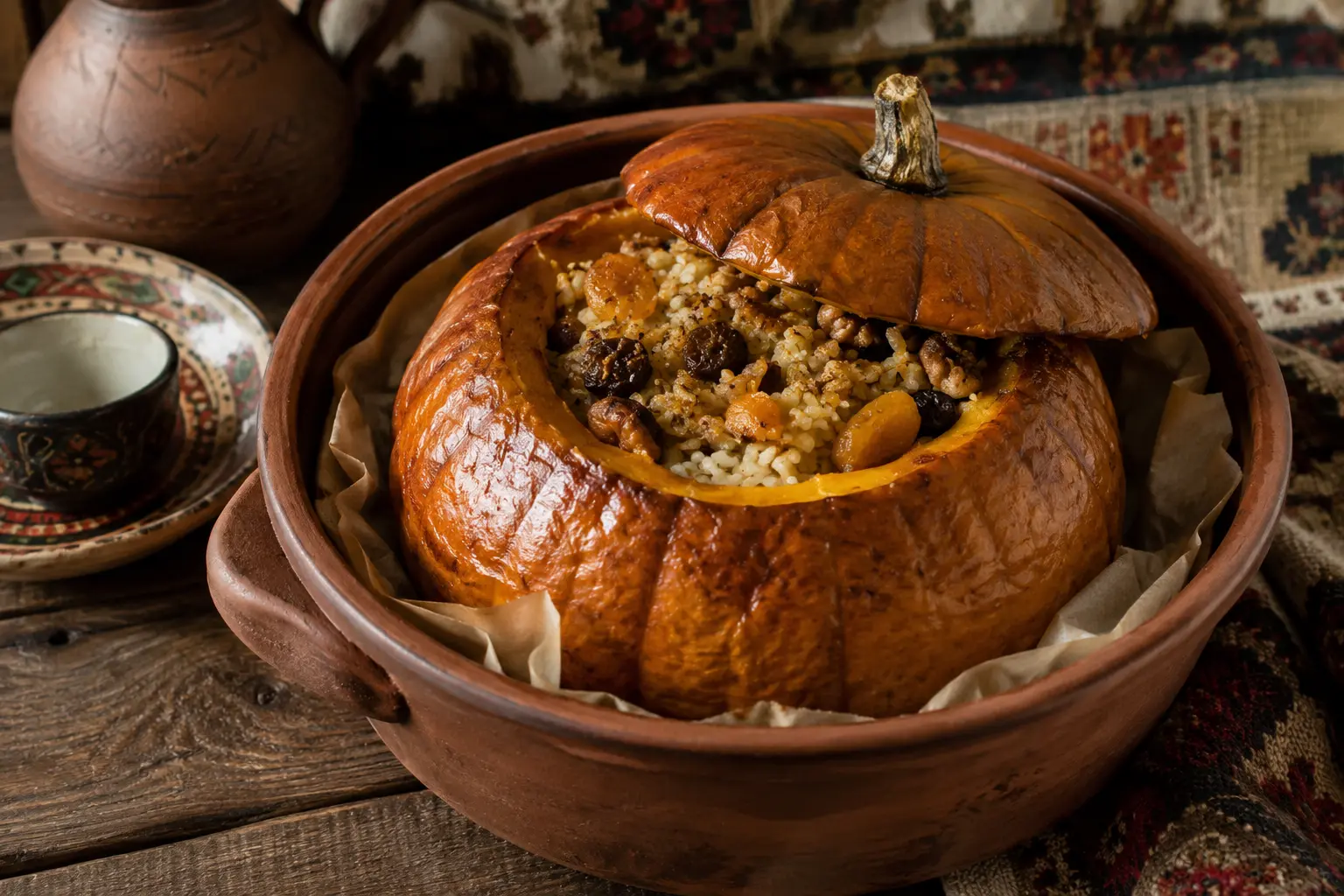
A whole pumpkin filled with rice, dried fruit and nuts and baked until it can be opened at the table — a festive dish whose ingredients place it firmly in the modern era.
Lavash
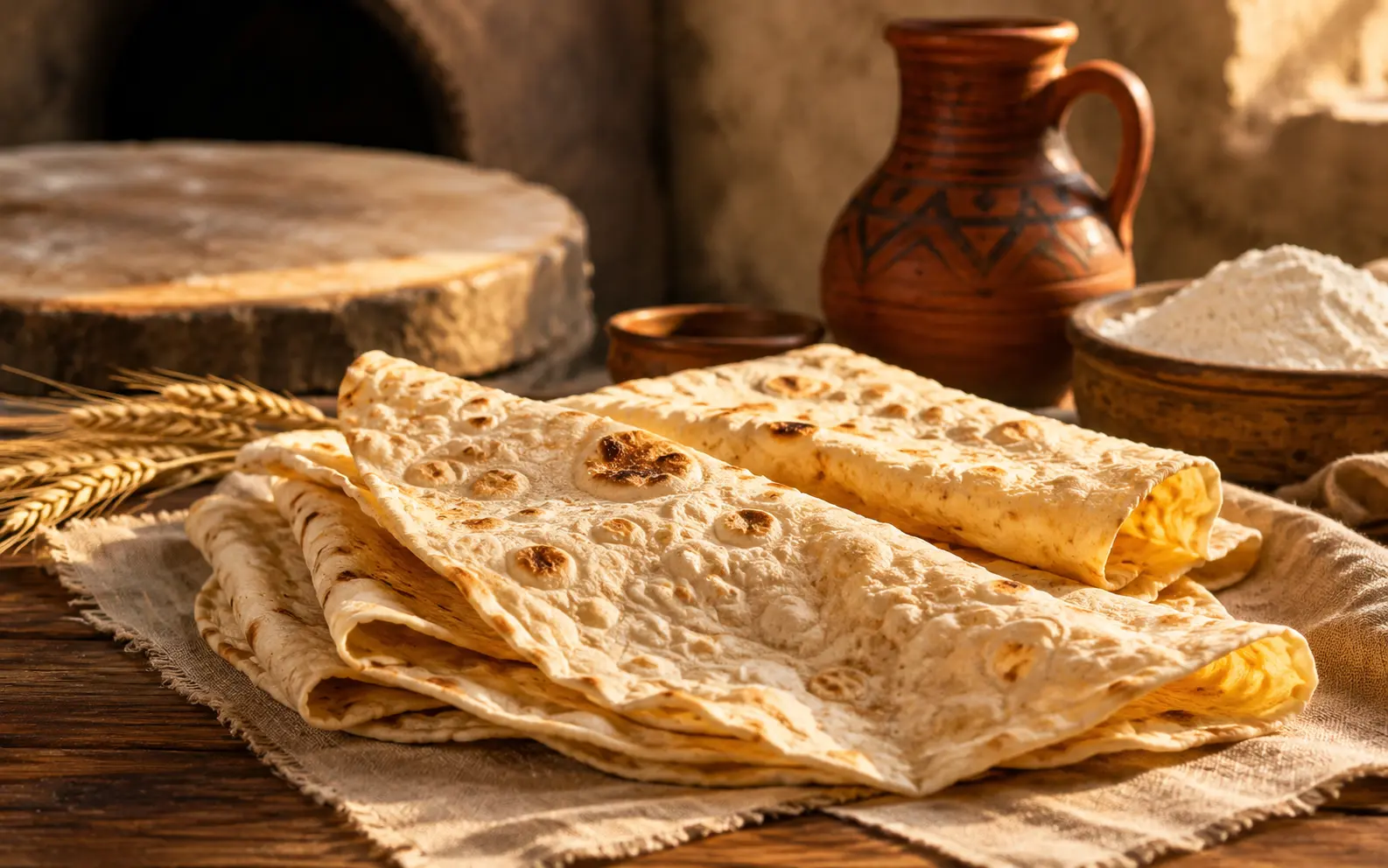
The thin flatbread baked against the wall of a clay tonir, inscribed by UNESCO in 2014 for the way it is made, shared and used in Armenian life — and inscribed again in 2016 for five other countries.
Khorovats
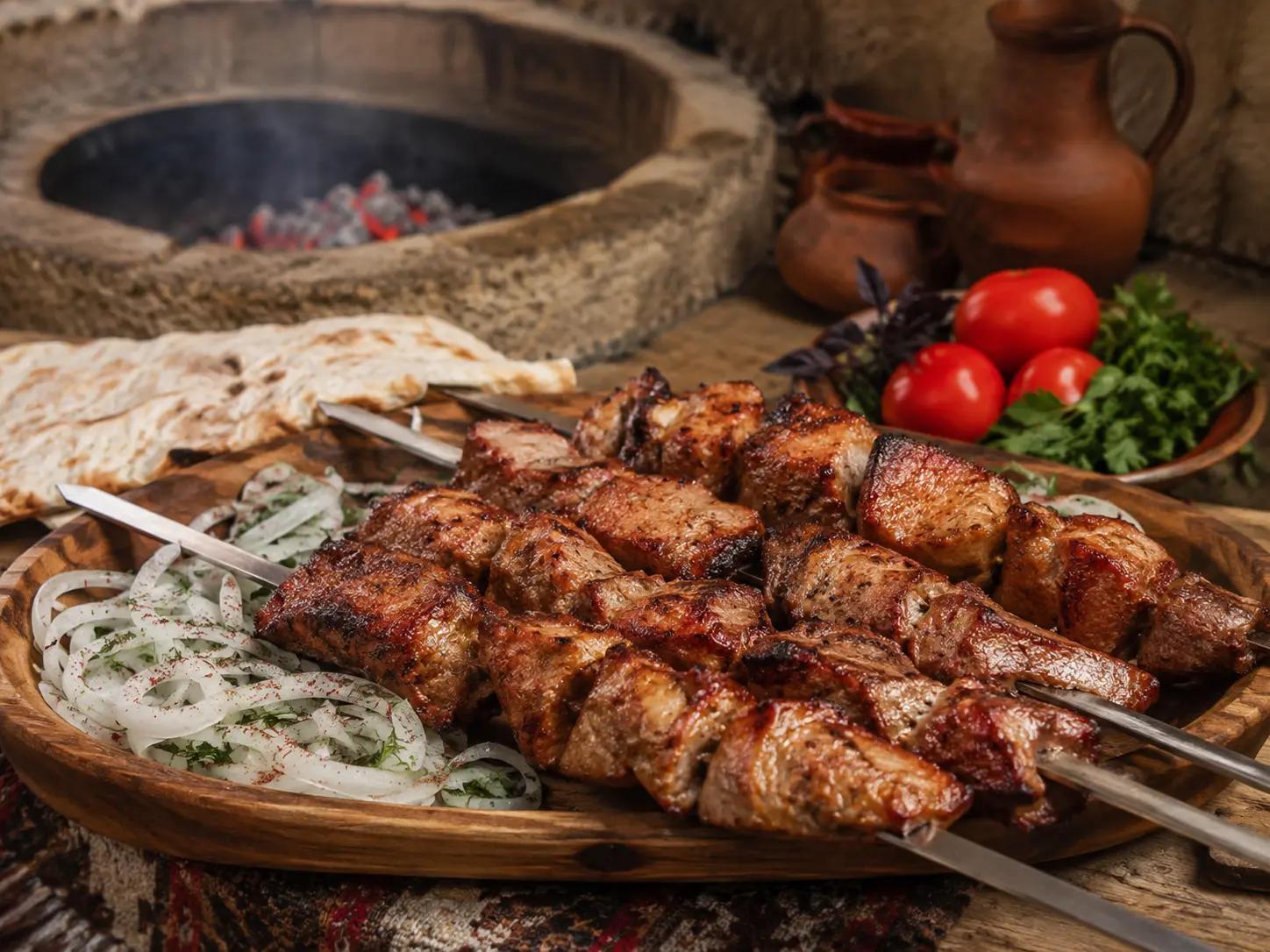
Meat grilled over open embers, and the social occasion built around it: who lights the fire, who tends it, and how it differs from the communal meal of a madagh.