
Land of Nairi
Land of Nairi is a novel in three parts by Yeghishe Charents, the modernist poet of early Soviet Armenia. He wrote it between 1921 and 1925, and it was published at Yerevan in 1926. Its subject is a provincial Armenian city closely modeled on Kars, the fortress city where Charents was born. The novel follows the city from patriotic confidence through the First World War to a collapse that leaves its grandest ambitions in ruins. Near the start the narrator announces that the novel has no hero. The rest of the book tests an old, lofty idea of the homeland, Nairi, against a real historical catastrophe, without simply celebrating it or rejecting it.
- Author
- Armat Editorial Team
- Updated
- Reading time
- 18 min read
In brief
Land of Nairi is a novel in three parts by Yeghishe Charents, written 1921–1925 in Moscow and Yerevan and published at Yerevan in 1926. It is set in an unnamed provincial city closely modeled on Kars, Charents's own birthplace. The novel follows the city's committees and notables through patriotic enthusiasm, the First World War and a collapse that leaves the dream of a restored, unified Nairi in ruins. Its self-aware narrator announces at the outset that the novel has no hero, and Armenian scholars widely regard it as the first modernist Armenian novel.
Key facts
- Author
- Yeghishe Charents (1897–1937)
- Form
- Novel in three parts; the author called it a "poem-like novel" (պոեմանման վեպ)
- Written
- 1921–1925, in Moscow and Yerevan
- Serialized
- In the journal Նորք (Norq), ahead of book publication
- First book publication
- Yerevan, 1926
- Setting
- An unnamed provincial city closely modeled on Kars
- Structure
- Three parts, tracing confidence through war to collapse
- Central figure
- Մազութի Համո (Mazuti Hamo); the narrator insists the novel has no hero
What Land of Nairi is
Land of Nairi (Երկիր Նաիրի, Yerkir Nairi) is a novel in three parts by Yeghishe Charents, written between 1921 and 1925 and published as a book at Yerevan in 1926. Charents did not call it simply a novel. He called it a պոեմանման վեպ, a poem-like novel, and he meant it. Long passages of lyrical, essay-like prose break into the narrative, the narrator speaks directly to the reader, and the city's collapse comes across less as a chain of events than as a mood the reader is made to live inside.
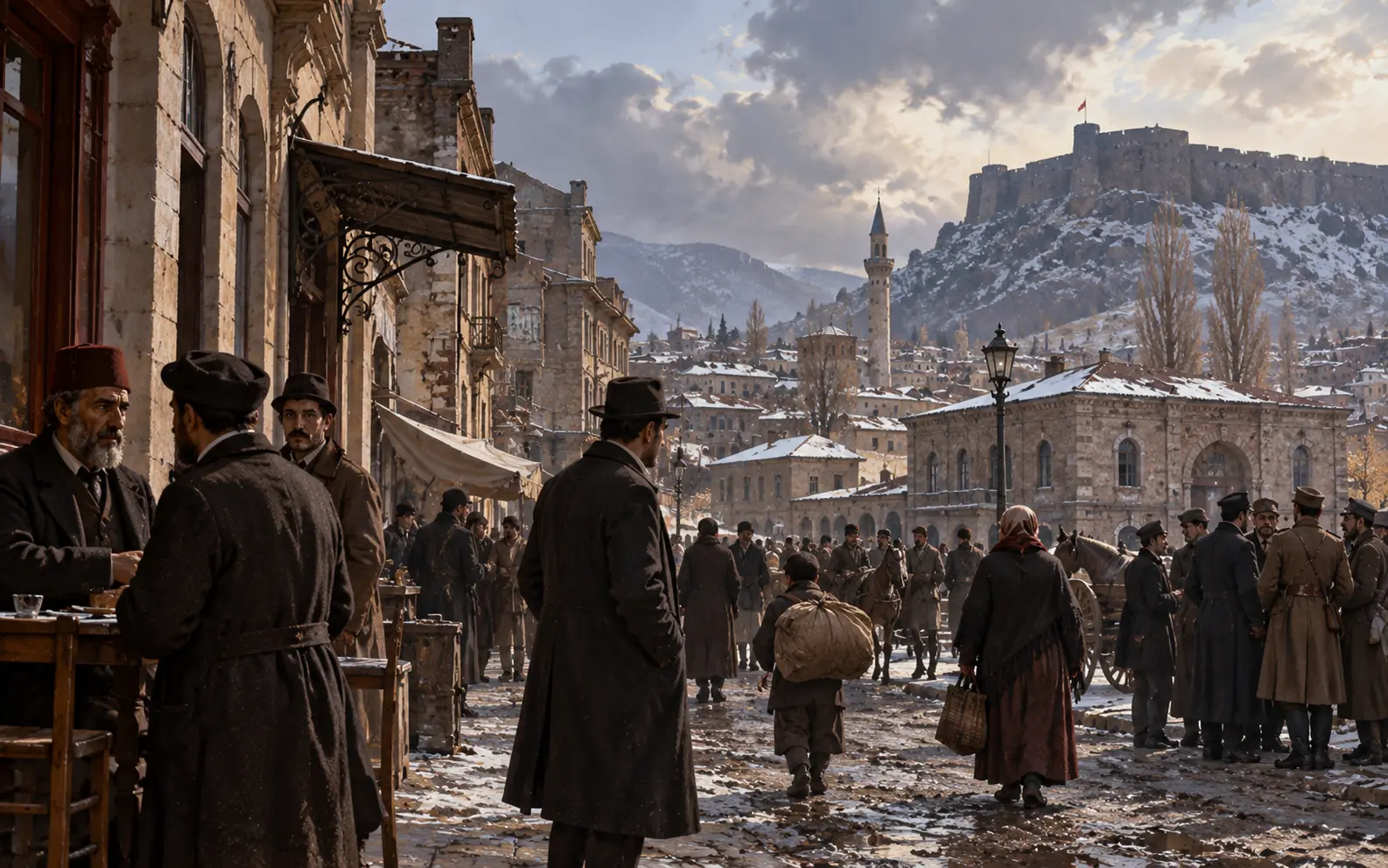
The setting is an unnamed provincial Armenian city in the years before and during the First World War. It is closely modeled on Kars, the fortress city where Charents was born in 1897. The novel follows the city's committees, notables and ordinary residents through patriotic enthusiasm, war, and a collapse that leaves its grandest ambitions in ruins.
Armenian scholars widely describe it as the first modernist Armenian novel. That is a claim about form as much as content, and this article examines it in its own section below instead of repeating it as a slogan.
The title, and what "Nairi" means
Նաիրի is an old name. It appears in Urartian and Assyrian inscriptions for a confederation of peoples and lands around Lake Van, centuries before the word "Armenia" existed. By the nineteenth century Armenian writers had taken it up as a poetic, lofty name for the Armenian homeland, much as English poetry might reach for "Albion" instead of "England." Charents uses that inherited grandeur on purpose, and then spends the book testing it against a much smaller and shabbier reality.
The characters themselves give the name its symbolic weight. One of them dreams aloud of a "united and independent Nairi, from sea to sea" (միացյալ ու անկախ, ծովից ծով Նաիրին), a vision of restored, undivided Armenian statehood. The narrator neither simply mocks this dream nor simply endorses it. The gap between the phrase and what actually happens to the city drives the whole novel; it is not a joke told once and dropped.
Two spellings circulate: Երկիր Նաիրի, the standard modern form and the one used throughout this article, and Երկիր Նայիրի, which appears in some printings and citations. This article treats them as spelling variants of the same title, not as a separate work or an error. No source treats the two spellings as naming different texts.
Written 1921–1925, published 1926
Charents wrote the novel between 1921 and 1925, in Moscow and in Yerevan, in the years just after he had thrown himself into the literary avant-garde of the early Soviet 1920s. Readers saw parts of it before the book appeared. Chapters were serialized in the Yerevan journal Նորք (Norq) in the early-to-mid 1920s, before the complete text came out as a book at Yerevan in 1926.
Some reference works give an earlier or narrower window for the writing: 1920 to 1923, or finished by 1924. At least one widely copied encyclopedia entry dates the book's first publication to 1924 instead of 1926. This article follows the fuller five-year window and the 1926 book date. They match the chronology this site already gives for Charents and agree with most of the sources consulted, including the serialization record. The narrower dates are noted here as a known discrepancy rather than quietly dropped.
The novel quickly found readers, including outside Armenia. It was translated into Russian and republished repeatedly in Moscow during Charents's own lifetime, at a time when very little new Armenian prose reached Russian readers at all.
Three parts, one collapse
The three parts trace a single arc, from confidence to ruin. The first, sometimes translated as "The City and Its People," introduces the city through its buildings, its fortress, bridge and church, and its notables. It sets out the conservative and progressive currents among the residents before anything has gone wrong. The second, "Toward Nairi," opens with the outbreak of the First World War in 1914. It follows the public meetings, recruitment appeals and patriotic speeches that promise liberation and a restored Nairi. The third and last part tells of the city's fall: chaos, betrayal, and the collapse of the dream the second part had built up.
The parts were not written or published as separate short works with their own titles. They are movements of one continuous novel, published together in the 1926 book. Still, because Norq serialized chapters in the early 1920s, readers met pieces of the story before the whole existed in one volume. That is worth knowing when a citation seems to refer to only part of the text.
Kars
Kars was a fortress city in the South Caucasus, held by the Russian Empire from 1878. It had a large, long-established Armenian population, including the family Charents was born into in 1897. It was a real administrative and military center, not a village: the kind of place with committees, notables, a hospital, a garrison and a local press, and the novel draws its cast from all of them.
The First World War and the collapse of Russian and then Armenian control in the region in 1918–1920 ended Kars's history as an Armenian city. It has been part of Turkey since the 1921 Treaty of Kars, signed in the same years that Charents was writing the novel. That border history is the novel's backdrop. This article gives it only as context, not as a military chronicle, because the novel is about a city, not a border.
Charents does not always call the city "Kars" in the text. Armenian scholars point to a deliberate ambiguity: at moments the narrator seems to question whether the city can be said to exist at all, even while specific, checkable place names tie it firmly to Kars. This article reads that ambiguity as a technique of storytelling and memory, not as a sign that the city is meant to be fictional or generic.
The remembered city, not the documentary one
Charents was writing several years and a lost war away from the city he describes, in Moscow and Yerevan rather than in Kars itself, and he built the novel as an act of memory, not reportage. Its geography is specific and checkable, with named streets, a named bridge and a named church. But the narration keeps reminding the reader that it is rebuilding a world that no longer exists in the form described.
This is the difference between a remembered city and a documentary one. A documentary account would fix Kars in 1914 as it really was. Charents's narrator instead keeps interrupting his own description and questioning what he tells, and he treats the city as already lost, even in the chapters set before its fall. The reader can never mistake the novel for a guidebook to a vanished place.
The narrator
Near the opening, the narrator makes an unusual claim about his own book: "there is no hero in this novel, and there will not be one" (իր վեպում չկա և չի լինելու ոչ մի հերոս), because, he says, the city's residents simply lack the qualities a hero would need. This is not false modesty. It sets the novel's method. Instead of a protagonist to follow and cheer for, the reader gets a narrator who watches, comments and doubts, and who now and then steps outside the story to speak to the reader directly.
Critics have compared the effect to Gogol. The writer Marietta Shaginyan called the novel a work "created in a Gogolian rhythm" (ստեղծված է գոգոլյան ռիթմով). Others have compared it to the essay-like, wandering narrators of early twentieth-century European fiction. One recent comparative study describes the narrator as passive before the events he records, unable to change their outcome, watching history flow past him like "a turbid current, a river of darkness." That passivity is deliberate. A narrator who could control or redeem the story would undercut the novel's larger argument that the city's catastrophe was nobody's plan.
"Unreliable narrator" is not a term Armenian scholars use here, and this article avoids bringing it in casually. The narrator is self-aware, digressive and often ironic, but his irony points outward, at the city's public rhetoric and self-image. It is not mainly there to make the reader doubt his own account of events.
The city's public men
Instead of one protagonist, the novel has a large cast of the city's notable and half-notable residents, a deliberate choice given the narrator's opening claim that there is no hero. The figure who returns most often and carries the most weight is Մազութի Համո, Mazuti Hamo, literally something like "Hamo of the oil trade," a nickname from his business rather than a formal surname. He is a local committee man whose grand, confident talk about liberating Nairi drives much of the second part, and whose downfall anchors the third. Sources differ on the exact form of a fuller patronymic, so this article uses the name he is always known by instead of guessing at a longer legal name.
Around him the novel sketches a gallery of social types from the machinery of a provincial city on the edge of war: committee leaders, a schoolteacher back from Europe who despises local manners, a skeptical school inspector, a coffeehouse owner who serves as the city's rumour mill, a respected judicial conciliator, a priest preaching patriotic sermons, and minor figures whose fates run through the background. None of them is a psychologically rounded individual in the realist sense. They are drawn briefly but memorably, as the social types the satire needs.
What the satire targets
The satire aims at a specific gap: between what the city's public men say about the nation's destiny and what they can actually do. Committee leaders and speakers promise liberation and a restored, unified Nairi with enormous confidence. Meanwhile the story around them shows disorder, self-interest, cowardice and a gulf between them and the people they claim to speak for. The target is not patriotic feeling itself but patriotism puffed up into a substitute for competence and honesty.
So the novel is not, as a flattened summary might put it, "Charents mocking Armenians" in general. The satire is social and political before it is national. It targets a particular class of provincial public men, with their speeches, their committees and their self-importance, in a specific city at a specific moment of crisis. European satirical fiction of the period found the same target in its own provincial notables and civic committees. Ordinary residents, and the city's losses, are treated with more sorrow than mockery.
Grotesque and caricature
Charents draws several of his public men as caricatures rather than realist portraits: grand nicknames, puffed-up speech, and behaviour pushed just past plausibility, so that a social type shows through an individual. This is the register that made critics think of Gogol. The grotesque here does analytical work as well as providing comic relief, because the exaggeration itself exposes the distance between how a man sees himself and how much he actually counts in events.
The technique costs the novel some of realism's inner psychological life, since readers are not invited inside these characters' minds. In return it gains satirical clarity: a caricature can carry a social criticism that a rounded character might blur.
Politics, committees and rhetoric
Much of the second part is built from the language of the moment: recruitment appeals, patriotic sermons and committee speeches, quoted or closely imitated rather than just described. Charents lets the period's rhetoric of liberation and volunteer mobilization run on at length, so that its emptiness shows through its own excess, without the narrator needing to comment.
Throughout, the novel cares more about the machinery of committees and public meetings than about formal politics or state institutions. That fits a city where, as the novel tells it, real authority lies with self-appointed local notables, not with any effective higher power that could prevent what comes next.
Nation, homeland and myth
The novel's central and most debated question is how Nairi the symbol relates to the actual fate of the city, and Armenian critics have not settled on one reading. The novel neither simply rejects Armenian national feeling nor celebrates it. It takes the inherited, lofty idea of Nairi seriously enough to let a character voice it with real conviction, and then shows that conviction failing to survive the war and the city's collapse.
Reading the novel as Charents simply "rejecting nationalism" claims more than the text says outright. Reading it as patriotic celebration ignores the steady irony aimed at the very rhetoric of national restoration. The more defensible reading, and the one this article follows, is that the novel holds the myth and the disappointment together without resolving them. It tests an inherited national imagination against a specific historical catastrophe, without passing a verdict on nationalism as such.
Memory and historical loss
Memory is the novel's deepest subject, and it works on two levels at once. One is the personal memory of a writer in Moscow and Yerevan in the early 1920s, rebuilding a city he had left and that had since passed out of Armenian control, an act of recollection shadowed by what had already been lost. The other is the collective memory the novel stages within its own story, as characters invoke Nairi's ancient name to make sense of a present crisis, reaching back for meaning because the present offers so little.
The novel does not treat memory as simply accurate. The narrator's doubts about whether the city can be said to exist at all, and the characters' inflated appeals to an ancient, united homeland, both show how memory distorts and turns things into myth even as it preserves them. The remembered Nairi is never quite the historical Kars, and the novel is built around that gap instead of papering over it.
Language
Charents wrote the novel in Eastern Armenian, shaped by the literary and journalistic language of the early Soviet 1920s rather than by the local Kars dialect. The satirized rhetoric of committees and sermons is a style of public speech, not a record of regional speech patterns. Kars was a truly multilingual place, but no source consulted for this article shows Turkish- or Russian-derived vocabulary used as a deliberate feature of the prose. So this article makes no claim about borrowed words beyond what the sources directly record.
What the sources do record is a shift of register built into the prose itself. Passages of lyrical, essay-like narration sit next to passages that closely imitate or quote the inflated rhetoric of patriotic speeches and committee meetings. The friction between the two is one way the satire works through language itself, not only through plot.
A modernist, experimental form
The label "first modernist Armenian novel" rests on specific features of form, not on fashion. The narrator steps into his own storytelling and comments on it. Charents refused to call the book a simple novel and preferred "poem-like novel". Long essay-like and lyrical digressions hold up the story. And the structure is built around mood and historical inevitability, not a conventional plot driven by a protagonist's choices.
A recent comparative study places the novel alongside the major European modernists, naming Musil, Broch, Joyce and Proust. It argues that, like Musil's The Man Without Qualities, the novel shows an empire's collapse through a visionary figure chasing an impossible ideal, and shows historical irrationality defeating rational intention. This article presents the comparison as a documented critical argument, not as a claim that Charents had read these writers or was directly imitating them.
Prose among the poems
This site presents Charents mainly as a poet, and Land of Nairi is the clearest proof that his ambitions went beyond verse. The themes that dominate his poetry return here: homeland, historical rupture, memory, and the gap between revolutionary hope and its cost. But prose lets him do something his poetry does not. He can build a whole social world of committees, notables and public rhetoric, large enough for satire to work on, and keep a single ironic narrating voice going across hundreds of pages instead of a lyric's few dozen lines.
This site does not give separate entries to poems that Charents's biography mentions only in passing. Land of Nairi has its own entry because it is a distinct, book-length prose work with its own publication history, not because every title linked to him deserves one.
Reception and translation
The novel was well received in its own time. It was translated into Russian and republished repeatedly in Moscow during Charents's lifetime, and it was presented to delegates at the 1934 Soviet Writers' Congress. That popular and official success in the 1920s and early 1930s belongs to the novel's own decade. It should not be read backward through Charents's arrest and death in 1937. The two are separated by a full decade and by a political turn that had nothing to do with this novel in particular: the 1933 attacks on Book of the Road, and then the purges. No source consulted records a formal ban or suppression of Land of Nairi itself, and this article does not claim one.
Armenian scholars have kept the novel alive as a subject of criticism, including comparative studies that place it within a European tradition of the novel. An English-titled edition circulates as Land of Nairi through commercial digital editions. This article could not confirm a named translator, publisher or ISBN for a printed critical edition, and gives no bibliographic details beyond what could be confirmed.
Important dates
1897
Charents is born in Kars, the city the novel will reconstruct from memory.
1914
The novel's second part opens with the outbreak of the First World War and the city's mobilization.
1918–1920
Kars passes out of Armenian control amid the region's wartime and postwar collapse, the backdrop the novel was written into.
1921–1925
Charents writes the novel in Moscow and Yerevan, with chapters serialized in Նորք along the way.
1926
Published as a book at Yerevan.
1934
Presented to delegates at the Soviet Writers' Congress in Moscow.
1937
Charents is arrested and dies in prison, a full decade after the novel's publication and for reasons unconnected to this work specifically.
Why Land of Nairi matters
It is the book that proves Charents's modernism went beyond verse. The same restlessness that let him break Armenian metre and invent compound words in his poems reshapes prose here into something closer to essay, memoir and satire than to the realist provincial novel that Armenian readers in 1926 might have expected.
It is also a memorial to a city that no longer exists in the form it describes, written by someone who could no longer go back. Kars's later history turned the novel's elegiac undertone from a matter of style into literal fact. The novel could not have fully known this when it was written, and this article states it as context, not as the novel's own claim about itself.
Interesting facts
- 01Charents did not call it simply a novel; he described it as a "poem-like novel" (պոեմանման վեպ).
- 02The narrator announces near the start that the novel has no hero, because none of the city's residents has heroic qualities.
- 03The writer Marietta Shaginyan described it as written "in a Gogolian rhythm."
- 04It was presented to delegates at the 1934 Soviet Writers' Congress.
- 05A recent comparative study places it alongside Robert Musil's The Man Without Qualities as a novel of imperial collapse.
- 06Its central symbolic phrase, a "united and independent Nairi, from sea to sea," voices a dream of restored statehood that the novel goes on to test against catastrophe.
Sources
- Երկիր Նաիրի (վեպ) — Հայկական Վիքիպեդիա, ըստ Հայկական հանրագիտարանի (encyclopedia.am), consulted 2026 Visit sourceThe source of the article's three-part structure and their titles, the character list (Մազութի Համո and the gallery of local notables around him), the narrator's own line that the novel has no hero, and the discussion of Նաիրի as both the historical kingdom and the symbolic 'united, undivided homeland' the characters invoke. Also the source of the Երկիր Նայիրի spelling variant, which it prints without treating it as a separate title. Cited with one caution stated in the article itself: this entry dates the novel's composition to 1921–1924 and its publication to 1924, which conflicts with the 1926 book date most other sources and this site's own Charents chronology use — recorded here as the documented discrepancy the article names rather than adopted silently.
- Yeghishe Charents — Wikipedia, consulted 2026 Visit sourceCited for the biographical anchor (Kars, 1897) and for two claims about the novel's afterlife not found elsewhere consulted: that it was translated into Russian and repeatedly republished in Moscow during Charents's lifetime, and that it was presented to delegates at the 1934 Soviet Writers' Congress by Maxim Gorky. Not cited for the composition/publication dates, which this article draws from the fuller record described above.
- Աշոտ Ալեքսանյան. Եղիշե Չարենցի «Երկիր Նաիրին» և եվրոպական վիպական ավանդույթը — Գրանիշ (granish.org), consulted 2026 Visit sourceThe source the modernist-form and narrator sections rest on. Alexanyan places the novel beside Musil, Broch, Joyce and Proust as a European modernist seeking new expressive forms without a wholesale break from narrative continuity; states the novel's own description of itself as having 'no hero — only a narrator,' passive before events he cannot shape and describing them as 'a turbid current, a river of darkness'; identifies the satirised nationalist intellectual as the target of a Musil-style comedy of ambition outrunning material reality; and notes the novel's self-description as a poem-like novel blending poetic and essayistic elements. Cited for a documented critical argument, not as evidence Charents read these European writers.
- «Երկիր Նաիրի», Ա. Ալեքսանդրյան | Մարիետա Շահինյան մեջբերումով — Վիքիքաղվածք (hy.wikiquote.org), «Եղիշե Չարենց», consulted 2026 Visit sourceThe source of Marietta Shaginyan's characterisation of the novel as 'created in a Gogolian rhythm' (ստեղծված է գոգոլյան ռիթմով), quoted in the narrator section and among the interesting facts. Cited for that one line, not for a general account of the novel.
- Land of Nairi, Where Are You? — Armenian National Institute / Aniarc (aniarc.am), 2015 Visit sourceCited for the passage on Kars's Arakelots church, which Charents compares to what the soul is to the body and to Notre-Dame for Parisians, and for its framing of Nairi as a name that reaches for a vanished world rather than a plain synonym for Armenia. This is the diaspora-facing source consulted for this article; it is descriptive rather than a scholarly critical study, and is cited only for that one passage and framing.
- Լիլիթ Երանյան. Կորստից ազատվելու հզոր ձգտումը ըստ Եղիշե Չարենցի «Երկիր Նաիրի» վեպի — Գրանիշ (granish.org), consulted 2026 Visit sourceLocated as a second, independent piece of contemporary Armenian literary criticism on the novel, evidence that it remains a live subject of critical attention rather than a closed classic — cited for that fact of continued scholarly engagement, not for specific claims quoted in the article, since this article does not reproduce its argument in detail.
- Երկիր Նաիրի: Land of Nairi — Google Play Books / Kobo, consulted 2026 Visit sourceThe evidence that an English-titled digital edition circulates commercially under Land of Nairi. Cited specifically for what it does not establish: neither this listing nor the parallel Kobo listing names a translator, a print publisher or an ISBN for a critical edition, which is why the article states the title's currency without asserting a canonical English translation's bibliographic details.
- Երկիր Նաիրի [Yerkir Nairi] — Goodreads, consulted 2026 Visit sourceA library-catalogue-style record used only to cross-check the title romanisation Yerkir Nairi against independent English-language usage outside Wikipedia, alongside the Yerkir Nayiri variant this article records as an alternative transliteration rather than a different title.
Related articles

Yeghishe Charents
A restless modernist poet whose bold experiments and fierce love of Armenia made him the defining literary voice of his generation.
Anush
Hovhannes Tumanyan's mountain love poem follows two young villagers destroyed by pride, custom and the harsh code of honour.
Wounds of Armenia
Khachatur Abovyan's novel of the Russo-Persian war is the first major work written in the living speech of the Armenian people.