
Baghdasar Aghbar
Baghdasar Aghbar is a comedy in three acts by Hakob Paronyan, the satirist of Ottoman Constantinople, written in 1886. It is about a man who is entirely in the right and is ruined by it. Baghdasar has seen his wife leaving a house with another man. He wants a divorce, and takes the case to the tribunal his community keeps for such matters. Over three acts, the lawyer he hires, the friend who is his wife's lover and the councillors who are supposed to judge the case agree among themselves that he saw nothing. By the end he is repeating their version in front of witnesses. Paronyan died in 1891 without seeing this or any of his other plays on a stage.
- Author
- Armat Editorial Team
- Updated
- Reading time
- 27 min read
In brief
Baghdasar Aghbar is a comedy in three acts by Hakob Paronyan, written at Constantinople in 1886 and printed the same year in his own satirical journal. A wealthy Constantinople Armenian discovers that his wife has a lover, his own closest friend, and asks the Armenian community's matrimonial tribunal for a divorce. He never gets one. Between them, the lawyer, the lover and the councillors decide that what he saw was an optical illusion, and he is made to say so himself. Paronyan died in 1891 without seeing any of his plays performed; this one reached the stage at Tiflis in 1895.
Key facts
- Author
- Hakob Paronyan (1843–1891), also written Hagop Baronian
- Form
- Comedy in three acts; the text calls itself Կատակերգություն երեք արարքով
- Written
- 1886, at Constantinople
- First printed
- Serialised in Paronyan's own journal Խիկար, August to December 1886 and January to February 1887
- First staged
- Tiflis, 1895, four years after the author's death
- Setting
- Baghdasar's house, in the Armenian community of Constantinople
- Main characters
- Պաղտասար աղբար, Անույշ, Կիպար, Օգսեն, Փայլակ, Երկաթ, Սուր, Սողոմե
- Text of record
- Հակոբ Պարոնյան, Երկերի ժողովածու, volume 1, Yerevan, 1962
What Baghdasar Aghbar is
Baghdasar Aghbar is a comedy in three acts by Hakob Paronyan, written at Constantinople in 1886. The text names its own genre on the title page, Կատակերգություն երեք արարքով, a comedy in three acts, and it is the last play he wrote. It is also his most performed play, though he never saw it performed.
The situation is domestic, but the target is not. A prosperous Constantinople Armenian finds out that his wife is unfaithful and applies for a divorce. The system his community keeps for deciding such cases takes his application, turns it around, and hands him a verdict against himself. Nothing supernatural or improbable happens. Everyone acts in their own interest, and those interests are arranged so that the one person telling the truth is the one person nobody can believe.
The name covers several things, so it helps to be clear from the start. Պաղտասար աղբար is the play, and it is also the name of the man in it. In English it appears under at least six different titles, none of them standard. A later section sorts those out.
The title, and the word աղբար
Պաղտասար is the Armenian form of the name Balthasar. Աղբար is the tricky half. It is a dialect form of եղբայր, brother, used in speech as a form of address. The standard dialect dictionary of Armenian marks it as dialectal and refers it to the variant աղբեր, and the list of dialects under that word opens with Constantinople itself. The form belongs to the very city where the play is set.
That matters, because it rules out the reading the title most invites. Աղբար does not make Baghdasar a provincial or a peasant. The encyclopedia describes him as a wealthy Constantinople Armenian, and so does the criticism. The word marks register, not origin. Literary եղբայր is a learned form, taken back into the modern language from Classical Armenian; աղբար is what everyday speech made of the same word on its own. Calling a man Baghdasar aghbar is homely, not respectful, and in a title it is faintly comic.
The play itself tells us what the name is worth. In the first act his wife tells him that before they married, in his baggy trousers and long coat, he looked like a cook, so that everyone called him Baghdasar aghbar. The title is the mocking name his neighbours gave him, and Paronyan hung it over the door.
One caution about the word belongs here. In the twentieth century ախպար took on a pejorative edge in Soviet Armenia, where it was used for diaspora Armenians who repatriated in the years after the Second World War. That sense came decades after this play and has nothing to do with it.
Why it has six English titles and no canonical one
There is no settled English title for this play, because the people best placed to settle it did not agree. Two English translations have been published. Mischa Kudian, who had already given English readers Paronyan's novel as Honourable Beggars, translated the play in 1992 and called it simply Balthazar, dropping the Armenian word entirely. Paul Rapley and Aramazd Stepanian translated it for an anthology of Armenian playwrights in 2020. They kept the Armenian, transliterated as Baghdasar Akhpar, and then added Uncle Baghdasar in parentheses, printing both solutions at once.
Around those two, English writing uses Baghdasar Aghbar, Baghdasar Aghpar, Brother Baghdasar, Brother Balthazar and Uncle Balthazar more or less interchangeably. The oldest of these goes back further than you might think. The notes to the Armenian collected works record a French translation of 1913 as Maître Balthasar, an English one published at Boston in 1933 as Uncle Balthazar, and a Russian one of 1937 as Дядя Багдасар. So translators in more than one language reached for Uncle early and independently. English and Russian both have a familiar but respectful way to address an older man, and in neither language is it Brother.
This article uses Baghdasar Aghbar, the form most widely used in English, and treats it as a transliteration, not a translation. Where the meaning matters, the text explains it, which is what the translators themselves ended up doing.
Written 1886, printed in his own journal
Paronyan announced the play himself. In the August 1886 issue of Խիկար, the satirical journal he edited, he told readers that he planned to publish a series of comedies drawn from national life, beginning in that issue with a comedy called Պաղտասար աղբար. The serial ran from August to December 1886 and continued through January and February 1887. The academic edition of his works is based on that printing.
So the play was printed in his lifetime, in his own paper. The usual shorthand date of 1886 marks the start of the run, not the whole of it. No separate Armenian book edition is documented before a Constantinople volume of 1910, which prints it together with the unfinished Պռույգ.
The announcement also explains why he wrote a play at all. He told his readers he would stop publishing allegorical writing, the kind that necessity forces on a satirist and in which, he said, the satire dies. Instead he would give them comedies taken from national manners. That is a statement about censorship as much as about form. A satirist wrote allegory when he could not name things. A comedy of Constantinople manners let him show the institutions at work without having to describe them.
Why he never saw it performed
Paronyan died at Constantinople on 27 May 1891, poor and ill with tuberculosis, having seen none of his plays staged. This does not reflect on their quality or mean he was obscure, and it was not bad luck. Armenian theatre in the Ottoman capital had been shut down during the 1880s, and there was no stage in the city where an Armenian comedy could be performed.
For this play the result is precise, and easy to get wrong. It was written in 1886, printed in 1886 and 1887, and first performed in 1895: four years after its author died, and in another empire. Everything that happened to it on stage is posthumous reception, and none of it tells us how the play was received when it was new.
What does survive from his lifetime is a review. M. Santaljyan wrote about the play in Խիկար in May 1887, describing it as a national comedy whose purpose was to mock the conduct of judges in matrimonial cases. That is a reader responding to a printed text, not an audience to a performance, and it is the only reaction from the time on record.
The dramatic situation
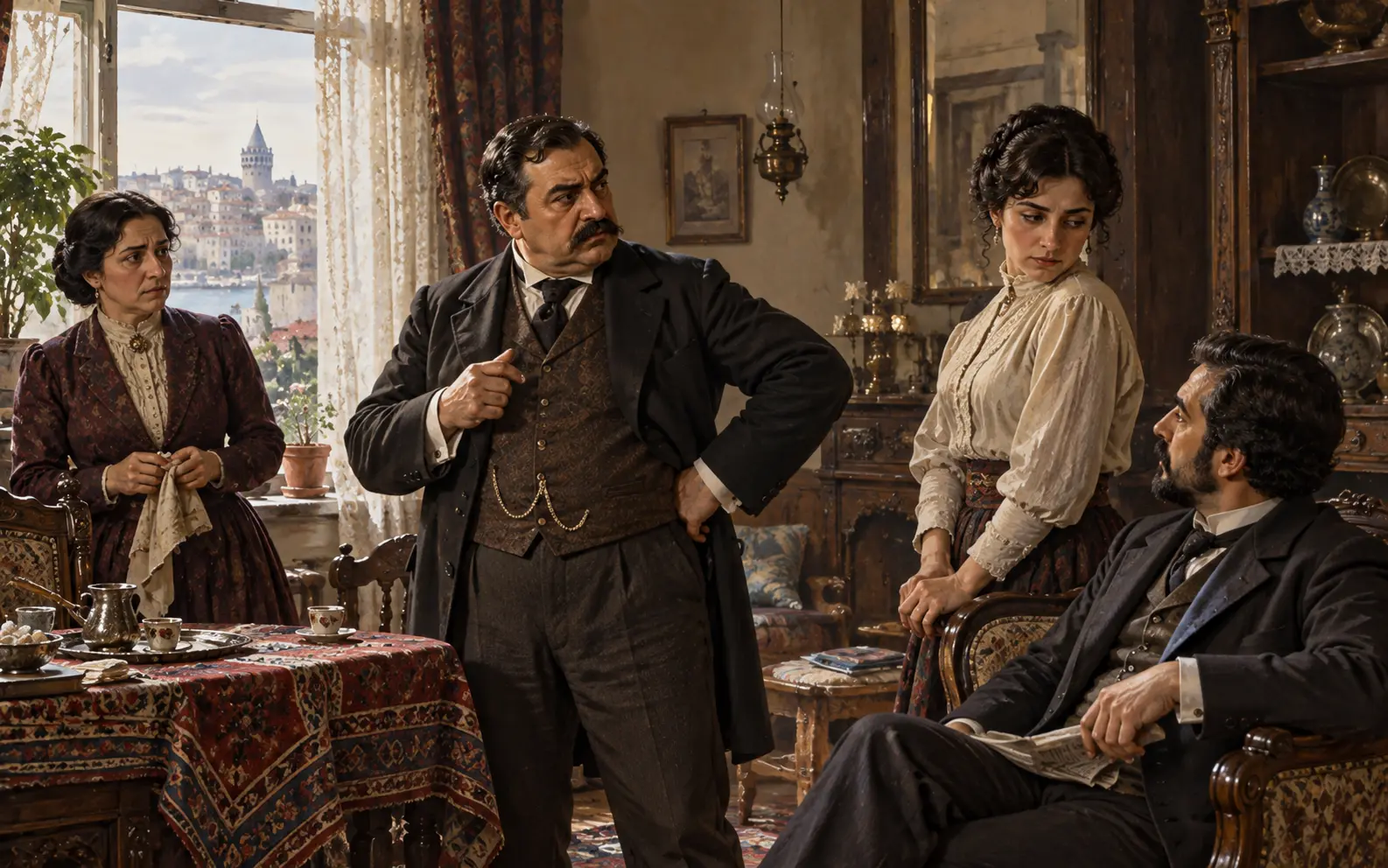
Baghdasar's wife Anush has a lover, Kipar, who is also Baghdasar's closest and most trusted friend and has been in love with her for ten years. The play opens just after the discovery. The evening before, Baghdasar saw his wife coming out of a disreputable house with a man. As the first act begins, he knows that much but not who the man was.
He hires a lawyer, Ogsen, and applies to the Դատաստանական խորհուրդ, the tribunal the Armenian community of Constantinople kept for matrimonial cases. What follows is a step-by-step reversal. Ogsen agrees a fee of a hundred and fifty gold pieces in three instalments, and later threatens, in so many words, to get his own client convicted and the wife acquitted if the money is late. Kipar files a counter-suit for slander. Anush files one of her own, appearing with her arm in a sling and a broken arm to prove it, and the council hears her petition before her husband's. Two neighbours are bribed to testify that Baghdasar had promised to marry them, which destroys what is left of his credibility.
He loses everything. The verdict is not a divorce but a separation on terms. He must leave his own house to his wife and pay her thirty gold a month, backed by a guarantor. And, the detail that stings, if she ever wants him back, he has no right to refuse. He is then required to apologise in public and to state himself that nobody was at fault and that there had been an optical illusion.
The ending is not the reconciliation this kind of plot usually reaches. In the last scene Baghdasar walks in on his wife and Kipar embracing again and goes for Kipar, who runs. Anush, no longer bothering to hide anything, tells her husband that she loves Kipar, has never loved him and never will, and walks out angry. The curtain falls on a man alone in a house that is no longer his, with the lie about him now on the legal record.
Baghdasar
The comedy works because its hero is right about the facts and wrong about everything else. Baghdasar is a market man who has made money, and his whole sense of himself rests on being nobody's fool. His catchphrase, which he produces at his moments of deepest blindness, is that people call him Baghdik and he knows his business. He explains to his wife's lover, in confidence and at length, that although he may look coarse and stupid from the outside he can tell a friend from an enemy. Then he sends the lover himself to find out the lover's name.
The scene that defines the character comes in the first act. Ogsen, who has just quarrelled with Kipar on the doorstep, comes back in denouncing him: what honour can a man have who for ten years has been the intimate friend of Baghdasar and loves Baghdasar's wife. Baghdasar does not recognise the description. It must be a different Baghdasar, he says; for a moment he thought it was himself. Then, about the man in the story, he passes the harshest judgement anyone in the play passes on him: who is this Baghdasar aghbar, what an ass of a man he must be. He is entirely correct, and he has no idea he is talking about himself.
Armenian critics disagree about what to make of him, and this article reports the disagreement without trying to settle it. An older reading treats him as a tragicomic figure in whom the comic and the tragic are interwoven. Darbinyan rejects the sympathy that reading implies. The author, he argues, shows no positive feeling toward anybody in the play, and Baghdasar only seems to be a suffering husband. The suffering is exactly what is being mocked, because he cannot tell real love from outward attraction. Gldjyan also rejects the tragicomic label, but reaches a different conclusion: the sobered Baghdasar of the later acts shows vitality, common sense and a genuine sense of humour, and in extremity is not nearly as stupid as he looks. Even so, Gldjyan's verdict is severe. This man is a nonentity, he writes, and not a petty nonentity to be pitied as a victim of circumstance — he is one of those responsible for the evil sprouting in his own society.
The text backs the severity. Early in the play, asked what the law should do with an unfaithful wife, Baghdasar answers that she should be sent to the national hospital, chained, starved, beaten every night, have her bones broken and be removed from the world. It is the ugliest speech in the comedy, and it is his. The audience is not invited to take his side. It is shown a man who deserves better than what happens to him, and who is still not a good man.
Marriage, jealousy and reputation
What Baghdasar wants from the tribunal is not really justice, and the play makes this clear. He wants his standing back. By the end he understands the machine well enough to use it. The optical illusion, he tells himself, will actually serve him: now he can tell his friends he mistook another woman for his wife. He knowingly trades the truth for a story he can repeat in public, and the play presents that trade as the most humiliating thing that happens to him.
The play cuts both ways on the marriage, and reading it simply as a defence of the wronged husband misses half of it. The case against Baghdasar as a husband is made in the play, and it is accurate. Anush tells him that he had not grasped the enlightened spirit of the age and regarded his wife as a slave. She is right. She is also an adulteress saying it to get out of a marriage, and her lover taught her the vocabulary. Paronyan puts a true criticism in a false mouth, and lets neither of them off.
The same doubleness runs through the money. Divorce, the lawyer observes, costs more than marriage; with what this is going to cost, Baghdasar says, a man could take three wives. The council's verdict settles a household in terms of maintenance and guarantors. In this comedy reputation has a price, and everybody in the room knows the figure.
The word that does the work
The play turns on a single word: թյուրատեսություն, false seeing, a misapprehension or an optical illusion. Kipar proposes it. The councillors take it up and pass it round in a rising chorus — yes, simply an optical illusion; yes, a perfect optical illusion; indeed more than an optical illusion; and for an optical illusion of that sort, what honourable man could possibly blame Baghdasar aghbar. Nothing has been disproved. A word has been agreed on, and agreement is all it takes.
Then Baghdasar has to say it himself, in public, as the price of the settlement: he was the cause of a misunderstanding, his wife is innocent, he is innocent, Kipar is innocent, there was an optical illusion in the business. That sentence sums up the comedy of the whole play, because the audience has watched every step by which a fact became a word and the word became a verdict.
And the word explodes in the final seconds. Caught in the act a second time, Kipar reaches for it again (an optical illusion), and this time Baghdasar goes for him. The joke that has run for three acts stops being funny at the exact moment the play ends.
The tribunal, the lawyer and the philanthropists
The institution being mocked was real. The Դատաստանական խորհուրդ was a body of four laymen and four clerics, elected by the Mixed Assembly under the Armenian National Constitution, with authority over matrimonial matters. It was the community's own court, in a city where the community ran its own affairs. Paronyan is not inventing a fantastical bureaucracy. He is dramatising a court his audience could have petitioned.
The satire on procedure is the most quoted part of the play. Ogsen explains to his client what will happen to his petition: it goes to the president, then to the court of initiative, the court of competence, the office of relations, the office of editing, the office of jurisdiction, the economic office, the educational office, then to the tribunal, then to a commission, a sub-commission, a sub-group and an auxiliary sub-group. Councillor Paylak caps it with a phrase that sums up how these men talk. The summary, he explains, recounts everything in detail: a brief extensiveness.
The lawyer describes his job without embarrassment. He will work, he tells Baghdasar, to have him declared innocent and to make his wife guilty. Kipar puts the profession's principle more neatly: most lawyers find justice and right where they see plenty of gold. Both men try to buy the verdict. Only Kipar succeeds, which is the play's quietest and least forgiving joke.
The sharpest blow is aimed elsewhere, at the philanthropic cant of the Constantinople Armenian elite. Ogsen explains that there are extenuating circumstances. If a wife took a lover for a good cause, that is, in aid of national progress and enlightenment, or to benefit some praiseworthy and nationally useful undertaking for orphans, the disabled, the old and the poor, then she would be written up in the newspapers and given laurel wreaths, for having heroically sacrificed private interest to the common good. This is the exact language of the community's charitable and patriotic life, turned to this use.
How the comedy is built
The encyclopedia gives the best short account of the method: events and characters develop through unexpected disclosures which never halt or interrupt the momentum of the work; the resolutions of the conflicts are witty; and the comedy of situation, and above all of speech, is strong. That last point is the key one. This is a play whose funniest effects are verbal.
The play is built on dramatic irony pushed to its limit. In the opening scene the audience learns from the lovers themselves everything that Baghdasar will spend three acts failing to find out. Every line he speaks to Kipar after that has two meanings, and he cannot hear the second. Paronyan sharpens the imbalance by giving Baghdasar far more asides than anyone else, so the audience is constantly inside the head of the one man who understands least.
Alongside this runs a comedy of escalation and derailment. The petition passes through a dozen offices, the lawyer's fee arrives in instalments, and three separate suits pile onto one adultery case. When the tribunal finally meets to hear it, the councillors spend the session discussing Kipar's father's horse: what it cost, what it is worth now, how high it jumps, how it does after hares. Meanwhile Baghdasar mutters in the corner, asking who brought up the wretched animal. As Gldjyan comments, after a private visit from Kipar the judges are more interested in the horse's age than in Baghdasar's plight.
Even the names are doing work. The three councillors are called Paylak, Yerkat and Sur: Lightning, Iron and Sword. Darbinyan calls them satirically generalising names. Their point is the gap between what the names promise and the pliable, purchasable men who carry them.
The language of the play
Paronyan wrote in Western Armenian, and specifically in the spoken idiom of Constantinople. This article follows Makaryan's description, because it is the only scholarly account of his dramatic language that could be found: a writer who began his literary career as a dramatist and ended as one, and who often gives whole pages over to nothing but the living talk of his characters, delivered in rich Constantinople Armenian speech.
Reading the text, you notice that the characters do not all speak the same Armenian. Ogsen talks in legal formulas and says so himself: in the language of advocates, he explains, this is called an extenuating circumstance of the offence. He then recites the term in five languages, French, Italian, German, Greek and English, written out in Armenian letters. Kipar speaks a flowery, abstract, self-consciously modern idiom full of principles and the civilisation of the age, sprinkled with classicising forms. Baghdasar is blunt and speaks in short, strung-together clauses. Soghome the maid is plainest of all, and gets some of the best lines: they have found a fool, she says of the lawyers, and they milk him and milk him.
There is a limit to this. No study of the language of this particular play could be found; the linguistic work on Paronyan deals with his prose, his wordplay across all his writing, or a different comedy. The differences in register described above are visible in the text and fit what critics say about the comedy of speech, but they are not the findings of a published study, and this article does not present them as if they were. In particular, it makes no claim about Turkish or French borrowings in this play, because no source documents any.
All of this rests on a fact about the city. The Armenians of Ottoman Constantinople ran much of their own community life under a National Constitution, with elected assemblies, councils and courts. That is why a play about one divorce can be a play about institutions. The tribunal, the councillors, the procedural offices and the charitable undertakings are parts of a single apparatus, staffed by the notables of a middle class that had recently acquired both money and the vocabulary of progress. Paronyan spent his working life inside that world as a journalist and editor, and his subject was always the gap between what it said about itself and what it did. These are not generic hypocrites. They are a particular committee, in a particular city, using words the audience had heard at fundraising dinners.
The play among his other satire
Paronyan's best-known works belong to three different forms, and they should not be run together. Ազգային ջոջեր, which began serialisation in 1874, is a series of satirical portrait-biographies of real, living, named Armenian notables. Մեծապատիվ մուրացկաններ, serialised from 1880 and published as a book in 1887, is a novella in which a rich man from the provinces arrives in the capital and is besieged by everyone who wants something from him. Baghdasar Aghbar is a play. So, for that matter, is Ատամնաբոյժն արեւելեան, printed in 1868: it is a comedy, not prose.
Nor did drama replace journalism in a late phase of his career. He began as a dramatist in 1865, spent the 1870s and early 1880s mostly on periodicals and prose, and returned to the stage at the very end. Even then he did not switch from one to the other: Baghdasar Aghbar ran in Խիկար at the same time as his prose series Քաղաքավարության վնասները, in the same journal.
What does change is where the satirist stands. In the portraits there is a real, named subject and a biographer's voice standing outside the picture. In the novella there is a narrator who interrupts, digresses and talks to the reader. In the play there is no authorial voice at all; nothing is left but what the characters say to each other. Sarinyan's formulation captures the effect: here the real and the satirical are of equal weight, there is no parallel track running beside the comedy, and the world is submerged whole inside the satire. Paronyan himself put the general principle more drily, in the novella: every subject has a nature, and if Horace had taken this one he would have made a satire of it and Molière a comedy — but we, who have to live, must suit the times.
The first staging, and a date without a source
The best-supported account of the premiere is that Aram Vruyr first staged the play at Tiflis in 1895, and played the title role himself. The Armenian encyclopedia's entry on Vruyr says so in those terms, naming a city, a year and a person, and adds that he did the same for Մեծապատիվ մուրացկաններ. Note the city: Tiflis, not Constantinople. The play reached the stage in the Eastern Armenian theatre of the Russian empire, not in the city it is about.
A different year, 1896, circulates widely, including in reference works. It needs care, because no source consulted here links it to a theatre, a company or a person. What the underlying Armenian sources actually say is that the play was staged ten years after it was written. That is a round figure counted from 1886, not a date, and 1896 appears to be that round figure written out as a year. This article gives 1895 with its evidence and records 1896 as the widely repeated alternative.
A third date is easy to misread. The encyclopedia's entry on the actor Hovhannes Abelyan gives 1897 for his Baghdasar. That is when he took the role, not when the play was first performed, though it can look like a premiere date. Together, the three dates show the part spreading quickly through the Eastern Armenian companies in the second half of the 1890s.
Beyond Vruyr's name, little is known about the premiere. No theatre building, company, full cast or exact date could be established for it here.
On the Armenian stage
From the 1890s the play entered the repertoire and stayed there, which is simply why it is the Paronyan work most people have actually seen. In 1927 it was staged in Yerevan at the First State Theatre, the company that would later be named after Gabriel Sundukyan and become the national theatre. It has been revived many times since.
Two parts of that history should be kept apart. The play became a classic in Armenia during the Soviet decades, and was steadily reprinted and taught. Soviet critics read it through the lens of class, as an exposure of bourgeois morality and of the courts. That is reception, and it came two generations after the play was written. The targets Paronyan chose (a communal matrimonial tribunal, a fee-taking advocate, the charitable rhetoric of Constantinople notables) belong to Ottoman Armenian society in the 1880s. Neither the play's values nor its genre came from Soviet literary policy. Paronyan had been dead for more than a quarter of a century when the Soviet period began.
The play in other languages
The notes to the Armenian collected works list the early translations, and they form a useful sequence. A French version appeared at Paris in 1913 as Maître Balthasar, a comedy in three acts. An English one was published at Boston in 1933 as Uncle Balthazar, translated by Ervant D. Megerditchian. The editors note, with visible irritation, that he renamed four of the characters for no reason they could discover, the three councillors among them. A Russian translation by Ya. Khachatryants appeared at Moscow in 1937 and was later reissued.
Two modern English versions exist, and between them they define the title problem described above: Kudian's Balthazar of 1992, which drops the Armenian word, and the 2020 Baghdasar Akhpar, which keeps it and glosses it. Anyone looking for the play in English should be ready to find it under any of these names.
On screen
There is one well-documented screen version. Բաղդասարը բաժանվում է կնոջից (Baghdasar Divorces His Wife) was produced by Armenfilm in 1976 and released the following April. Grigor Melik-Avagyan directed it from a screenplay by Aghasi Ayvazyan, with Mher Mkrtchyan, the best-known Armenian comic actor of the period, as Baghdasar.
Two qualifications come with it, both from the state film archive's own catalogue record. It is a feature film, not a filmed stage production, and it is based on motifs from the play, not adapted from its text. It also renames its hero: the film's Բաղդասար is the Eastern Armenian form, where the play's Պաղտասար is the Western one. The difference is worth knowing, because in English search results the film reliably ranks above the play, and the two are easy to mistake for one work.
Why the comedy lasts
The mechanism travels in a way the setting does not. A man is right. The people around him have reasons to prefer him wrong. A word is agreed on, and the word becomes the record. None of that needs an Ottoman communal court, which is why audiences who know nothing about the Armenian National Constitution laugh in the right places.
What stops it from being just a machine is the man at the centre. Baghdasar is not a victim the audience is asked to pity, nor a fool it is asked to despise, and critics have never fully agreed on which he is. That disagreement is the strongest sign that Paronyan built the ambiguity on purpose. He is vain, gullible, brutal in speech, sharper than he looks, and utterly defeated. A comedy that can hold all of that in one part is a comedy actors keep wanting to play.
Important dates
1886
Paronyan announces the comedy in the August number of his journal Խիկար and begins serialising it.
1887
The serialisation ends in February; M. Santaljyan reviews the play in Խիկար in May, the only response recorded in the author's lifetime.
1891
Paronyan dies at Constantinople on 27 May, having never seen any of his plays performed.
1895
First staged at Tiflis by Aram Vruyr, who plays the title role.
1897
Hovhannes Abelyan takes the part, as the play spreads through the Eastern Armenian companies.
1910
The earliest documented separate Armenian edition appears at Constantinople, together with the unfinished Պռույգ.
1913
A French translation is published at Paris as Maître Balthasar.
1927
Staged in Yerevan at the First State Theatre, the future Sundukyan national theatre.
1933
An English translation appears at Boston as Uncle Balthazar, with four characters renamed.
1976
Armenfilm produces Բաղդասարը բաժանվում է կնոջից, a feature film on motifs of the play, with Mher Mkrtchyan.
Why Baghdasar Aghbar matters
It is the play in which Armenian comedy stopped needing a moral. Paronyan gives his audience a wronged husband and then will not let them side with him. He gives them a court and will not let it be merely corrupt. He ends without a reconciliation, a punishment or a lesson. What the comedy leaves behind is a demonstration: a community can agree a fact out of existence if enough of its members find that convenient, and the person it happens to may well be someone nobody much likes.
It is also the work that carried Western Armenian comedy onto a stage that outlived the world it was written for. The city it describes and the institutions it mocks are gone, but the play went on being performed, in a different Armenian and in a different country, for more than a century. That is an unusual afterlife for a topical satire, and it rests on the quality satire is least often praised for: its construction.
Interesting facts
- 01The title is a nickname from inside the play: Baghdasar's wife tells him that in his baggy trousers and long coat he looked like a cook, so that everyone called him Baghdasar aghbar.
- 02In the first act Baghdasar hears his own situation described, fails to recognise it, decides it must be a different Baghdasar, and calls the man in the story an ass.
- 03The lawyer recites the legal term for extenuating circumstances in five languages (French, Italian, German, Greek and English), written out in Armenian letters.
- 04When the tribunal finally sits to hear the adultery case, it spends the session discussing the price and jumping ability of the lover's father's horse.
- 05The English translator of 1933 renamed four characters, among them the three councillors named Lightning, Iron and Sword.
- 06The play was never performed while Paronyan lived, because Armenian theatre in Constantinople had been closed down during the 1880s.
Sources
- Հակոբ Պարոնյան, բնագիրը և ծանոթագրությունները՝ Ա. Ս. Մանուկյանի. Երկերի ժողովածու տասը հատորով, հատոր 1 — ՀՍՍՌ ԳԱ Մ. Աբեղյանի անվան գրականության ինստիտուտ, Երևան, 1962 · Հակոբ Պարոնյան, Երկերի ժողովածու, հ. 1, Երևան, 1962, «Պաղտասար աղբար», էջ 297–421, ծանոթագրություններ՝ էջ 459–461The text of record and the source of almost everything the article states as fact rather than as reading. It supplies the play's own subtitle, Կատակերգություն երեք արարքով, and so the three acts; the dramatis personae exactly as printed, which is what settles the wife's name as Անույշ; the textological note fixing first publication in Paronyan's own Խիկար across August–December 1886 and January–February 1887; the editorial gloss defining the Դատաստանական խորհուրդ as a body of four laymen and four clerics with jurisdiction over matrimonial cases; the list of translations, which is where the French, English and Russian titles and their dates come from; and the note that the 1933 English translator renamed four characters. It is also the source for Paronyan's own statement of method at the relaunch of Խիկար — that he would stop publishing the allegorical writing which necessity forces on a satirist and in which satire dies, and write instead a series of comedies drawn from national manners, of which this was to be the first. Cited for text and chronology, never for evaluation. The edition prints reformed orthography, so the Armenian this article quotes is the academic text rather than Paronyan's own classical spelling.
- Հայկական սովետական հանրագիտարան, հատորներ 1, 9 և 11 — Հայկական հանրագիտարանի գլխավոր խմբագրություն, Երևան, 1974–1985 · ՀՍՀ, հատոր 9, էջ 204–205; հատոր 11, էջ 532 և 193; հատոր 1, էջ 21Three entries doing three different jobs, which is why they are cited together rather than as one page. The Պարոնյան entry in volume 9, signed by Ա. Մանուկյան, carries the chronology of the periodicals, the genre of each work — which is what keeps Ազգային ջոջեր, Մեծապատիվ մուրացկաններ and this play apart — the typing of the cast, and the one compact critical judgement the article quotes, that the comedy of situation and above all of speech is strong. The Վրույր entry in volume 11 is the only source found that names a year, a city and a person for the first staging: Tiflis, 1895, staged by Aram Vruyr, who played the title part. The same volume's theatre entry carries the 1927 Yerevan production. The Աբելյան entry in volume 1 gives his assumption of the role in 1897, which the article uses to show the part spreading and takes care not to present as a premiere.
- Արսեն Գլջյան. «Պարոնյանի թատերգության գլուխգործոցը նոր մեկնաբանությամբ», Կանթեղ. գիտական հոդվածների ժողովածու, 2002, թիվ 3, էջ 3–12 — Երևան, 2002 Visit sourceThe fullest modern study devoted to this play alone, and the source of the reading the character section rests on. Gldjyan rejects the received tragicomic account of Baghdasar in as many words and argues instead for a figure in two phases: the sobered Baghdasar of the later acts shows vitality, common sense and a sense of humour, and is not, in extremity, as stupid as he looks — but he remains a nonentity, and not a petty one to be pitied as a victim of circumstance, since he is among those responsible for the evil sprouting in his own society. Also cited for the reading of the maid Soghome against the sympathetic-servant type, and for the observation that both Baghdasar and Kipar try to buy the verdict and only Kipar succeeds.
- Վ. Ս. Դարբինյան. «Հակոբ Պարոնյանի թատերգությունները», Լրաբեր հասարակական գիտությունների, 1972, թիվ 5, էջ 73–80 — ՀՍՍՀ ԳԱ, Երևան, 1972 Visit sourceCited as the position against Gldjyan's, so that the article can report a live disagreement rather than choose a winner. Darbinyan holds that the author expresses no positive attitude toward any character in the play; that Baghdasar only appears to be a suffering husband and is mocked precisely through that appearance, his suffering set in quotation marks; and that he cannot tell real love from outward attraction, which is the true motive of his so-called tragedy. Also the source for the survey of the plays as a sequence and for the gap of about fifteen years between Շողոքորթը and this comedy.
- Ս. Ն. Սարինյան. «Պարոնյանի ծիծաղի փիլիսոփայությունը», Լրաբեր հասարակական գիտությունների, 1993, թիվ 4, էջ 39–48 — ՀՀ ԳԱԱ, Երևան, 1993 Visit sourceThe formulation the satire section turns on: that in this play the real and the satirical are of equal weight, there is no parallel track running beside the comedy, and the world is submerged whole inside the satire. Cited with care about what it contrasts — Sarinyan is setting the play against Sundukyan's drama, where the comic is drawn against a background of positive reality and the line between them stays visible, not against Paronyan's own prose. He also holds that Ատամնաբոյժն արեւելեան can be read alongside Molière's comedies while this play is something else in its social and psychological landscape.
- Ալբերտ Մակարյան. «Հակոբ Պարոնյանի «Մեծապատիվ մուրացկանները» վիպակի պոետիկան», Հայագիտական հանդես, 2016, թիվ 2 (32), էջ 101–115 — Խ. Աբովյանի անվան ՀՊՄՀ, Երևան, 2016 Visit sourceCited for two things and not for its main subject. First, the shape of the career: Makaryan states that Paronyan began his literary work as a dramatist and ended as one, naming Երկու տերով ծառա մը in 1865 and this play in 1886 as the two ends. Second, the only scholarly attestation found for the medium of his dialogue — that he often gives whole pages over to nothing but the characters' living talk, delivered in rich Constantinople Armenian speech. The article leans on that phrase rather than characterising the play's language on its own authority, because no study devoted to the language of this play could be located.
- Հայոց լեզվի բարբառային բառարան — ՀՀ ԳԱԱ Հ. Աճառյանի անվան լեզվի ինստիտուտ, Երևան, 2001–2012 · Հայոց լեզվի բարբառային բառարան, բառահոդվածներ «աղբար» և «աղբեր»The evidence for the one word in the title, and the reason the article refuses the reading that most invites itself. The dictionary marks աղբար as dialectal and refers it to աղբեր, whose dialect list opens with Պոլիս — so the form is native Constantinople speech rather than a provincial import, and cannot be used to make Baghdasar a rustic. The idioms recorded under it are markers of intimacy rather than of low origin. The article states the register contrast — inherited spoken form against the learned եղբայր — and stops there, because the later pejorative sense the word acquired in Soviet Armenia belongs to the twentieth century and cannot be read back into an 1886 title.
- Hagop Baronian, translated and edited by Mischa Kudian. Balthazar: A Satirical Farce in Three Acts — Mashtots Press, London, 1992 ISBN 9780903039208One of the two published English versions, and cited as evidence about the title rather than as the authority on it. Kudian, who had already given English readers Մեծապատիվ մուրացկաններ as Honourable Beggars, dropped the Armenian word from the title altogether and called the play simply Balthazar. That is half the reason this article treats Baghdasar Aghbar as a transliteration rather than a translation: the two translators who actually printed the play in English did not agree on what to call it.
- Hagop Baronian and others, translated by Paul Rapley and Aramazd Stepanian. Armenian Playwrights, Volume I — C.A.P.S. Publications, 2020 ISBN 9781649991294The other half of the title evidence, and the more revealing half. This translation keeps the Armenian title transliterated as Baghdasar Akhpar and then glosses it in parentheses as Uncle Baghdasar — that is, the most recent translators declined to settle on an English title and printed both solutions at once. Cited for that, and for the description of the play as a late nineteenth-century marital comedy with a strong satirical bent.
- «Բաղդասարը բաժանվում է կնոջից», ռեժիսոր՝ Գրիգոր Մելիք-Ավագյան, սցենար՝ Աղասի Այվազյան, «Հայֆիլմ» — Госфильмофонд России, каталог, 1976 Visit sourceThe state film archive's catalogue record, cited so that the screen adaptation is described from a catalogue rather than from a synopsis site. It supplies the production year of 1976 against an April 1977 release, the studio, the director and screenwriter, the classification as a feature film rather than a filmed stage production, and Mher Mkrtchyan in the title part. It is also the source for the qualification the article makes twice: the film is built on motifs of the play rather than being an adaptation of its text, and it spells the name Բաղդասար where the play has Պաղտասար.
Related articles
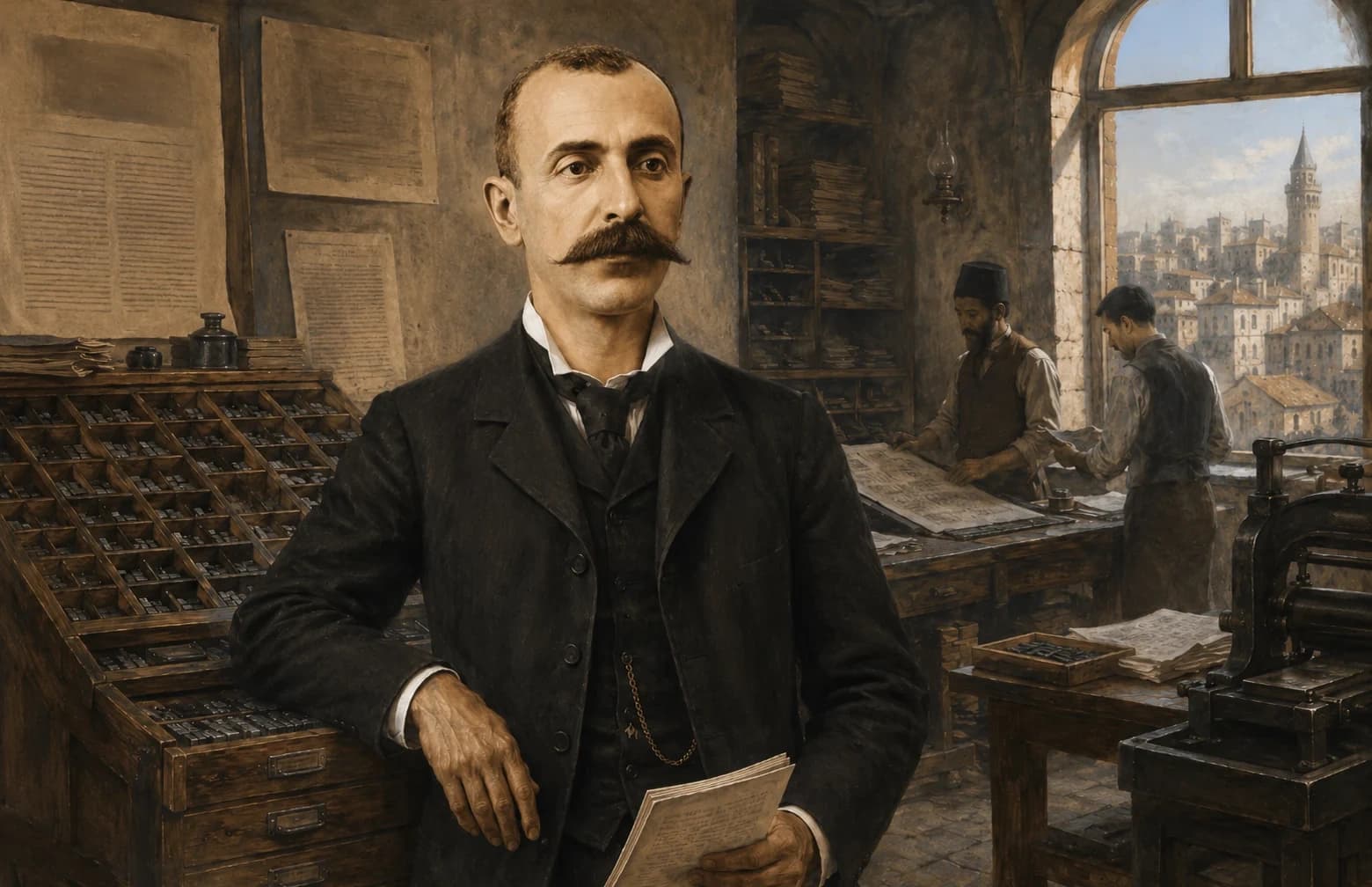
Hakob Paronyan
The Constantinople satirist, playwright and editor whose comedies and papers made Ottoman Armenian city life the subject of Armenian comic writing.
Anush
Hovhannes Tumanyan's mountain love poem follows two young villagers destroyed by pride, custom and the harsh code of honour.
Wounds of Armenia
Khachatur Abovyan's novel of the Russo-Persian war is the first major work written in the living speech of the Armenian people.