
Chaos
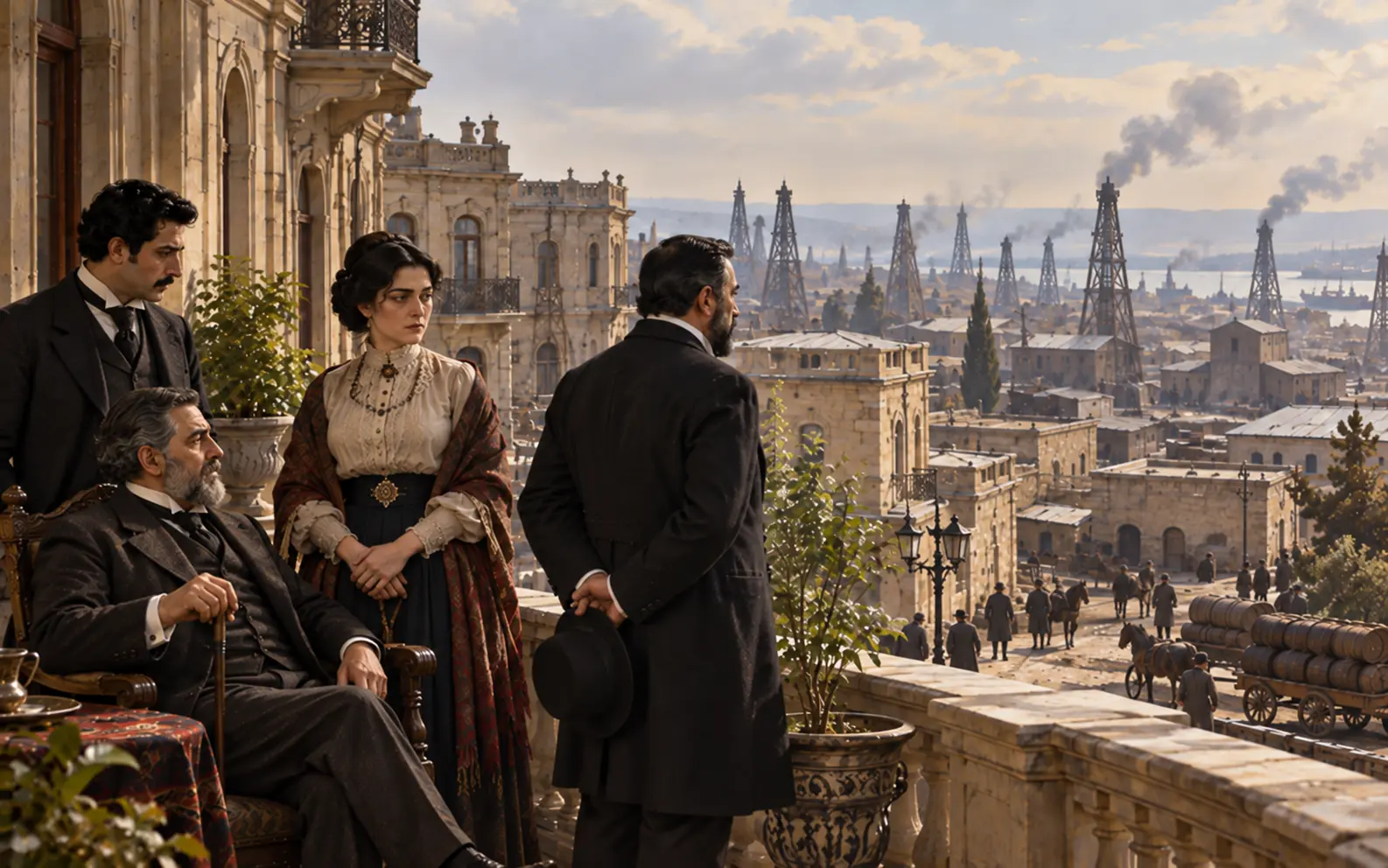
Chaos (Քաոս) is a novel by Alexander Shirvanzade, published at Baku in 1898 and set in the oil city it was printed in, at the moment Baku was becoming one of the richest industrial towns of the Russian Empire. It begins at a deathbed. The wealthy patriarch Markos agha Alimyan dies, and his fortune passes under a will to a family that cannot hold together around it. From there the novel follows money through a household — inheritance, marriage, debt, respectability — and shows what a new economy does to old family authority. It is the book Armenian critics most often call Shirvanzade's best.
- Author
- Armat Editorial Team
- Updated
- Reading time
- 20 min read
In brief
Chaos (Քաոս, K'aos) is a novel by the Armenian writer Alexander Shirvanzade, written in 1896–1897 and published as a book at Baku in 1898. It is set in a fast-growing oil city on the Caspian that the text leaves unnamed and that author and critics identify as Baku. The novel opens with the death of the patriarch Markos agha Alimyan. It follows what his fortune, and the will that divides it, do to his widow, his three sons and the people who depend on the house. Armenian scholarship ranks it as Shirvanzade's major novel and the high point of Armenian critical realism.
Key facts
- Author
- Alexander Shirvanzade (1858–1935)
- Form
- Novel in three parts (17, 8 and 9 chapters)
- Written
- 1896–1897; the subject had occupied him since the 1880s
- First book edition
- Baku, 1898
- Setting
- An unnamed Caspian oil city, identified as Baku, in the late nineteenth century
- Central family
- The Alimyans: Markos agha, his widow Voskehat, their sons Smbat, Mikayel and Arshak, and their daughter Martha
- Film
- Քաոս, Hayfilm, 1973, directed by Laert Vagharshyan
- Translations
- Russian (Хаос, from 1956); French (Chaos, 2013). No published complete English translation confirmed
What Chaos is
Chaos (Քաոս, often romanized K'aos) is a novel by Alexander Shirvanzade, the Armenian novelist and playwright of oil-boom Baku. It was written in 1896–1897 and first published as a book at Baku in 1898. The Soviet Armenian Encyclopedia calls it the largest achievement of Armenian critical realism, and Armenian critics most often name it as his best book.
Its subject is a family and a fortune. Markos agha Alimyan, a rich man in a boom-town on the Caspian, dies in the first chapter. The rest of the book follows what his money, and the will that assigns it, does to his widow, his three sons, his daughter and son-in-law, and the dependants of the house. Around them stands the city that made the money: fast, rich, crowded and still inventing its rules.
Much in the novel is plot — deathbed, will, a forged counter-will, debts, a fire — but the plot is there for an argument. Shirvanzade wanted to show a society whose economy had moved faster than its morality. This article gives the plot only as far as that argument needs it.
The title, and which Chaos this is
The Armenian title is a single word, Քաոս, borrowed from the Greek chaos, and in English the novel is known simply as Chaos. English reference works give it as K'aos (Chaos), and the French translation of 2013 is titled Chaos. This article uses Chaos in English and Քաոս in Armenian, and adds no subtitle, because the book has none.
A one-word title in English that is also a common noun needs some care. On this site, Chaos means Shirvanzade's novel of 1898, not the general idea of disorder. It is also not the film of 1973 or the television version, which are adaptations with sections of their own below. And it is not an account of the history of Baku: the city here is the setting of a novel, not the subject of a historical article.
How and when it was written
The subject was with Shirvanzade for a long time. The Armenian Wikipedia article on the novel traces it to the 1880s and to a real conflict inside a prominent Baku family in 1881–1882, and says he returned to Baku several times while working on it to refresh what he had seen. He had spent about eight years in the city in his youth, as a clerk and bookkeeper in government offices and oil-firm counting-houses, so the world of the novel was one he knew from its books of account.
The decision to write it came in prison. In the mid-1890s Shirvanzade was arrested at Tiflis for his political activity on behalf of the Ottoman Armenians and held in the Metekhi prison. Armenian and English accounts both place the conception of the novel there, and quote him as saying that he felt he had to give Armenian literature a new and significant work. The text itself was written in 1896–1897.
Where and when exactly each part was drafted is not documented in the sources consulted. Some popular summaries say the whole novel was written in prison in 1898, the year of publication. That is not supported by the fuller accounts, and this article follows the 1896–1897 dating.
Publication history
The novel was published as a book at Baku in 1898, in a volume of 444 pages. In January of the same year Shirvanzade was sent into exile at Odessa, so his major novel appeared in the city it describes while its author was being removed from the region.
One English-language literary history says the novel was serialized in 1896–1897 before the book appeared. The sources consulted for this article date the writing to those years but name no periodical in which it ran, and the Armenian Wikipedia article on the novel speaks only of the separate book of 1898. The serialization is therefore reported here as a claim that could not be confirmed, not as a fact.
The novel has been reprinted steadily. After the first edition it appeared at Yerevan in 1926, in Shirvanzade's collected works in 1934, 1950 and 1959, at Cairo in 1956, in further Yerevan editions of 1944, 1976 and 1987, and in the 2010s and 2020s. The repeated place in collected works is the plainest evidence of its standing.
Baku at the centre
In the late nineteenth century Baku was the seat of a governorate of the Russian Empire on the western shore of the Caspian, today the capital of Azerbaijan. In a few decades it grew from a small port into one of the great oil towns of the world. Oil fields at Balakhani, refineries in the district called the Black Town, and capital from Armenian and other local entrepreneurs and from Russian and European investors turned it into a city of new fortunes, fast building and a mixed, largely migrant population.
The novel records that change without naming it. Its first chapter speaks of 'that small, insignificant seaside town' where Markos Alimyan settled, and of how it became famous for what lay beneath it. The city in the book is never called Baku. Shirvanzade himself and his critics identify it as Baku, and every detail of oil, money and building fits, but the text leaves the city unnamed. The effect is to make it less a portrait of one place than a type: the boom-town.
This article describes Baku as it was when the novel was written, a late-imperial city. It does not read later history back into it, whether the Soviet oil industry or modern national borders.
Oil and the money it made
Chaos is not a novel about the oil industry in the sense of a novel about drilling or refining. Very little of it takes place at the wells. Oil is the economy that produced the Alimyan fortune, and the book is about what that fortune does once it exists.
It shows money that is new. Markos agha is a first-generation magnate, and he dies while supervising the building of his eleventh house. The characters around him are learning how to live with sums their parents never saw. Wealth is spread across property, oil interests, trade and credit, and it can be divided, contested, forged and borrowed against. A moneylender lends Mikayel a thousand roubles against a note for seven thousand. A lawyer in the family proposes a false will. The novel is exact about these transactions because they are what move its people.
The fire that ends the book belongs to the same world. A city built quickly on oil and money burns easily, and its last scenes come out of that material fact rather than symbolism laid on top of it.
The Alimyan family
The novel is built around one household. Markos agha Alimyan is sixty-five when it opens: a rich man who came to the small seaside town, grew with it and leaves behind a fortune, a widow and four grown or growing children. His death in the first chapter sets everything in motion, and the whole book can be read as the story of what his authority becomes once he is no longer there to exercise it.
The family he leaves is already divided. The eldest son has been away for eight years and comes back married to a Russian woman. The middle son is a spendthrift in debt. The youngest is still a boy of sixteen. The daughter is married into another family with its own interests. The widow wants the household to go on as it was. None of them can simply inherit the father's position, because it rested on a way of doing things that the new city no longer rewards.
The book is in three parts, of seventeen, eight and nine chapters. The first and longest sets out the family and the will. The second and third follow the consequences, through quarrels, compromises and a fire, to a close in which one son is ruined and another has remade his life.
The main characters
Սմբատ (Smbat) is the eldest son and the heir to the business. He left home as a young man with liberal ideas, saw his father's wealth as unjustly made and married a Russian woman, Անտոնինա Իվանովնա (Antonina Ivanovna), against his family's wishes. Coming home to take over the fortune, he is slowly absorbed by it. The Armenian account of the novel says he buries his ideals in the oil wells. His story is the novel's central tragedy: a decent man turned by circumstances into what he once despised.
Միքայել (Mikayel), the second son, is twenty-eight, dissolute and in debt, the spoiled young man of new money. The will ties his share to his reforming and marrying an Armenian girl. He is drawn into a plan to forge a counter-will, and then turns back from it. His slow, humiliating reform, carried partly by the love of Շուշանիկ (Shushanik), is the novel's counter-movement to Smbat's decline.
Around them stand the widow Ոսկեհատ (Voskehat), who holds to the household's old expectations; the youngest son Արշակ (Arshak); the daughter Մարթա (Martha) and her husband Իսահակ Մարութխանյան (Isahak Marutkhanyan), the son-in-law whose interest in the estate is not disinterested; Voskehat's brother Սրաֆիոն Գասպարիչ (Srafion Gasparich); and the family of the bookkeeper Դավիթ Զարգարյան (Davit Zargaryan), a household of modest means whose niece Shushanik becomes the moral centre of the book. The names are given here as they are spelled in the Armenian text.
The will and the fight over it
The will is the novel's engine. The old man dictated it and the parish priest wrote it down, and it reads more like an outpouring of feeling than a business document. It places the fortune in Smbat's hands and pleads with him to "correct" his "mistake". Most notable of all, in the narrator's words, is a clause about inheritance: Smbat may not leave his share to his "foreign" wife or to their children, but if he divorces her and marries an Armenian, the children of the new marriage will be his lawful heirs. The will does not order a divorce; it shuts his present family out of the fortune unless there is one. Mikayel is to receive a monthly allowance, and his share only if he mends his ways and marries an Armenian girl. A father who can no longer give orders in person tries to give them through a document.
The document does not hold. Marutkhanyan, the son-in-law, persuades Mikayel that the will can be answered by a forged counter-will. Mikayel agrees and then repents, and the conspiracy fails. The pressure on Smbat to give up his Russian wife and their children comes from several directions that reinforce one another: the inheritance clause, his father's pleading and dying curse, and his mother's endless reproaches. Smbat himself sets "the paternal will with its heavy curse" on one side and his mother's reproaches on the other.
The point of all this is not legal suspense. It shows the old family order trying to survive in a new medium. Paternal authority becomes a clause, and a clause can be contested, bought round or forged in a way that a living father could not.
Wealth, morality and standing
It would be easy to summarize the novel as 'money corrupts'. That is not quite what it shows. Markos agha's fortune does not make his sons bad. It gives each of them a different kind of pressure. Smbat's ideals are not defeated by greed. They are worn down by responsibility for a business that runs on practices he once condemned. Mikayel's dissipation is made possible by money, but so is the debt that forces him to face himself. The novel's interest lies in these contradictions, not in a verdict on the rich.
Standing counts as much as money. The Alimyans live in a city where position is new and has to be displayed, so reputation is a working asset. Houses, marriages and appearances are part of the family's credit. Around the family stand people whose position depends on theirs: the bookkeeper Zargaryan and his household, clerks, servants and the moneylender Barsegh. The novel shows how the fortunes of the house pass down to all of them.
The novel gives no sustained picture of the oil workers themselves, and this article does not claim one. The class reading associated with its Soviet-era reception is described under reception. It is not taken over here as a neutral description of the text.
Old authority, new city
The deepest tension in the novel is between two ways of organizing life. One is the patriarchal household, in which the father decides, marriages are arranged between families, the community's customs have the force of law and wealth is kept in the family. The other is the boom-town, in which money moves fast, education and travel give sons their own ideas, marriages cross communities and a man's position is only as good as his last transaction.
Shirvanzade does not take either side simply. The old order in the novel is often narrow and cruel. It tells a son to abandon his wife and children, and it values appearance over conduct. The new order is often empty. It has no rules except profit, and it rewards whoever can move fastest. The characters who suffer most are those caught between the two, like Smbat, who has left the first without finding anything in the second to replace it.
This is what makes Chaos a novel of modernization and not simply a family saga. The family disintegrates because the ground under the family has shifted, not because its members are unusually wicked.
Women in the novel
The women of Chaos are placed where the family's economic and moral pressures meet. Voskehat, the widow, speaks for the household's traditions and keeps up the pressure on Smbat to give up his wife. She has authority inside the house but none over the fortune. Antonina Ivanovna, Smbat's Russian wife, is the outsider the family refuses to accept. Her position in the city depends entirely on a marriage the family is working to dissolve.
Shushanik, from the bookkeeper's modest household, is the woman the novel sets against the Alimyans' world. Her standing rests on conduct, not money, and her love is part of what reforms Mikayel. Anush Ghulamyan, a married woman with whom Mikayel has an affair, belongs to the looser, less settled side of the city's life that his reform leaves behind.
This article describes these positions in the terms the novel offers: dependence, reputation, marriage and family pressure. It does not assign the novel a later vocabulary. Shirvanzade's concern with the position of women is documented elsewhere in his work, above all in his plays of 1903, and Chaos shows the same concern at work inside a family.
Shirvanzade's realism
Armenian scholarship classes the novel as realist. The Armenian Wikipedia article calls it a realist novel of social life, and the Soviet Armenian Encyclopedia calls it the largest achievement of Armenian critical realism. The label means something specific here. Characters are shaped by their social and economic situation. Sums, documents, houses and debts are given precisely because the plot depends on them. Conflict comes from causes the reader can follow instead of from coincidence or romantic idealization. And the cast is built from recognizable social types: the magnate, the heir, the spendthrift, the lawyer, the bookkeeper, the moneylender.
"Critical realism" is the standard Armenian scholarly term for this line of nineteenth-century prose, and it was fixed by Soviet-era literary history. This article uses it as that scholarship's term, not as a claim that the novel was written to a program. No source consulted describes Chaos as naturalist. Shirvanzade's own stated method, of generalization and typification as against photographic reproduction, is discussed in his biography on this site and separates him from naturalism.
The novel is also founded on observation. The Armenian account notes that it grew from a real family conflict, and Shirvanzade kept returning to Baku to check his impressions against the city itself. The realism of Chaos is that of a writer who had kept the accounts of the world he describes.
Why the novel is called Chaos
Shirvanzade explained the title himself. Describing the Baku of those years, he wrote that the milieu was brilliant outside and deformed within, and that there had formed there «մի այլանդակ քաոս», a monstrous chaos, in which love of gold had wiped out the line between light and darkness, between what was moral and what was not, setting brother against brother and son against father.
The title therefore names a moral condition, not a random disorder. It covers the family, where a will turns brothers into rivals. It covers the city, where money has outrun the rules. And it covers the individual, whose sense of right and wrong has lost its fixed points. Critics have read it on all three levels, and the novel supports each of them. This article does not reduce the title to a single symbol.
A city novel in Armenian prose
Much Armenian prose of the period was set in villages or in the national past, and Raffi's historical novels are the best-known examples. City life was not new to Armenian writing: Paronyan's comedies and satirical papers had already made the Armenian society of Constantinople their subject. What Chaos adds is sustained attention to a large, modern, commercial and industrial city, with a plot built on the economy that city ran on.
This article does not call it the first Armenian urban novel, because the sources consulted do not establish that claim. What they do establish is that Armenian scholarship treats it as the fullest achievement of the realist, urban and economic line in Armenian prose, and that Shirvanzade made the life of a modern commercial city a serious subject for the Armenian novel.
Reception and adaptations
In Armenian literary history the novel holds the place of Shirvanzade's major work. The Soviet Armenian Encyclopedia treats it as the peak of Armenian critical realism. The standard Armenian literary history of 1950 discusses it at length (volume 2, pages 179–186). English-language reference works call it his masterpiece. Its place in his collected works of 1934, 1950 and 1959 reflects the same judgement.
Soviet-era reception, as the Russian Wikipedia article summarizes it, read the novel through class: the struggle of social classes, the exploitation of workers and the decay of the bourgeois family under the rule of money. That reading tells us how the novel was placed in Soviet literary history. It does not replace the novel's own terms, and the novel predates Soviet rule by two decades.
The novel was filmed as Քաոս by Hayfilm in 1973, directed by Laert Vagharshyan from a screenplay by Vadim Meliksetyan, with Sos Sargsyan as Smbat. The film is an adaptation with its own emphases, and its setting is sometimes described as early-twentieth-century Baku. Armenian public television has also broadcast a multi-part television version. Its listed cast suggests an older production rebroadcast later, and this article could not confirm its date.
Translations
The novel reached Russian readers as Хаос. Book catalogues record Russian editions from 1956, when it was published in Moscow, with further editions at Yerevan in 1975 and 1983 and later reprints. The translator of the 1956 edition could not be confirmed and is not named here.
A French translation by Pierre Ter-Sarkissian, Chaos, was published by Éditions Thaddée in 2013. No complete published English translation could be confirmed. A 2016 print-on-demand volume titled Chaos is not an English translation. English readers have the reference-work accounts of the novel but not, so far as this article could establish, the novel itself.
Important dates
1873 or 1875
Shirvanzade moves to Baku and spends about eight years there as a clerk and bookkeeper.
1881–1882
A real conflict in a prominent Baku family, later named as the germ of the novel.
mid-1890s
Arrested at Tiflis and held in Metekhi prison, where the decision to write the novel is placed.
1896–1897
The novel is written.
1898
First book edition, Baku; the same year Shirvanzade is exiled to Odessa.
1956
Russian translation, Хаос, published in Moscow.
1973
Hayfilm's film Քաոս, directed by Laert Vagharshyan.
2013
French translation, Chaos, by Pierre Ter-Sarkissian.
Why Chaos matters
It is a major Armenian novel of the modern commercial city. Chaos looks at the counting-houses and drawing rooms of an oil town in the middle of its boom, and treats wills, debts, shares and marriages as the substance of a serious novel.
It is also a precise study of a family coming apart under economic change. The patriarch's authority passes into a document, the document is contested, and the sons are pulled between an old order that is too narrow and a new one with no rules. Shirvanzade's achievement was to show that transformation as a chain of causes, in a city he knew from its books of account, and to give Armenian realism its fullest novel.
Interesting facts
- 01The novel never names Baku. Its first chapter calls the city only 'that small, insignificant seaside town' where Markos Alimyan settled.
- 02Markos agha Alimyan dies in the first chapter, having caught his fatal illness while supervising the building of his eleventh house.
- 03Shirvanzade traced the novel's origin to a real conflict in a Baku family in 1881–1882.
- 04The book appeared at Baku in 1898, the same year its author was exiled to Odessa.
- 05Its 1973 film version starred Sos Sargsyan as Smbat.
Sources
- Հայկական սովետական հանրագիտարան, հատոր 8 — Հայկական հանրագիտարանի գլխավոր խմբագրություն, Երևան, 1982 · ՀՍՀ, հատոր 8, էջ 517–519, «Շիրվանզադե Ալեքսանդր»Cited for the assessment of Քաոս as the largest achievement of Armenian critical realism, and for its place in Shirvanzade's publication sequence. The same entry the site's biography rests on; cited here only for those two points.
- Ալեքսանդր Շիրվանզադե. Քաոս — Վիքիդարան (hy.wikisource.org), consulted 2026 Visit sourceThe primary text. Source of the three-part structure (17, 8 and 9 chapters), the spellings of every character name the article prints (Մարկոս աղա Ալիմյան, Ոսկեհատ, Սմբատ, Միքայել, Արշակ, Մարթա, Իսահակ Մարութխանյան, Սրաֆիոն Գասպարիչ), the ages given in the first chapter, the unnamed 'small, insignificant seaside town', the eleventh house, the thousand-rouble loan against a seven-thousand note, and the line that the father wrote little in his will but said much.
- Քաոս (վեպ) — Հայերեն Վիքիպեդիա, consulted 2026 Visit sourceUsed with caution and named in the article where relied on: the genre label սոցիալական ռեալիստական վեպ, the 1896–1897 writing dates, the 1881–1882 family conflict and the return visits to Baku, the setting in late-nineteenth-century Baku, the will's terms and the ending, Shushanik's and Anush Ghulamyan's roles, and Shirvanzade's own description of the 'monstrous chaos' that explains the title.
- Ալեքսանդր Շիրվանզադե — Հայերեն Վիքիպեդիա, consulted 2026 Visit sourceCited for the bibliography of editions — Baku 1898 (444 pages), Yerevan 1926, collected works 1934, 1950 and 1959, Cairo 1956, Yerevan 1944, 1976 and 1987 — for the Odessa exile of January 1898, for the Metekhi prison origin of the novel and the author's words about giving Armenian literature a new work, and for its citation of Հայ գրականության պատմություն, book 2 (Yerevan, 1950), pp. 179–186.
- A. J. Hacikyan, G. Basmajian, E. S. Franchuk and N. Ouzounian (eds.). The Heritage of Armenian Literature, Volume III: From the Eighteenth Century to Modern Times — Wayne State University Press, 2005 ISBN 9780814332214The English-language literary history behind this site's biography of Shirvanzade, including its statement that the novel was serialized in 1896–1897. Cited here as the source of that claim, which this article reports as unconfirmed because no periodical is named in the sources consulted.
- Alexander Shirvanzade — Wikipedia, consulted 2026 Visit sourceCited for the English-language form of the title, K'aos (Chaos), for the description of the novel as his masterpiece, and for the English account of its conception in Metekhi prison. Not cited for dates.
- Ширванзаде, Александр Минасович — Русская Википедия, consulted 2026 Visit sourceCited only as reception history: the Soviet-era Russian characterisation of the novel in terms of class struggle, the exploitation of workers and the decay of the bourgeois family. The article reports this reading and does not adopt it.
- Քաոս (ֆիլմ) — Հայերեն Վիքիպեդիա, consulted 2026 Visit sourceThe 1973 Hayfilm adaptation: director Laert Vagharshyan, screenplay by Vadim Meliksetyan, Sos Sargsyan as Smbat, and the description of its setting as early-twentieth-century Baku. Cited to keep the film distinct from the novel.
- Chirvanzadé, trans. Pierre Ter-Sarkissian. Chaos — Éditions Thaddée, Paris, 2013 ISBN 9782919131099The verified French translation, and the only Western-European translation of the novel found. Its title is part of the evidence for Chaos as the novel's established Western-language title.
- Хаос — издания — LiveLib, consulted 2026 Visit sourceEdition list for the Russian translation: Moscow 1956, Yerevan 1975 and 1983, and later reprints. Cited for the Russian publication record only; it does not establish the translator, and the article names none.
Related articles
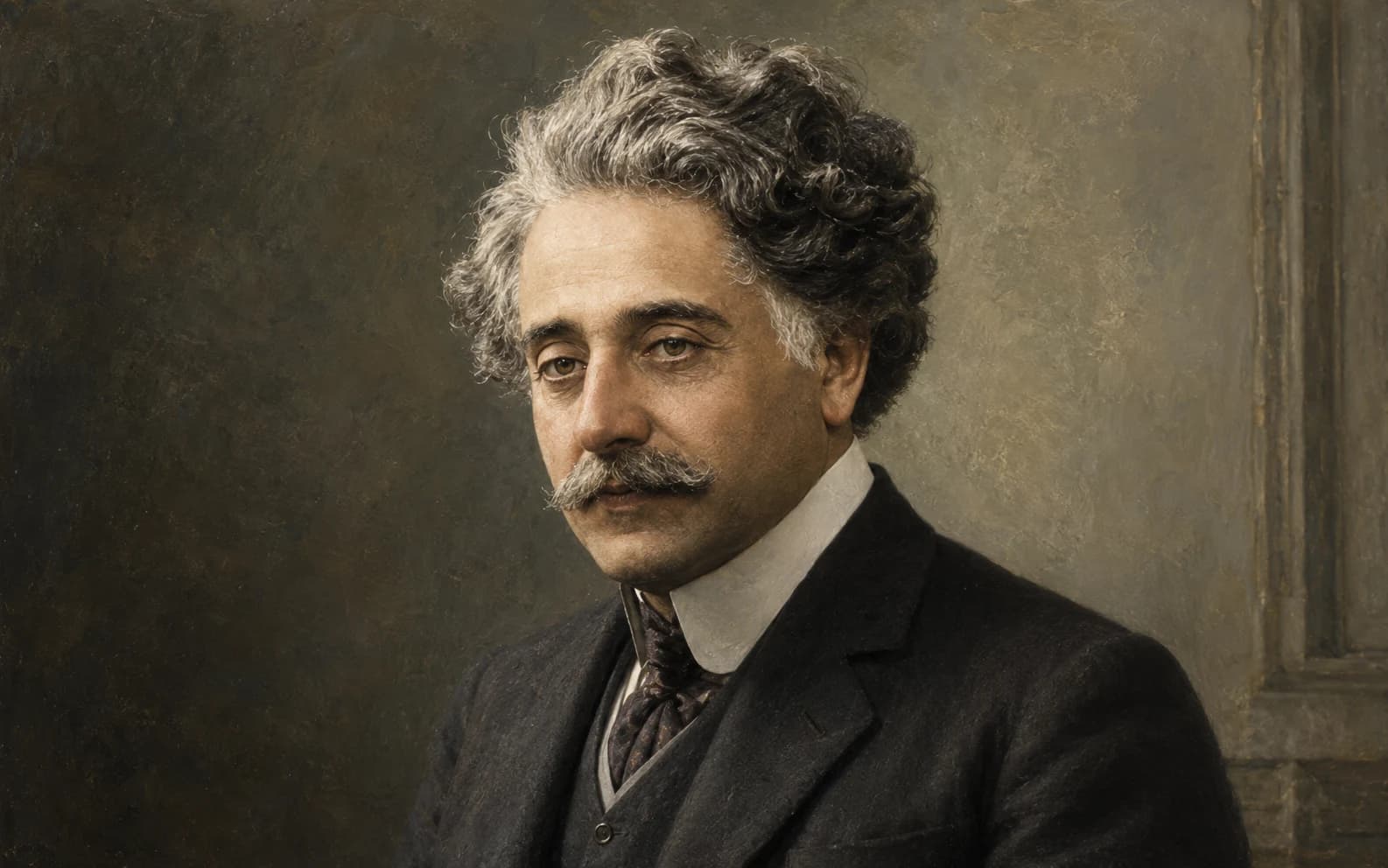
Alexander Shirvanzade
The novelist and playwright of oil-boom Baku, whose realist prose made money, family and social standing the central subject of Armenian literature.
Anush
Hovhannes Tumanyan's mountain love poem follows two young villagers destroyed by pride, custom and the harsh code of honour.
Wounds of Armenia
Khachatur Abovyan's novel of the Russo-Persian war is the first major work written in the living speech of the Armenian people.