
Hakob Paronyan
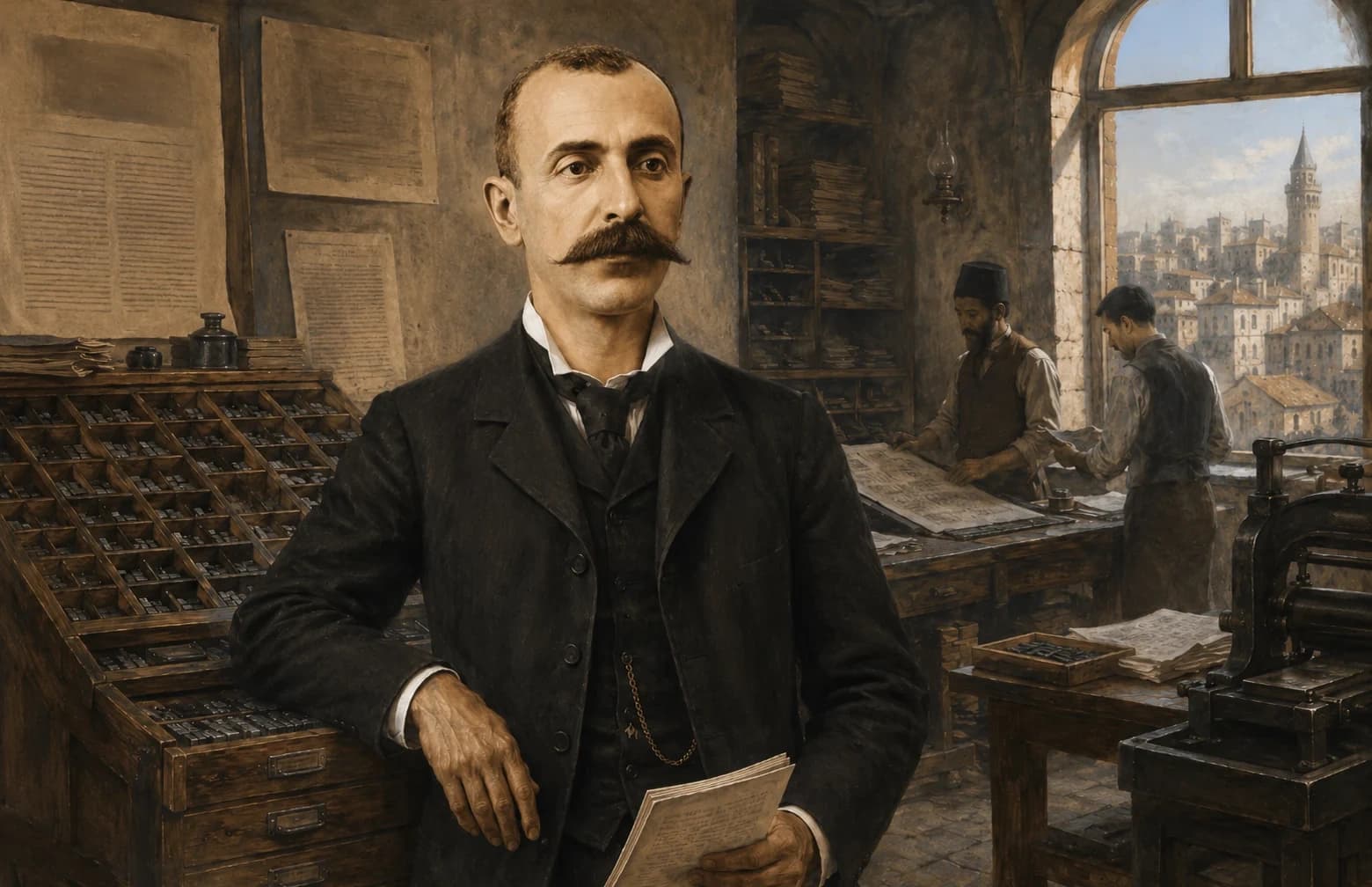
Hakob Paronyan made Armenian readers laugh at themselves in print. For twenty years he edited satirical papers in Constantinople, and whenever one was shut down or ran out of money, he started another. In between he wrote the comedies and prose satires that still come first to mind when people talk about Armenian satire. The reputation can hide how specific his work is. He did not write about vice in general. He wrote about one city, in one decade, in the language that city actually spoke, and he named names.
- Author
- Armat Editorial Team
- Updated
- Reading time
- 20 min read
In brief
Hakob Paronyan, often catalogued in English as Hagop Baronian, was a Western Armenian satirist, playwright, prose writer and editor. He was born at Adrianople in 1843 and died at Constantinople in 1891. He spent almost his whole working life in the Ottoman capital, editing a string of satirical papers that were closed or abandoned one after another. Alongside them he wrote the comedies and prose satires that made Armenian comic literature a literature about a city. Ազգային ջոջեր portrayed the leading Armenians of his day by name. Մեծապատիվ մուրացկաններ turned a rich provincial's arrival in Constantinople into a parade of everyone who wanted something from him. Պաղտասար աղբար, written in 1886, was first staged about ten years later and has stayed in the Armenian repertoire ever since.
Key facts
- Lived
- 19 November 1843 to 27 May 1891
- Born
- Adrianople (Ադրիանուպոլիս), Ottoman Empire — now Edirne, Turkey
- Died
- Constantinople, of tuberculosis, aged 47
- Wrote in
- Western Armenian
- Worked as
- Satirist, playwright, prose writer, periodical editor; also telegraph clerk, teacher and accountant
- Best known for
- Պաղտասար աղբար, Ազգային ջոջեր and Մեծապատիվ մուրացկաններ
- Also written
- Hagop Baronian, Hakob Baronian, Hagop Paronian; Յակոբ Պարոնեան
Who Hakob Paronyan was
Hakob Paronyan was a Western Armenian satirist, playwright, prose writer and journalist. He was born at Adrianople in the Ottoman Empire in 1843 and died at Constantinople in 1891. Those four jobs were really one activity seen from four sides. His plays were printed in his own journals, his journalism was written in scenes and dialogue, and his best-known prose work reads like a comedy with the stage directions taken out.
He was an Ottoman Armenian writer, not a Russian Armenian one, and a writer of the city, not the provinces. Almost everything he wrote was written in Constantinople, printed there, and aimed at Constantinople Armenians who would recognise the type being described, and sometimes the man. That sets him sharply apart from the other writers in this archive, most of whom wrote about villages, mountains, nations and the past.
Genre sets him apart too. Nineteenth-century Armenian literature leans heavily toward poetry, the historical novel and the patriotic lyric. Paronyan wrote stage comedy, satirical portraits and comic prose, and he did it as a working editor, not as a man of letters with a private income.
Paronyan or Baronian: one writer, two search results
This article calls him Hakob Paronyan. That is how the name is written in Eastern Armenian and how Armenian institutions in Yerevan spell it; the Yerevan musical comedy theatre named after him uses that form. Much of the English-language material about him, including library catalogue records and the standard English translation of his novel, calls him Hagop Baronian instead. Hagop Paronian, Hakob Baronian and Hakob Paronean are also in use.
None of these is a mistake. The Armenian letter Պ is a plain p in Eastern Armenian and closer to a b in Western Armenian pronunciation. Հակոբ in the reformed Eastern spelling is Յակոբ in the classical Western one. The two English forms are simply faithful transliterations of the two branches of Armenian. In practice, a reader searching for one form may never find the material filed under the other, because each spelling brings up a largely different set of pages.
This archive's Eastern Armenian edition spells his name Հակոբ Պարոնյան, and its Western Armenian edition spells it Յակոբ Պարոնեան. Both forms, along with the English variants, are in this page's search terms, so any of them will find him.
Adrianople and what schooling he had
He was born on 19 November 1843 at Adrianople, the Ottoman city on the Maritsa in Thrace. Armenians called it Ադրիանուպոլիս, and today it is the Turkish city of Edirne. What matters for his biography is that it had a long-established Armenian community with its own schools.
His formal education was short. He went to the Arshakunyan school in his home town, and in 1857 he entered the town's Greek school, where he stayed about a year before leaving. That was the end of his schooling. After that he taught himself: he read widely and worked in several languages, and Armenian sources say he learned French, Italian and Greek largely on his own.
Several popular biographies place him in Catholic or Mekhitarist schools, but this article does not repeat the claim. The Armenian encyclopedias and reference works consulted for it name the Arshakunyan school and the Greek school and nothing else. An attractive detail that the sources do not carry is not passed on here.
1843, and why some catalogues say 1841
Armenian reference works agree on 19 November 1843. The Soviet Armenian Encyclopedia gives that date, and Armenian educational and literary sources follow it.
Several major Western library authority files do not. The Library of Congress name authority lists him as Paronean, Hakob, 1841?-1891. The question mark is what cataloguers use for a date they cannot confirm. The Bibliothèque nationale de France gives 1841–1891 with no question mark. Both are linked to the same authority cluster as the records that say 1843.
This article uses 1843. That is the date the Armenian scholarly and encyclopedic tradition gives, and the catalogue that first recorded 1841 flags it as uncertain. The disagreement is reported here, not smoothed away. A reader who finds 1841 in a library catalogue has not found an error, but a date the cataloguers themselves marked as unverified.
Constantinople
He moved to Constantinople in 1863 (English reference works sometimes say 1864). Apart from a brief return to Adrianople in 1868, he lived and worked in the capital for the rest of his life. In the 1860s Constantinople had the largest Armenian population of any city in the world, with its own patriarchate, schools, printing houses and theatres, and a growing press.
That concentration made his kind of writing possible. Satire needs an audience that shares enough references to recognise the target, and a press cheap enough to reach that audience every week. Constantinople had both, and Paronyan spent his whole career working inside that system.
This article uses the city's historical name because everyone involved used it; in Armenian it was Կ. Պոլիս. It is modern Istanbul, and he is buried there. A monument to him was put up in the Şişli Armenian cemetery in 2019.
The jobs that paid
Before the writing and alongside it, he held ordinary jobs, and they are worth naming because they never really stopped. As a young man in Adrianople he worked in a pharmacy for about two years, picking up some natural history and medicine, and then kept the books for a tobacco company.
In Constantinople he worked at the telegraph office, tutored privately in a wealthy household, and taught at the seminary at Scutari on the Asian shore, where the poet Petros Duryan was one of his pupils. He also held a post in the patriarchate's administration. At the end of his life, after his last journal was closed, he went back to accountancy.
These jobs are more than colourful background. A satirist who lives off a subscription list is far more exposed than a salaried writer, and the office work is what allowed the writing to continue at all.
The periodicals
Paronyan's career is easiest to follow through his papers, not his books. In 1871 he became editor of Եփրատ, Euphrates, at Adrianople. In 1872 he took over as editor of Մեղու, The Bee, the Constantinople satirical paper founded by Harutyun Svajyan. From 1874 to 1877 he edited its successor, Թատրոն, Theatre.
In 1876 he founded Թատրոն. բարեկամ մանկանց, Theatre: Children's Friend, an illustrated paper for children. Armenian sources count it among the earliest and best-known Armenian children's periodicals, which is an unexpected item in a satirist's bibliography. In 1883 he launched Ծիծաղ, Laughter, a weekly that lasted about a year. From 1884 he edited Խիկար, named after the sage of the old Near Eastern tale. It ran in two stretches, 1884 to 1885 and 1886 to 1888, and was published at Constantinople and at Adrianople.
He also wrote for papers he did not edit, among them Մասիս and Փորձ. According to Armenian accounts, their editors sometimes turned down his satirical pieces for fear of what printing them might cost the paper.
- Եփրատ (Euphrates), Adrianople — editor from 1871.
- Մեղու (The Bee), Constantinople — editor from 1872, following Harutyun Svajyan.
- Թատրոն (Theatre) — 1874 to 1877.
- Թատրոն. բարեկամ մանկանց (Theatre: Children's Friend) — illustrated, 1876.
- Ծիծաղ (Laughter) — weekly, 1883, about a year.
- Խիկար — 1884 to 1885 and 1886 to 1888, Constantinople and Adrianople.
What he actually satirized
His subject was the Armenian community of Constantinople looking at itself: its notables, its institutions, its professions and the show it put on. He wrote about people who wanted to be thought important, and about the machinery that handed out importance: councils, committees, newspapers and patronage.
Money runs through all of it, but it is rarely simple greed. What interests him is the gap between a person's real economic position and the manner they adopt to hide it or show it off: the provincial with money and no standing, the educated man with standing and no money, the professional whose learning is a way of selling. Մեծապատիվ մուրացկաններ is built entirely on that gap, and its beggars are editors, poets, doctors, teachers, lawyers and priests.
He was also willing to be specific in a way satire usually avoids. Ազգային ջոջեր goes through the leading Armenians of his own day one by one, under their real names. Among them are the editor Grigor Artsruni, the writer Tserents, the churchman Khoren Nar-Bey and the Catholic Armenian leader Anton Hassoun. This is a long way from generalised moralising.
How the comedy works
His main tool is the social type, drawn precisely enough to remain an individual. A Paronyan character is introduced through what he wants and how he talks about wanting it, and the comedy comes from watching his manners fail to hide his motive. Paronyan rarely denounces anyone. He lets a man explain himself at length, and arranges the explanation so that it convicts him.
Even in the prose, the technique is basically dramatic. Scenes are built from dialogue, entrances and interruptions, and the narrator often steps back almost completely and lets the speech do the work. This is why Մեծապատիվ մուրացկաններ has been adapted for the stage so easily: much of it is already staged.
The other constant is repetition with variation. A string of visitors arrives, each with a different profession and the same basic request, so the pattern makes the point more than any single case. Armenian critics have consistently praised the economy of his language: the brevity and clarity with which he sets up a whole situation in a line or two.
One label often attached to him is not used here. He is frequently called the founder or father of Armenian satire, and popular writing often compares him to Molière. Armenian scholarship is more careful. It describes him as the first satirist of modern Armenian literature and its greatest, which is a claim about achievement and standing, not about invention. This article follows the more careful wording.
Western Armenian, and why the language is the joke
Paronyan wrote in Western Armenian, and specifically in the literary form of it that was taking shape during his lifetime, based on the spoken Armenian of Constantinople. That technical fact lies underneath his comedy, and it matters more than it seems.
Satire of social pretension is largely satire of speech. His characters give themselves away by how they talk: borrowed words used to sound educated, polite formulas used at the wrong scale, a counting-house phrase turning up in a conversation about art. That kind of comedy only works in a language whose spoken and written forms are close enough for the mismatch to be heard. The Constantinople vernacular of his readers was exactly that.
This also sets him apart in Armenian literature as a whole. The Eastern Armenian turn toward the spoken language is linked with Khachatur Abovyan a generation earlier. Paronyan belongs to the parallel Western Armenian development, and he showed that the new literary language could be funny. It could carry irony, timing and social nuance as well as lofty feeling.
The theatre
Of the writers in this archive, Paronyan is the one best known as a comic playwright, and drama was central to his work. He wrote for the stage from the start: Երկու տերով ծառա մը, A Servant with Two Masters, dates from 1865, and Ատամնաբույժն արևելյան, The Oriental Dentist, from the same period; it was printed in 1868.
His theatre is comedy of manners. It starts from domestic situations that turn out to be about money: marriages arranged around property, households run for appearances, professionals whose expertise is really a way of charging for it. The dialogue is written for actors, with short exchanges, interruptions, and characters who talk past each other while thinking they are negotiating.
His plays had a more complicated relationship with the Armenian stage than a list of premieres suggests, and that is the subject of the next section.
Պաղտասար աղբար: written 1886, staged 1895
Պաղտասար աղբար is his best-known play and the one that has stayed longest in the repertoire. In English it appears as Uncle Baghdasar, Brother Baghdasar and simply Baghdasar Aghbar. The word աղբար is the familiar Western Armenian for brother, used when addressing someone, and no single English title has become standard.
The date usually given for it, 1886, is when he wrote it in Constantinople. It was not performed then. It was first staged only nine years later, in 1895 (1896 is also often given), by Aram Vruyr at Tiflis, that is, by Eastern Armenian theatre, not in the city it was written in and for.
The gap between those dates is worth keeping, because it says something true about his position. A Western Armenian comedy about Constantinople Armenian life first reached the stage in the other half of the Armenian world, after its author had died. The play's later life in the Armenian national repertoire, where it has been performed ever since, began without him.
The comedy turns on a husband who is deceived, finds out, and is then managed by everyone around him: his wife, her lover, a lawyer and a group of council members, each with a stake in how things are settled. Armenian critics have disagreed over whether Baghdasar is a fool exposed or a decent man surrounded by frauds. The better readings treat that ambiguity as part of the design, not a flaw.
Ազգային ջոջեր: portraits of the living
Ազգային ջոջեր is a series of satirical portraits of prominent Armenians of his time. The title is hard to translate. The word ջոջ is a dialect word for a big or important person, with none of the dignity of the standard word for a leader, and English versions give it as National Bigshots, National Notables and the like. This archive keeps the Armenian title, translates it where needed, and does not pretend any English title is settled.
It began appearing in Թատրոն in 1874 and came out as books in two parts, the first at Constantinople in 1879 and the second in 1880. Armenian scholars note that he spent roughly six years, from 1874 to 1880, gathering biographical material for the portraits, and that they rest on documented facts about their subjects, not invention.
His method was to concentrate, not to invent. He took a real career, described it accurately, and adjusted the proportions until its shape became visible. Armenian critics have noted that the portraits are written without personal malice. That is part of why they outlived their moment: they are still readable after everyone in them has been forgotten.
Մեծապատիվ մուրացկաններ, and an unresolved chronology
Մեծապատիվ մուրացկաններ (Honourable Beggars, spelled Honorable Beggars in American editions) is his best-known prose work and the one most often read outside Armenian. Abisoghom Agha, a rich man from Trebizond, comes to Constantinople to find a wife. One after another, the city's educated men call on him: an editor, a priest, a poet, a photographer, a doctor, a teacher, a lawyer, an actor. Each has a reason for coming, and each wants money. He never gets what he came for.
Its dates are not settled, and this article does not pretend they are. English reference works say it was serialized in 1880 and published as a book in 1887. Armenian sources on the novel often give 1887 alone, without separating the serial from the book. The two fit together if 1880 is the serialization and 1887 the book, which is the most likely explanation, but the sources available for this article do not confirm it between them.
What the book does is not in dispute. The beggars of the title are the respectable, not the poor, and the joke lies in the structure more than in any moral: a society in which every learned profession has become a claim on someone else's money. Most English readers know it through Mischa Kudian's translation, published as Honourable Beggars: A Satire.
Censorship, and the separate problem of money
Two different pressures cut his papers short. Treating them as one makes for a more heroic story, and a less accurate one than the sources support.
The first was censorship. Under the Hamidian regime of the later 1880s, conditions for the Ottoman press grew much tighter. Armenian accounts describe the satirical papers of the time, his own among them, turning away from politics toward domestic subjects, a visible sign of the pressure at work. The authorities closed Խիկար in 1888, together with other Armenian periodicals, and that ended his career as an editor. Armenian sources also record editors at other papers turning down his contributions for fear of the consequences.
The second was simply that satirical weeklies were bad businesses. Ծիծաղ lasted about a year. Papers folded, came back and folded again, and the pattern of his bibliography, one title after another with some of them restarts, is as much commercial as political. After 1888 he went back to keeping accounts.
Both pressures were real, and they were different. A journal shut by a censor and a journal that closes because nobody renews the subscriptions fail in different ways, and his career saw both.
The last years
After Խիկար was closed in 1888 he had no paper of his own. He worked as an accountant, and he was ill. He died of tuberculosis at Constantinople on 27 May 1891, aged forty-seven. Armenian sources record that his widow and children were left without means.
This article says no more than that. A popular version of his death, in which the great satirist dies destitute in the street, has proved hard to shake, but the sources consulted here do not support it. He died of a disease that killed huge numbers of people in nineteenth-century cities, in poverty that is documented. Adding pathos would mean inventing details about a real person's death.
On the stage after him
Almost everything that made Paronyan a fixture of Armenian culture happened after 1891. Պաղտասար աղբար reached the stage in 1895 and entered the permanent repertoire. Մեծապատիվ մուրացկաններ has been reprinted and adapted again and again. His collected works were edited and published throughout the twentieth century in Tiflis, Constantinople, Moscow, Beirut and Yerevan, and ten volumes of them are in the public domain.
In Soviet Armenia he was firmly part of the canon, taught in schools and constantly staged. The state musical comedy theatre in Yerevan, founded in 1941 and opened in 1942, bears his name, as do a school and a street in the city. In 2018 Armenia issued a commemorative stamp for the 175th anniversary of his birth.
Dates matter here more than usual. He died in 1891, and Soviet Armenia was established in 1920. The Soviet-era editions, productions and institutions belong to how he was received, not to his life. The reading of him they encouraged, as a critic of bourgeois society, is one interpretation of the work, not a description of what he set out to do.
Important dates
1843
Born on 19 November at Adrianople; some library authority files give 1841 instead.
1857
Enters the Greek school at Adrianople after the Arshakunyan school; leaves after about a year, ending his formal education.
1863
Settles in Constantinople, where he works at the telegraph office and takes teaching and clerical posts.
1865
Writes Երկու տերով ծառա մը, which is not printed until 1911.
1868
Ատամնաբույժն արևելյան published.
1871
Becomes editor of Եփրատ at Adrianople.
1872
Takes over as editor of the Constantinople satirical paper Մեղու.
1874
Edits Թատրոն, where Ազգային ջոջեր begins to appear.
1876
Founds Թատրոն. բարեկամ մանկանց, an illustrated children's paper.
1879
First part of Ազգային ջոջեր published as a book at Constantinople; the second follows in 1880.
1880
Պտույտ մը Պոլսո թաղերու մեջ and Հոսհոսի ձեռատետրը; Մեծապատիվ մուրացկաններ serialized.
1883
Launches the weekly Ծիծաղ, which lasts about a year.
1884
Founds Խիկար, which runs in two stretches to 1888.
1886
Writes Պաղտասար աղբար at Constantinople.
1887
Մեծապատիվ մուրացկաններ published as a book.
1888
The authorities close Խիկար along with other Armenian periodicals; he returns to accountancy.
1891
Dies of tuberculosis at Constantinople on 27 May.
1895
Պաղտասար աղբար staged for the first time, at Tiflis, nine years after it was written.
Why Hakob Paronyan matters
Paronyan gave Armenian literature comic prose and a comic stage. Before him, modern Armenian writing was strongest in poetry, the historical novel and the patriotic lyric. He showed that the new Western Armenian literary language could carry irony, timing and social observation, and he left a body of work that is still performed, not just studied.
He also made a city into a literary subject. He wrote about Constantinople Armenians — their councils and committees, their newspapers and professions, the way they talked about themselves — at a time when that community was the largest in the Armenian world and the richest in institutions. Hardly anything else in nineteenth-century Armenian literature looks at city life so closely, so his work is a record as well as a joke.
And he proved that Armenian satire did not have to be imported. His targets were local and named, his method was his own observation, not a borrowed formula, and his best pages still work on readers who have never heard of anyone in them. That is the ordinary test of satire, and Պաղտասար աղբար has been passing it on stage for more than a century.
Interesting facts
- 01The satirist who spent his career mocking Constantinople's notables also founded one of the earliest and best-known Armenian children's periodicals, an illustrated paper he launched in 1876.
- 02Petros Duryan, the poet who died at twenty, was his pupil at the seminary at Scutari.
- 03Ազգային ջոջեր names its targets. Its subjects were living public figures, and Armenian scholarship records that he spent about six years gathering biographical material on them.
- 04His first play was printed forty-six years after he wrote it and twenty years after he died.
- 05The Library of Congress files him under 1841?, with the question mark; Armenian encyclopedias give 19 November 1843 without one.
- 06The state musical comedy theatre in Yerevan has carried his name since 1962, which is why a search for Hakob Paronyan often returns a theatre's programme rather than a biography.
Sources
- Հայկական սովետական հանրագիտարան, հատոր 9 — Հայկական հանրագիտարանի գլխավոր խմբագրություն, Երևան, 1983 · ՀՍՀ, հատոր 9, էջ 204The spine of the article and the source of every date it states without qualification: 19 November 1843 at Adrianople, 27 May 1891 at Constantinople, the Arshakunyan school, the single year at the Greek school from 1857, the pharmacy and bookkeeping work, and the sequence of periodicals from Եփրատ in 1871 to Խիկար in 1884–1888. It is also the source consulted for the schooling question, and what matters is what it does not contain: no Catholic or Mekhitarist education appears in it, which is why the article omits that claim rather than repeating it.
- Kevork B. Bardakjian. A Reference Guide to Modern Armenian Literature, 1500–1920 — Wayne State University Press, Detroit, 2000 ISBN 9780814327470The standard English-language reference for the period and the work of the scholar who has written most on Paronyan specifically. Cited for the placement of him in the movement from romanticism to realism, and for the careful formulation the article follows — first and greatest satirist of modern Armenian literature — in place of the founder-of-Armenian-satire and Armenian-Molière framings that circulate in popular writing.
- A. J. Hacikyan, G. Basmajian, E. S. Franchuk and N. Ouzounian (eds.). The Heritage of Armenian Literature, Volume III: From the Eighteenth Century to Modern Times — Wayne State University Press, 2005 ISBN 9780814332214The section's backbone series at the volume covering him. Cited for the English-language account of his career and for the treatment of his satire as social rather than political in its primary target.
- Hagop Baronian, translated and edited by Mischa Kudian. Honourable Beggars: A Satire — Mashtots Press, London, 1978 ISBN 9780903039055The standard English translation of Մեծապատիվ մուրացկաններ and the route by which most English readers meet him. Cited for the English title the article uses and for the cast of visiting professionals; it is also part of the transliteration evidence, since it files its author as Baronian while Armenian institutions write Պարոնյան.
- Հակոբ Պարոնյան, Երկերի ժողովածու, տասը հատորով — Հայկական ՍՍՀ ԳԱ հրատարակչություն, Երևան, 1962–1979 · Wikimedia Commons, Hagop Baronian collected works, volumes 1–10The ten-volume academic collected works, digitised and in the public domain. Cited as the primary corpus behind the article's statements about what he actually wrote — the plays, the feuilleton series, Ազգային ջոջեր and the prose — and as the evidence that the texts discussed here are available rather than merely described.
- Mariam Gevorgyan. Հակոբ Պարոնյանի «Ազգային ջոջեր»-ի գրապատմական արժեքը — Artsakh State University, Stepanakert, 2019 · artsakhlib.am, Գևորգյան, «Ազգային ջոջեր»-ի գրապատմական արժեքըThe basis for the Ազգային ջոջեր section and the source that resolves what looks like a date conflict elsewhere: serialization in Թատրոն from 1874, then two book parts, Constantinople 1879 and 1880, with roughly six years of biographical research behind the portraits. Also the source for the claim that the portraits are built on documented fact and written without personal malice.
- Library of Congress Name Authority File and Bibliothèque nationale de France, authority records for Hakob Paronean / Hagop Baronian — Library of Congress; Bibliothèque nationale de France, consulted 2026 · VIAF cluster 46886934; BnF 12761124Cited only for the birth-year disagreement, and cited precisely. The Library of Congress records him as Paronean, Hakob, 1841?-1891, with the question mark that marks an unverified date; the BnF gives 1841–1891 without one. Both cluster with the records that say 1843. This is the evidence for the article's statement that a reader meeting 1841 in a catalogue has found a flagged uncertainty rather than an error, and it is not used for any biographical claim.
- Հակոբ Պարոնյանի անվան երաժշտական կոմեդիայի պետական թատրոն — Yerevan, founded 1941 · Paronyan Musical Comedy Theatre, Yerevan — institutional recordCited for the reception section: the theatre was founded in 1941 and opened in 1942 and carries his name. It is also the reason the article makes a point about search — the institution now dominates the query Hakob Paronyan, which is precisely the discovery problem this page exists to fix.
Related articles
Khachatur Abovyan
The teacher, mountaineer and novelist who founded modern Armenian literature by writing in the language people actually spoke.
Siamanto
The Western Armenian poet who gave the language its free verse, wrote the Adana massacre into poetry in 1909, and was taken to Ayaş in 1915.
Hovhannes Tumanyan
The village-born poet whose ballads, fairy tales and quiet moral authority earned him the title Poet of All Armenians.