
Gata
Gata is a sweet pastry with a filling of its own name: khoriz, flour rubbed into butter and sugar until it is crumbly, which melts back into the dough as it bakes. Beyond that description almost everything varies. Gata can be a disc the width of a table or a roll that fits in a hand; it can be plain or heavily patterned; it can be a celebration cake, a gift carried on a visit, or the thing eaten with afternoon coffee. It was among the sweets demonstrated at the Smithsonian Folklife Festival's Armenia programme in 2018.
- Author
- Armat Editorial Team
- Updated
- Reading time
- 6 min read
In brief
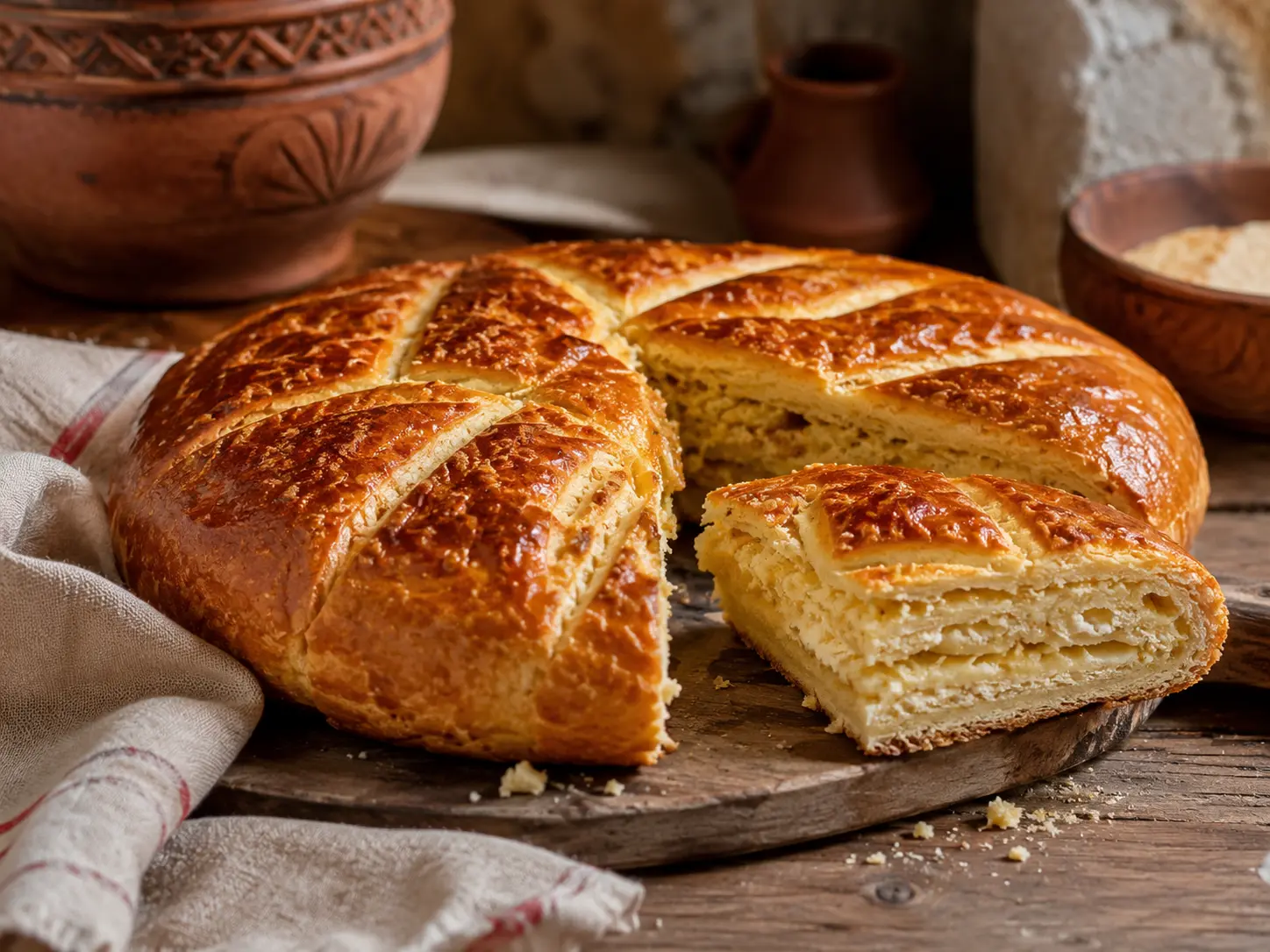
Gata is a sweet baked pastry whose filling has a name of its own: khoriz, flour rubbed into softened butter with sugar until it holds together in crumbs, which melts back into the dough in the oven. The dough is enriched with butter and often yoghurt or sour cream, and the top is glazed with egg and marked before baking — decoration that also keeps the surface from doming. The result is dry rather than moist, and that is what lets it keep and travel: a whole gata, wrapped, is the standard thing to bring when visiting. Almost everything else varies. Sizes run from discs the width of a table to rolls that fit in a hand, many families keep their own pattern for the top, and a walnut version made in the south is often called nazook instead.
Key facts
- Kind of dish
- Sweet baked pastry
- Filling
- Khoriz — flour worked into butter and sugar
- Dough
- Enriched with butter and often yoghurt or sour cream
- Shapes
- Large marked discs, small rolls, braided loaves
- Decoration
- Patterns scored or pricked into the top before baking
- Usually eaten with
- Tea or coffee
The dish at a glance
- Common ingredients
- Flour, Butter, Sugar, Yoghurt or sour cream, Egg, for the dough and the glaze, Walnuts, in some regional versions
- Traditional preparation
- An enriched dough is rolled out and spread or filled with khoriz — flour rubbed into butter and sugar — then folded or enclosed, flattened, glazed with egg, marked on top and baked until deep gold.
- Occasions
- Family visits and gifts, Church feast days, Everyday tea and coffee
- Known regions
- Villages around Geghard and Garni, for the large decorated discs, Southern Armenia and Armenian communities of Iran, for the walnut versions, Diaspora households and bakeries
- Serving traditions
- Cut into wedges or slices and served with tea or coffee; a whole gata, wrapped, is a usual gift when visiting.
What gata is
Gata is made in two parts. The dough is enriched — butter, and in many recipes yoghurt or sour cream, sometimes egg — and is closer to a pastry than to a bread dough. The filling, khoriz, is flour worked into softened butter with sugar until it holds together in crumbs.
The two are combined either by spreading khoriz over rolled dough and folding it, or by enclosing a quantity of it and flattening the whole. The top is brushed with egg and marked, and the pastry is baked until deep gold.
The result is dry rather than moist, which is not a flaw. Gata keeps and travels, and both of its main social uses depend on that.
Its place in Armenian life
Gata is the standard thing to arrive with. A whole one, wrapped, is an ordinary gift when visiting a household, and cutting it is part of the visit; the same pastry appears on the table when guests are received.
It is also strongly associated with places rather than only with families. Marked discs sold at monastery gates and roadside stalls are, for many people, the form gata takes in memory — bought on a journey, eaten in a car, brought home as a token of where you had been.
The decoration matters more than it looks. Many villages and families keep a pattern, and the marking is how a particular gata is recognised on a table with several.
Documented background
Gata belongs to the part of Armenian cooking that is documented well in the modern period and thinly before it. There is no dated origin to give, and this article does not manufacture one.
What is recorded is the repertoire. Sonia Uvezian's The Cuisine of Armenia, first published in 1974, was the first wide-ranging English-language account of Armenian cooking and set down the standard forms of pastries like this one for readers outside the community. Irina Petrosian and David Underwood's Armenian Food: Fact, Fiction & Folklore, published in 2006, took the further step of separating what is documented about Armenian dishes from what is merely repeated about them — a distinction that matters for a pastry surrounded by as much unsourced story as gata.
Ethnographic work on Armenian folk culture, including the material collected in Armenian Folk Arts, Culture, and Identity, places baking of this kind within the household and calendar practices it belongs to rather than treating it as a recipe in isolation.
Ingredients and preparation
The dough is made with flour, butter and a souring dairy element, worked briefly and rested. The khoriz is made separately by rubbing flour into softened butter with sugar; some cooks toast the flour first, and many add vanilla, and in the south walnuts are commonly worked in.
The assembly is where the versions separate. A thin, wide gata is made by spreading khoriz over rolled dough, rolling or folding it, and flattening the result; a thick one encloses a much larger quantity of filling in a smaller circle.
The top is egg-washed and then marked — with a fork, a knife, or a carved wooden stamp — before going into a hot oven. The marking is decorative, but it also stops the surface from doming.
Occasions and traditions
Gata is a celebration pastry without belonging to any one celebration. It appears at family gatherings, on feast days, at the table for guests, and at the end of ordinary afternoons with coffee.
Many families bake it for particular days in the church calendar, and the practice differs between households and regions rather than following a single rule. It is also common as an offering brought to a church or shared after a service.
In the diaspora it survives strongly, partly because it needs no special equipment and partly because it is the kind of thing an older relative teaches by making it in front of someone.
Regional variations
The best-known versions are large, round and decorated, and are closely associated with the villages around Geghard and Garni, where they are sold to visitors.
Elsewhere gata is thicker and denser, with a much heavier proportion of filling, or is made as small individual rolls, or as a braided loaf sliced across.
In some regions walnuts are worked into the khoriz, and the version made that way in the south and among Armenians of Iran is often called nazook instead. Whether that is a different pastry or the same one under another name is a question families answer differently, and there is no need to settle it.
Important dates
1974
Sonia Uvezian's The Cuisine of Armenia is published, the first wide-ranging English-language account of Armenian cooking.
2006
Irina Petrosian and David Underwood publish Armenian Food: Fact, Fiction & Folklore, separating what is documented about Armenian dishes from what is repeated about them.
2018
Gata is among the sweets demonstrated in the Armenia programme of the Smithsonian Folklife Festival.
Why gata matters
Gata is the dish in this section with the least documented history and the clearest present-day function. It is what an Armenian household gives, receives and offers, and its keeping quality is what makes that possible.
Its variety is also instructive. There is no single correct gata — the shape, the thickness, the proportion of filling and the pattern on top all change from village to village — and a section that presented one household's version as the authentic one would be describing a family rather than a tradition.
Interesting facts
- 01The filling has its own name, khoriz: flour rubbed into butter and sugar until crumbly.
- 02Many villages and families keep their own pattern for the top, and the marking is how a particular gata is identified.
- 03Sizes run from discs wide enough to fill a table to rolls that fit in one hand.
- 04The scoring is not only decorative — it keeps the surface from doming in the oven.
- 05A walnut-filled version made in the south and among Armenians of Iran is often called nazook; whether it is the same pastry under another name is answered differently by different families.
Sources
- Armenia: Creating Home — Foodways — Smithsonian Folklife Festival, Center for Folklife and Cultural Heritage, 2018 Visit source
- Sonia Uvezian. The Cuisine of Armenia — Siamanto Press ISBN 9780970971678Cited for preparation practice. First published by Harper & Row, New York, in 1974.
- Irina Petrosian and David Underwood. Armenian Food: Fact, Fiction & Folklore — Yerkir Publishing, 2006 ISBN 9781411698659
- Levon Abrahamian and Nancy Sweezy (eds.). Armenian Folk Arts, Culture, and Identity — Indiana University Press, Bloomington, 2001 ISBN 9780253337047
Related articles
Ghapama
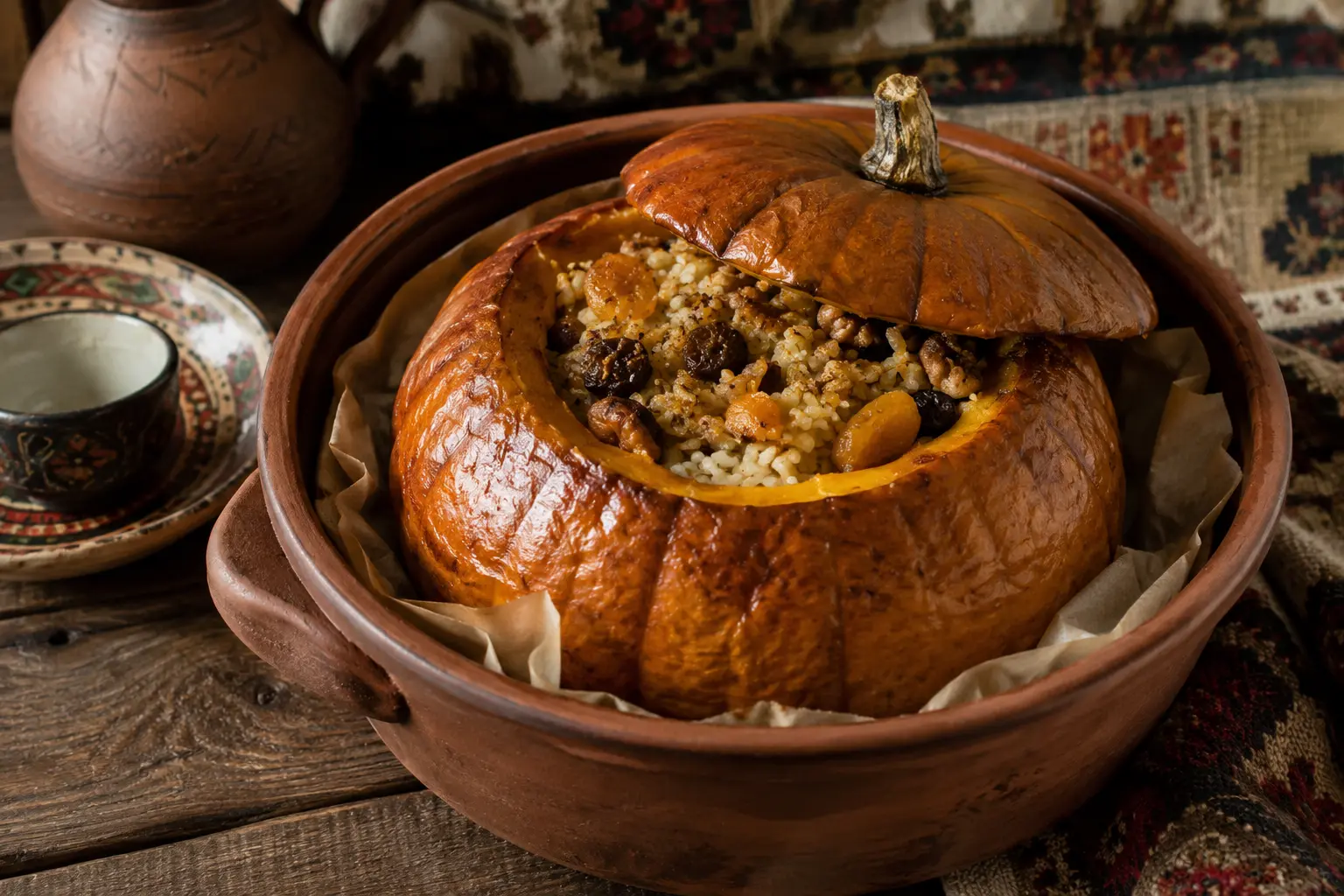
A whole pumpkin filled with rice, dried fruit and nuts and baked until it can be opened at the table — a festive dish whose ingredients place it firmly in the modern era.
Lavash
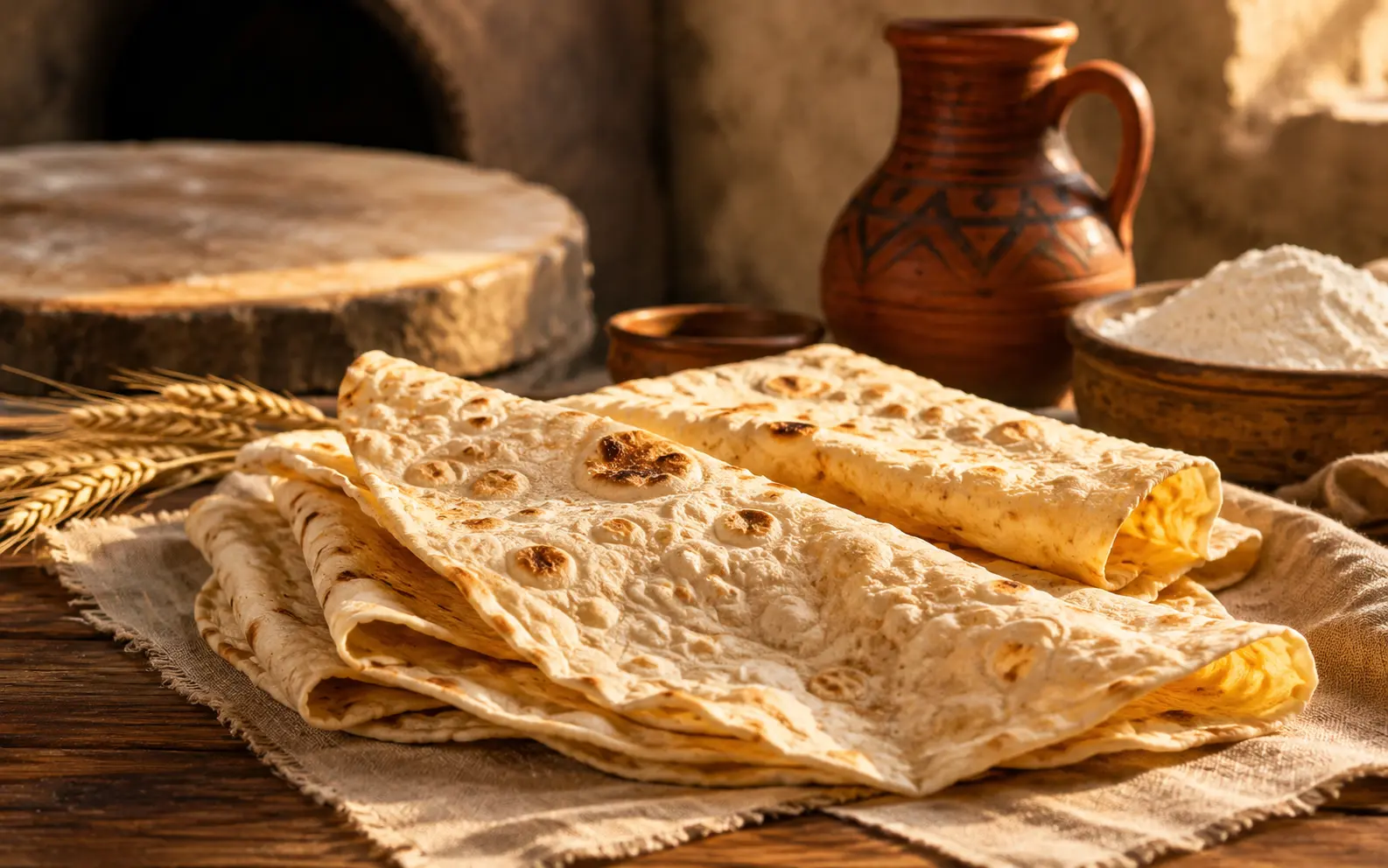
The thin flatbread baked against the wall of a clay tonir, inscribed by UNESCO in 2014 for the way it is made, shared and used in Armenian life — and inscribed again in 2016 for five other countries.
Dolma
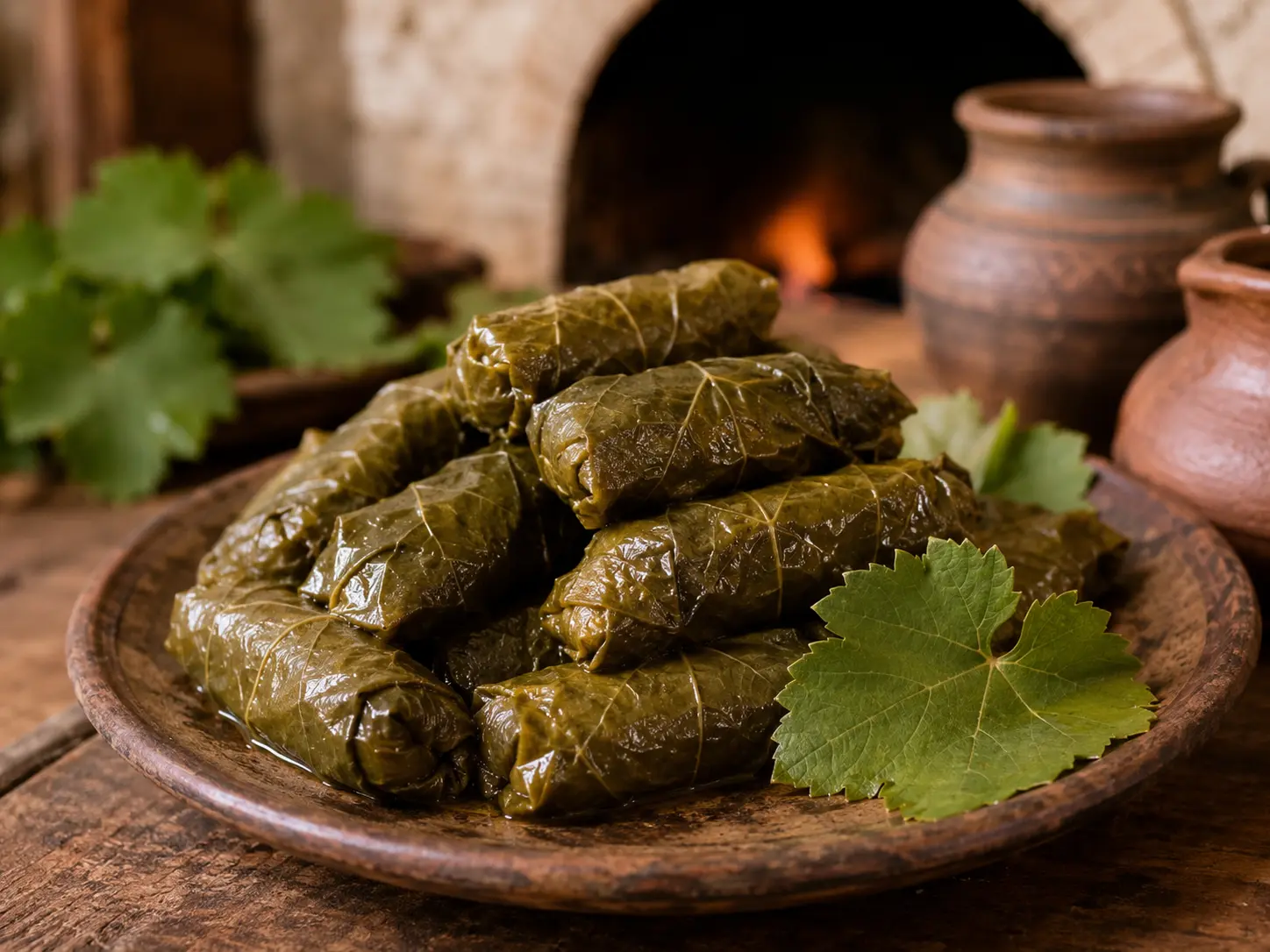
Vine leaves and hollowed vegetables filled with rice, herbs and often meat — a dish made across the whole region, and one of the clearest examples of why this section does not assign dishes to a single owner.